Bear
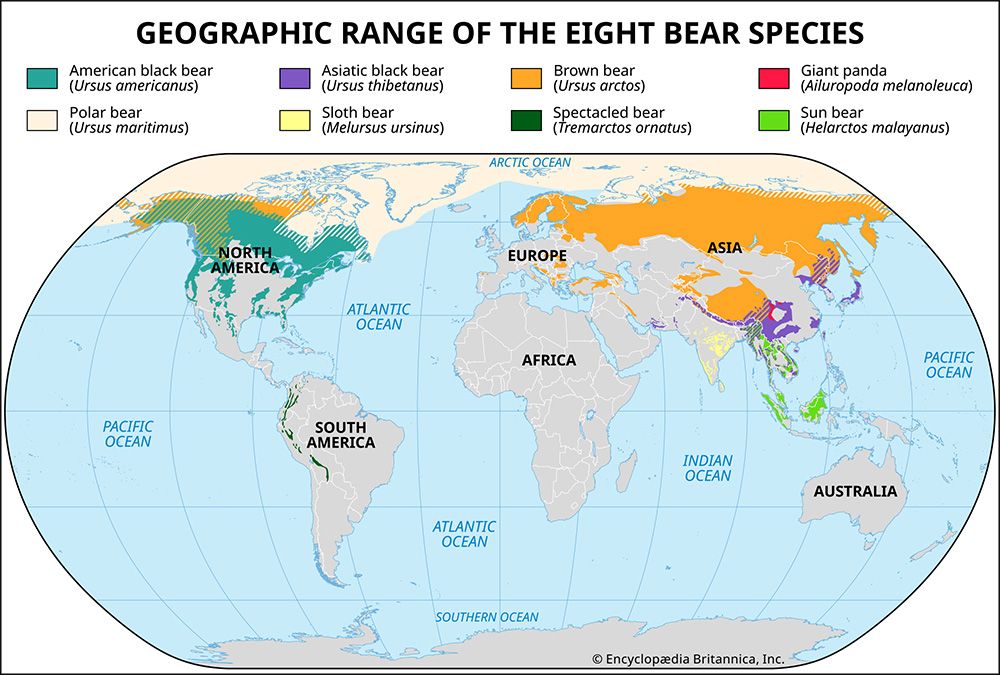
There are eight extant species of bear (family Ursidae) found across North America, South America, Europe, and Asia. Africa and Australia lack native bear…
How many species of bears exist, and where are they found around the world?
There are eight extant species of bear (family Ursidae) found across North America, South America, Europe, and Asia. Africa and Australia lack native bear species.123
The eight species are categorized into five genera:
- Genus Ursus:
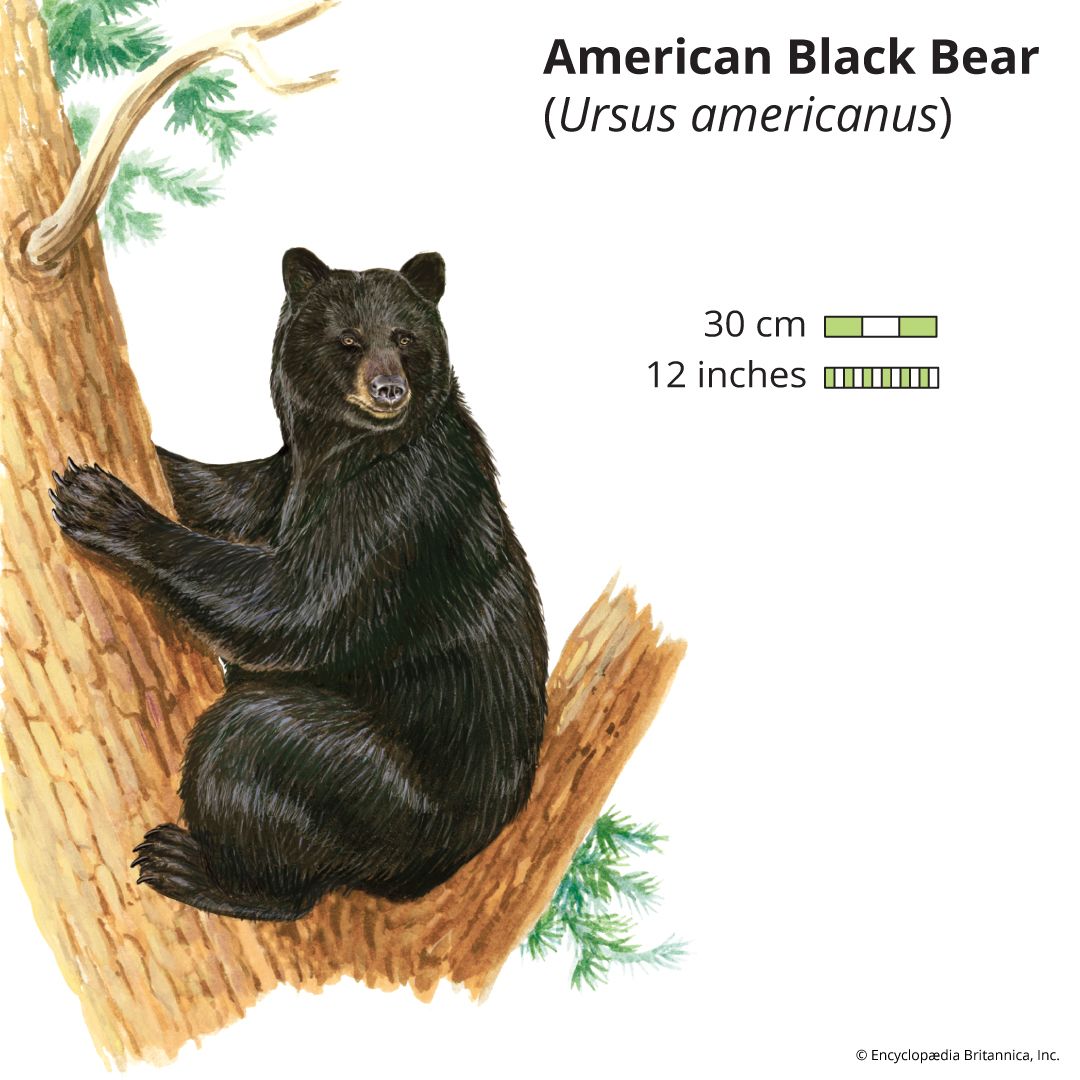
- American black bear: Found in North America.24
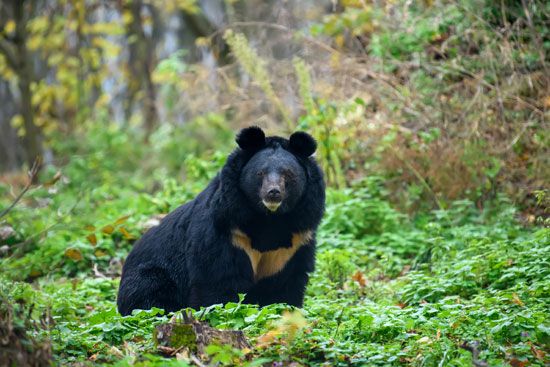
- Asiatic black bear: Found in Asia.2
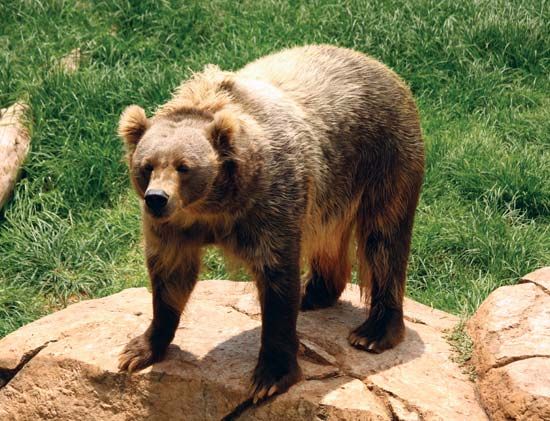
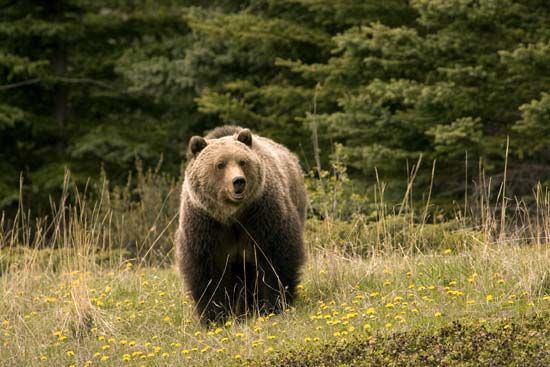
- Brown bear (including grizzly and Kodiak bears): Found in North America, Asia, and Europe.12
- Polar bear: Found throughout the Arctic region.15
- Genus Ailuropoda:
- Genus Helarctos:
- Sun bear: Found in Southeast Asia.2
- Genus Melursus:
- Sloth bear: Found on the Indian subcontinent.2
- Genus Tremarctos:
The spectacled bear is the only species that lives south of the Equator. While these are the currently recognized species, an African species (Ursus crowtheri) of the Atlas Mountains was driven to extinction in the 19th century.32
What are the different sizes and weights of various bear species?
Bear species exhibit significant variation in size and weight, with males generally being larger than females across most species.7
Size Extremes
- Largest Bears: The Kodiak bear (a subspecies of the brown bear) and the polar bear are the largest, both holding the title of the world’s largest land carnivore. These massive animals can weigh up to 720 kg (1,600 pounds).8910
- Smallest Bear: The sun bear is the smallest bear species, typically weighing between 27 and 65 kg (59–143 pounds) and reaching lengths of 1 to 1.2 metres (3.3–4 feet).119
General Characteristics
- Newborns: Regardless of the adult size, newborn bears are remarkably small, weighing about 0.5 kg (1 pound) and measuring approximately 23 cm (9 inches) in length.6
- Spectacled Bear: The spectacled bear stands about 64 cm (25 inches) at the shoulder and ranges from 1.2 to 1.8 metres (4 to 6 feet) in length.12
While these figures provide a general overview, individual weights can fluctuate based on seasonal food availability and the animal’s ability to accumulate fat.6
What are some unique adaptations that bears have developed for survival?
Bears have evolved a variety of specialized adaptations that allow them to thrive in diverse environments, from the Arctic ice to temperate forests.
Physical and Sensory Adaptations
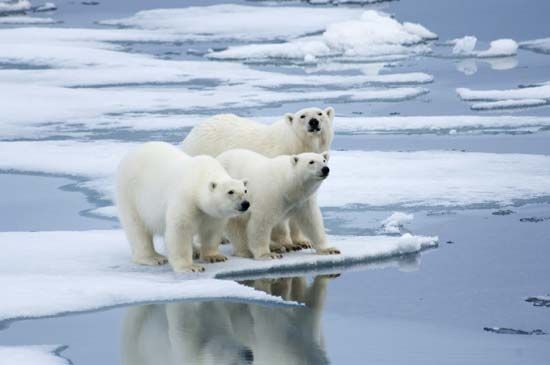
- Locomotion: Bears are plantigrade, meaning they walk on the soles of their feet with their heels touching the ground. While many species have hairless soles, polar bears possess hairy soles that provide insulation and traction on ice.123
- Claws and Digging: Each foot features five nonretractile claws. These are particularly well-developed on the front feet, serving as essential tools for digging out roots or small rodents. Polar bears use these strong claws to gain traction on ice and to hunt prey.123
- Specialized Anatomy: The giant panda has a unique bone formation in its forefoot that acts as an opposable “sixth digit,” aiding in the handling of bamboo. Additionally, the sloth bear has evolved mobile, funnel-like lips that allow it to efficiently suck up termites and larvae.612
- Sensory Strengths: While their sight and hearing are relatively poor, bears rely heavily on a highly developed sense of smell for hunting and foraging.6
Environmental and Metabolic Adaptations
- Polar Bear Specializations: To survive in the Arctic, polar bears have thick fur that allows sunlight to reach their heat-absorbing black skin. They are also unique among four-legged mammals for using only their front limbs to swim.314
- Winter Dormancy: Many bears enter a state of winter lethargy, consuming large amounts of food beforehand to build fat reserves. Unlike true hibernators, bears do not experience a drastic drop in body temperature, allowing them to remain somewhat responsive and, in the case of females, to give birth and nurse cubs during this period.615
- Delayed Implantation: This reproductive strategy ensures that fertilized eggs remain dormant in the uterus, guaranteeing that cubs are born during the winter and emerge in the spring when food is more abundant.6
How do bears hibernate, and why is this process important for their survival?
Bears do not undergo true hibernation; instead, they enter a state of winter lethargy or “shallow hibernation”. While true hibernators experience a drastic drop in body temperature and metabolic rate, a bear’s body temperature remains relatively high—typically dropping only from about 38 °C (100 °F) to around 34 °C (93 °F).146
The Process of Winter Lethargy
Before entering their dens, bears consume large amounts of food to build significant stores of body fat, which serves as their primary energy source throughout the winter. Unlike many other hibernating animals that may rouse to eat or eliminate waste, certain species of bears remain in their dens for several months without eating, drinking, or going to the bathroom. During this period, they remain warm and capable of activity if stimulated.14156
Importance for Survival
This process is a critical adaptation for surviving the winter months when food supplies are scarce. By entering a state of lethargy, bears conserve energy that would otherwise be spent foraging in harsh conditions. Additionally, this period of dormancy is vital for reproduction: female bears give birth to cubs in the den, where the young are kept warm and nourished by their mother until they emerge in the spring when food is once again abundant.14615
Sources
- List of bears — Encyclopædia Britannica
- bear - Evolution and classification — Encyclopædia Britannica
- polar bear — Encyclopædia Britannica
- black bear — Encyclopædia Britannica
- giant panda — Encyclopædia Britannica
- bear - Natural history — Encyclopædia Britannica
- bear: Top Questions — Encyclopædia Britannica
- spectacled bear — Encyclopædia Britannica
- Kodiak bear — Encyclopædia Britannica
- sun bear — Encyclopædia Britannica
- bear — Encyclopædia Britannica
- bear - Form and function — Encyclopædia Britannica
- Sexual dimorphism — Encyclopædia Britannica
- Why Do Some Animals Hibernate? — Encyclopædia Britannica
- Dormancy - Types of hibernation in mammals — Encyclopædia Britannica
- bear - Importance to humans — Encyclopædia Britannica
- polar bear: Top Questions — Encyclopædia Britannica
- Dormancy - Endocrine activity — Encyclopædia Britannica
Published on · 4 min read