Kodiak Bear
The Kodiak bear (Ursus arctos middendorffi) is primarily distinguished from other bear species, including the grizzly bear, by its massive size. As the…
What are the physical characteristics that distinguish Kodiak bears from other bear species?
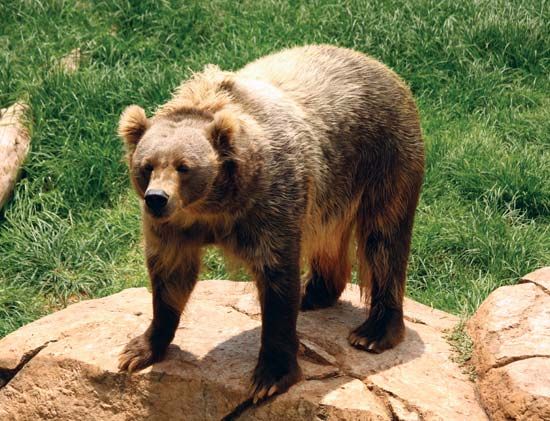
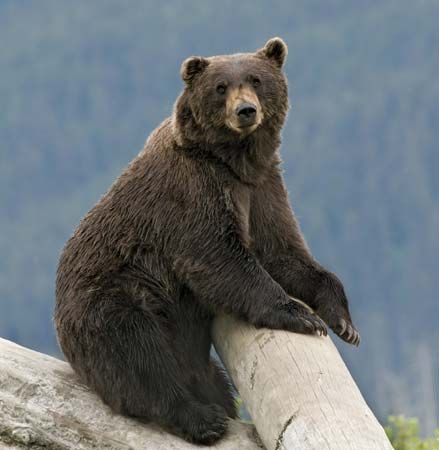
The Kodiak bear (Ursus arctos middendorffi) is primarily distinguished from other bear species, including the grizzly bear, by its massive size. As the world’s largest bear and largest land carnivore—a title it shares with the polar bear—the Kodiak bear can weigh up to 720 kg (1,600 pounds).123
While Kodiak bears are sometimes confused with grizzlies due to superficial physical similarities, they are significantly larger than the grizzly subspecies (U. arctos horribilis), which typically weighs about 410 kg (900 pounds). Furthermore, these two subspecies are geographically isolated, as their ranges do not overlap, and they have remained reproductively separated for approximately 12,000 years.12
Unlike the grizzly, which is characterized by humped shoulders and an elevated forehead that creates a concave profile, the Kodiak bear is defined most notably by its superior bulk within the brown bear species.12
Where is the natural habitat of Kodiak bears, and how has it changed over time?
The natural habitat of the Kodiak bear is restricted to Kodiak Island and nearby islands off the southern coast of Alaska. This archipelago features diverse terrain, including heavily forested eastern uplands and moist tundra in the southwestern regions that escaped glaciation. Approximately two-thirds of Kodiak Island is protected within the Kodiak National Wildlife Refuge, which was established in 1941 to conserve the species.41
The island’s environment has undergone significant changes over time due to both natural and human-influenced events:
- Volcanic Activity: The 1912 eruption of Novarupta blanketed the island in 18 inches of ash, which temporarily disrupted local ecosystems and agriculture before ultimately fostering lush vegetation.4
- Geological Shifts: The 1964 Alaska earthquake caused significant land elevation changes and triggered tsunamis that devastated coastal areas.4
- Industrial Impact: The 1989 Exxon Valdez oil spill caused severe damage to the island’s beaches and fishing industry.4
Despite these events, the population remains stable at approximately 3,500 individuals, having been reproductively isolated from other bear subspecies for about 12,000 years.41
How do Kodiak bears compare to other large bear species like the polar bear or grizzly bear in terms of size and behavior?
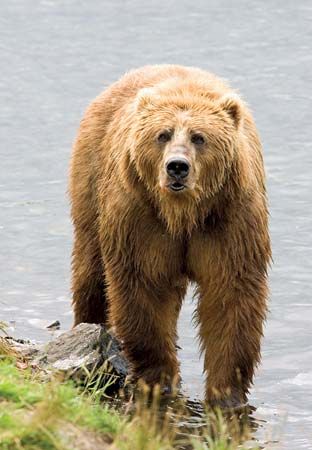
The Kodiak bear (Ursus arctos middendorffi) and the polar bear (Ursus maritimus) are the world’s largest bears and largest land carnivores, both capable of reaching weights up to 720 kg (1,600 pounds). In contrast, the grizzly bear (U. arctos horribilis) is significantly smaller, typically weighing about 410 kg (900 pounds).1627
Size and Physical Differences
- Kodiak vs. Grizzly: While often confused due to superficial similarities, Kodiak bears are larger than grizzlies. They are geographically isolated, having been separated for approximately 12,000 years. Grizzlies are physically distinguished by humped shoulders and an elevated forehead that creates a concave facial profile.17
- Kodiak vs. Polar Bear: Both reach similar maximum weights. However, polar bears are stockier with longer necks, smaller heads, and specialized hairy soles on their feet for traction on ice.128
Behavioral Distinctions
- Diet: Polar bears are overwhelmingly carnivorous, primarily hunting seals, whereas Kodiak and grizzly bears are omnivorous, consuming berries, roots, fish, and carrion.6782
- Agility: Due to their bulk and long, straight claws, grizzly bears rarely climb trees, though they are agile runners. Polar bears are powerful swimmers, using only their front limbs—an adaptation unique among four-legged mammals.78
- Temperament: Polar bears have no natural predators and often show no fear of humans, making them extremely dangerous. Grizzly bears are also known to be aggressive, particularly females with cubs.87
How does the diet of a Kodiak bear contribute to its massive size?
The massive size of the Kodiak bear is primarily supported by its omnivorous diet, which consists largely of salmon, plants, and berries. Like other brown bears, Kodiak bears are opportunistic feeders that also consume roots, shoots, small mammals, and carrion.19
This diverse diet allows the bears to accumulate significant amounts of fat during the late summer and autumn months. This energy storage is critical for their survival, as it provides the necessary reserves to sustain them while they retire to dens during the winter. The abundance of high-quality food sources on Kodiak Island—particularly the rich salmon runs—is a key factor that enables this subspecies to grow into the world’s largest land carnivore, reaching weights of up to 720 kg (1,600 pounds).941
Sources
- Kodiak bear — Encyclopædia Britannica
- grizzly bear — Encyclopædia Britannica
- brown bear — Encyclopædia Britannica
- Kodiak Island — Encyclopædia Britannica
- Arctic National Wildlife Refuge — Encyclopædia Britannica
- bear — Encyclopædia Britannica
- bear - Form and function — Encyclopædia Britannica
- polar bear — Encyclopædia Britannica
- Kodiak bear — Merriam-Webster
Published on · 4 min read