Beard Worm
Beard worms, members of the family Siboglinidae, play a significant role in deep-sea ecosystems, particularly in regions of tectonic activity such as…
What is the ecological importance of beard worms in deep-sea ecosystems?
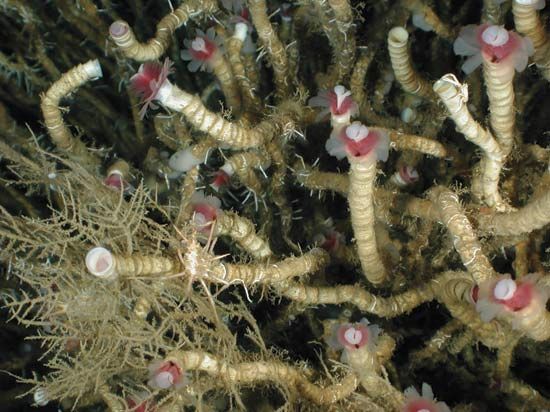
Beard worms, members of the family Siboglinidae, play a significant role in deep-sea ecosystems, particularly in regions of tectonic activity such as hydrothermal vents and methane seeps.1
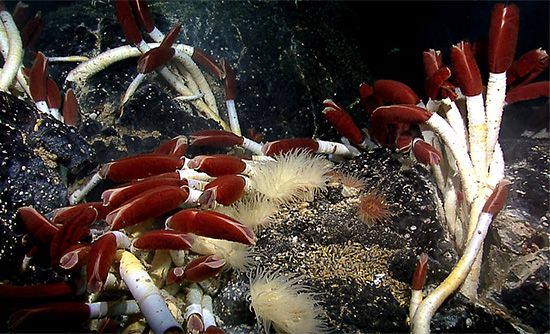
Their ecological importance is primarily tied to their role as chemoautotrophic organisms. Because these worms lack a mouth and an anus in their adult stage, they rely on symbiotic relationships with bacteria that oxidize sulfur or other chemicals to derive chemical energy. By hosting these bacteria, beard worms—often referred to as vestimentiferan worms in these environments—act as primary producers in the deep sea. This process is vital because it provides a source of organic carbon in the aphotic zone, where sunlight cannot reach to support photosynthesis. Consequently, these worms form the foundation of complex vent assemblages, supporting a diverse array of other deep-sea life, including crabs, mussels, and fish.12
How do beard worms adapt to survive in extreme deep-sea environments?
Beard worms (family Siboglinidae) have evolved remarkable physiological and structural adaptations to thrive in extreme deep-sea environments, such as hydrothermal vents and methane seeps.
A primary adaptation is their unique nutritional strategy. As adults, these worms lack a mouth and an anus, having lost their intestine during development. Instead, they rely on symbiotic relationships with chemoautotrophic bacteria. These bacteria oxidize chemicals like sulfur to produce chemical energy, providing the worms with essential nutrients in the aphotic zone where photosynthesis is impossible. Additionally, some species can absorb amino acids directly from seawater through their tentacles.12
Structurally, they secrete protective tubes made of chitin, which shield them while allowing them to move within their environment. A specialized structure called a bridle helps support the worm on the edge of its tube. Their circulatory system utilizes hemoglobin to transport oxygen and other substances efficiently throughout their bodies, supporting their metabolic needs in these high-pressure, often volatile habitats.1
What role do beard worms play in the food chain of deep-sea ecosystems?
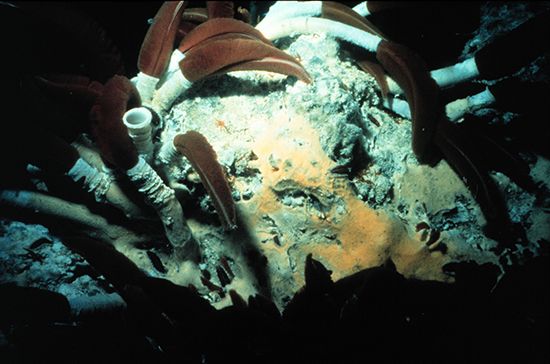
Beard worms (family Siboglinidae) are essential to the food chain of deep-sea ecosystems, particularly in areas like hydrothermal vents and methane seeps. Because these environments exist in the aphotic zone where sunlight cannot support photosynthesis, these worms serve as a primary source of organic carbon.23
Their role is defined by their chemoautotrophic nature. Adult beard worms lack a mouth and anus, relying instead on symbiotic relationships with bacteria that oxidize sulfur to derive chemical energy. By hosting these bacteria, the worms act as primary producers, effectively converting geothermal energy into biological matter.23
As a result, they form the foundation of complex vent assemblages. They support a diverse array of other deep-sea life, including crabs, mussels, and various fish, which either feed on the bacteria or exist in association with the worm-dominated communities.23
How do beard worms feed and reproduce?
Beard worms (family Siboglinidae) exhibit unique biological processes, as they are the only multicellular animals that lack a mouth and anus in their adult stage.1
Feeding
Because they lack a digestive tract, beard worms utilize several methods to acquire nutrients:
- Filter Feeding: Their tentacles contain pinnules that form a filter to capture microorganisms and other nutrients from the water, aided by ciliary tracts.1
- Pinocytosis: They can absorb small food particles through the outer layers of their pinnules.1
- Direct Absorption: They are capable of absorbing amino acids directly from seawater through their tentacles.1
Reproduction
Beard worms reproduce sexually, with males and females generally appearing similar.1
- Fertilization: Females lay yolk-rich eggs in the anterior part of their protective tubes. Males release sperm packets into the water, which settle into the female’s tube and break down to fertilize the eggs.1
- Development: Early development, including cleavage and the formation of a swimming larva, occurs within the female’s tube.1
Sources
- beard worm — Encyclopædia Britannica
- Marine ecosystem - Organisms of the deep-sea vents — Encyclopædia Britannica
- community ecology - The pyramid structure of communities — Encyclopædia Britannica
Published on · 3 min read