Bloodworm
The term "bloodworm" refers to several distinct types of bright red or pinkish invertebrates, rather than a single species.
What is bloodworm?
The term “bloodworm” refers to several distinct types of bright red or pinkish invertebrates, rather than a single species.12
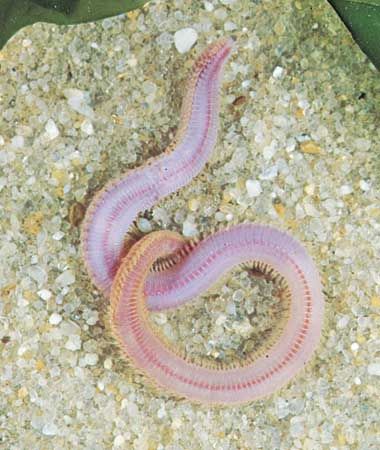
- Marine Polychaetes: The genus Glycera, particularly G. dibranchiata, is a marine worm found in tidal flats and estuarine environments, such as those in Maine and Nova Scotia. These worms are commonly used as bait for saltwater fishing.132
- Aquatic Larvae: The term also describes the bright red larvae of certain midge flies (family Chironomidae), which are frequently used as food for tropical aquarium fish.12
- Freshwater Annelids: The genus Tubifex, or sludge worms, are segmented aquatic worms also utilized as fish food.13
- Parasitic Worms: In veterinary contexts, the name may refer to certain strongyle worms (such as Strongylus vulgaris), which are intestinal parasites of horses.2
These organisms are grouped together primarily due to their reddish coloration, which often results from the presence of hemoglobin or similar pigments.12
How do bloodworms get their red color?
Bloodworms derive their characteristic bright red color from the presence of respiratory pigments within their bodies.15
In many of these aquatic invertebrates, the primary pigment responsible for this coloration is hemoglobin. Hemoglobin is an iron-containing protein molecule that functions as an oxygen carrier, significantly increasing the blood’s capacity to transport oxygen to tissues. Because these pigments are often dissolved directly in the plasma rather than being enclosed in blood cells, the red color is visible through the worm’s body wall.5
While hemoglobin is the most common cause of the red hue, other iron-containing pigments can also influence the coloration of various polychaete worms. For instance, some species possess chlorocruorins, which are green, or hemerythrins, which are violet. The specific appearance of a “bloodworm” depends on the type and concentration of these pigments present in the organism’s circulatory system.5
What role do annelids play in ocean ecosystems?
Annelids, particularly the class Polychaeta, are fundamental components of ocean ecosystems, where they occupy a wide range of habitats including the seafloor, tidal flats, and open water.89
Their roles in these environments include:
- Sediment Processing: Polychaetes are among the most important deposit feeders in soft-bottom marine environments. By burrowing and feeding, they play a critical role in turning over bottom sediments, which helps cycle nutrients and oxygenate the seafloor.1011
- Trophic Web Contribution: As members of the benthos, these worms serve as a vital food source for various predators, including fish, starfish, and crustaceans. Some species, such as the palolo worm, are even harvested by humans for food.1011
- Ecological Associations: Many polychaetes engage in commensalism, living within the tubes of other sedentary worms, the mantle cavities of mollusks, or on the surfaces of echinoderms like starfish.12
- Biological Activity: Some species are bioluminescent, and many exhibit complex behaviors such as tube-building or aggressive territorial defense, which influence the structure and dynamics of their local habitats.812
How do midge fly larvae differ from marine worms?
While both midge fly larvae and marine worms can appear wormlike, they are fundamentally different organisms belonging to distinct biological groups.
Biological Classification
- Midge Fly Larvae: These are the immature stage of insects in the order Diptera (family Chironomidae). As insects, they undergo metamorphosis to become winged adults.14
- Marine Worms: Many marine worms, such as polychaetes, are annelids. They are distinct invertebrates that do not undergo a transformation into a flying insect stage.15
Development and Structure
- Larval Stages: Midge larvae lack true, jointed thoracic legs, though they may possess “false legs” called prolegs to help them crawl. Their development is part of a life cycle that includes pupation before emerging as adults.1614
- Marine Worms: Many marine worms begin life as a trochophore larva, which is a free-swimming, ciliated stage unique to many marine invertebrates. Unlike midge larvae, which are destined to become flies, these larvae develop into adult worms.15
Respiration
- Midge Larvae: These larvae often obtain oxygen directly from the water through their thin cuticle, which contacts an internal system of tracheae (breathing tubes).17
- Marine Worms: Marine worms utilize various physiological adaptations for gas exchange, often relying on specialized structures or their body surface to interact with the marine environment.15
Sources
- bloodworm — Encyclopædia Britannica
- bloodworm — Merriam-Webster
- annelid - Importance — Encyclopædia Britannica
- Glycera — Merriam-Webster
- Circulatory system - Blood — Encyclopædia Britannica
- coloration - Short-term changes — Encyclopædia Britannica
- coloration - Physiological control — Encyclopædia Britannica
- annelid - Distribution and abundance — Encyclopædia Britannica
- polychaete — Encyclopædia Britannica
- annelid - Behaviour and associations. — Encyclopædia Britannica
- annelid — Encyclopædia Britannica
- benthos — Encyclopædia Britannica
- annelid - Tissues and fluids — Encyclopædia Britannica
- midge — Encyclopædia Britannica
- Diptera - Larvae — Encyclopædia Britannica
- Diptera - Larvae — Encyclopædia Britannica
- insect - Aquatic insects — Encyclopædia Britannica
- Animal development - The larval stage — Encyclopædia Britannica
- gall midge — Encyclopædia Britannica
Published on · 3 min read