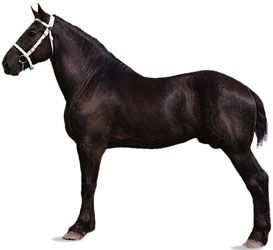
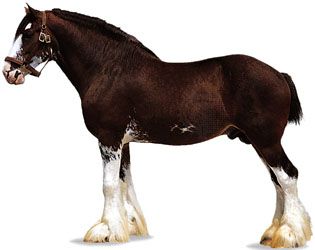
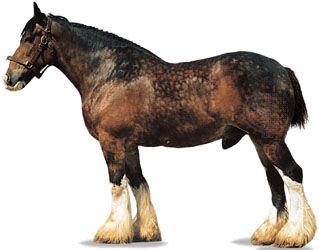
Belgian Horse
The Belgian horse is a breed of heavy draft horse that traces its ancestry to the medieval "great horse" of the Low Countries. Known for being patient and…
What is Belgian horse?
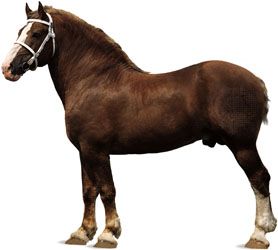
The Belgian horse is a breed of heavy draft horse that traces its ancestry to the medieval “great horse” of the Low Countries. Known for being patient and docile, these horses are characterized by their heavy bodies, thick musculature, and short legs.1
Physically, they typically stand between 16 and 17 hands (64 to 68 inches) tall and weigh between 1,800 and 2,200 pounds. While their ancestors were black, modern Belgians are commonly found in chestnut, sorrel, bay, or roan coat colors.12
The breed was significantly improved after 1880 and was introduced to the United States in 1866. Although they gained acceptance in America, they did not reach the same level of popularity as the Percheron popularity as the Percheron. The Belgian Draft Horse Corporation of America, which manages the breed’s standards, traces its organizational roots back to 1887.1
What is the difference between a draft horse and a light horse?
Domesticated horses are generally categorized into three types based on their size, build, and primary purpose: draft horses, light horses, and ponies.31
Draft Horses
Also known as “heavy horses,” these animals have been selectively bred for their strength and power to pull heavy loads, such as farm equipment or wagons.34
- Physical Characteristics: They are typically heavy-limbed, muscular, and large, often standing 16 hands or higher and weighing over 1,600 pounds.516
- Temperament: They are generally characterized as calmer and slower-moving compared to other types.4
- Examples: Well-known breeds include the Belgian, Clydesdale, Percheron, and Shire.36
Light Horses
Light horses are intermediate in size and are primarily utilized for riding and equestrian sports.31
- Physical Characteristics: They are built for agility and speed rather than raw pulling power.1
- Primary Uses: They are commonly used for dressage, show jumping, horse racing, and other riding disciplines.3
- Examples: This category includes the Arabian, Thoroughbred, and American Quarter Horse.4
How were medieval battle horses different from modern draft horses?
Medieval war-horses, known as destriers or “great horses,” were the direct ancestors of modern draft horses, but they served a fundamentally different purpose. While modern draft breeds were selectively refined for agricultural labor and pulling heavy loads, the medieval war-horse was bred specifically for the tactical demands of mounted combat.910
The primary differences include:
- Purpose and Breeding: The destrier was developed to carry an armored knight into battle, requiring a combination of size, strength, and agility. Breeders often used crossbreeding to achieve these traits, though this was difficult to maintain because such horses were expensive to keep and prone to instability in bloodlines. In contrast, modern draft breeds like the Shire, Clydesdale, and Belgian were refined over centuries for calm temperaments and immense pulling power, eventually becoming specialized for farm labor before being largely replaced by tractors.910
- Genetic Stability: Medieval breeders struggled to “fix” desired traits in war-horses, as indiscriminate breeding often led to the loss of specialized bloodlines. Modern draft breeds are the result of long-term, stable selective breeding programs.911
- Tactical Integration: The war-horse was part of a complex military system involving specialized saddles, stirrups, and armor that allowed the horse and rider to function as a single unit during a charge. Modern draft horses are characterized by their calm, slow-moving nature, which is distinct from the spirited, powerful performance required of a war-horse.108
What are some other popular breeds of draft horses?
Beyond the well-known breeds previously mentioned, there are several other significant draft horse breeds recognized for their strength and utility in farm work and heavy hauling.
Notable Draft Horse Breeds
- Suffolk: Often referred to as the Suffolk Punch, this breed is known for its solid, muscular build and is historically valued for its stamina and pulling power in agricultural settings.12
- Belgian: Also known as the Brabant, this ancient breed is recognized for being broad and powerful, with a massive hindquarters structure that makes it highly effective for heavy draft and farm work.1312
- Clydesdale: Originating in Scotland, this breed is noted for its high-stepping gait and the heavy feathering on its lower legs. It is generally of a slightly lighter build than other heavy breeds.1312
- Percheron: A French breed that historically influenced American agriculture significantly. It is known for being agile and energetic for its size, often displaying a mild disposition.13612
- Shire: Often cited as the world’s largest horse breed, the Shire is descended from the medieval “great horse.” It is characterized by its massive size and heavily feathered legs.1312
Sources
- Belgian horse — Encyclopædia Britannica
- Belgian — Merriam-Webster
- draft horse — Merriam-Webster
- Horse breeds — Encyclopædia Britannica
- horse - Anatomical adaptations — Encyclopædia Britannica
- Draft animal — Encyclopædia Britannica
- driving horse — Merriam-Webster
- horse - Breeds of horses — Encyclopædia Britannica
- military technology - The war-horse — Encyclopædia Britannica
- horse - Heavy breeds — Encyclopædia Britannica
- military technology - The age of cavalry , c. 400 ce –1350 — Encyclopædia Britannica
- horse - Heavy breeds — Encyclopædia Britannica
- Percheron — Encyclopædia Britannica
Published on · 3 min read