Belladonna
Belladonna (Atropa belladonna) contains several potent medicinal alkaloids that are responsible for its pharmacological activity and toxicity. The primary…
What are the main active compounds found in belladonna?
Belladonna (Atropa belladonna) contains several potent medicinal alkaloids that are responsible for its pharmacological activity and toxicity. The primary active compounds found in the plant are:
- Atropine: A poisonous crystalline substance that acts on the autonomic nervous system. It is used medically to dilate pupils, reduce secretions, and treat certain types of muscle spasms or organophosphate poisoning.12
- Hyoscyamine: A naturally occurring alkaloid that serves as a precursor to atropine; atropine itself exists in the plant as a racemic mixture of D- and L-hyoscyamine.12
- Hyoscine (Scopolamine): Often considered the most pharmacologically active of these substances due to its high solubility, which allows it to pass rapidly to its site of action. It is frequently used to treat motion sickness and to dry up secretions during medical procedures.13
Because these naturally occurring compounds can cause significant toxicity and undesirable side effects, modern medicine often utilizes synthetic or semisynthetic derivatives designed to provide more targeted therapeutic results.12
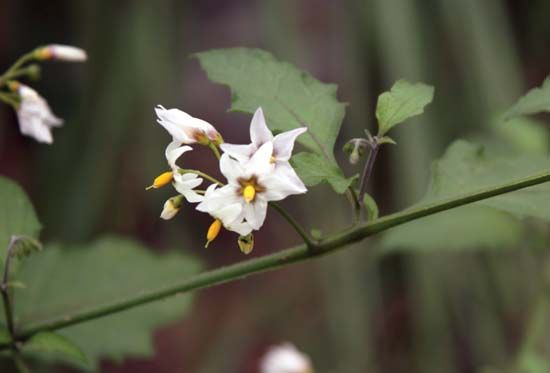
What is belladonna and where does it naturally grow?
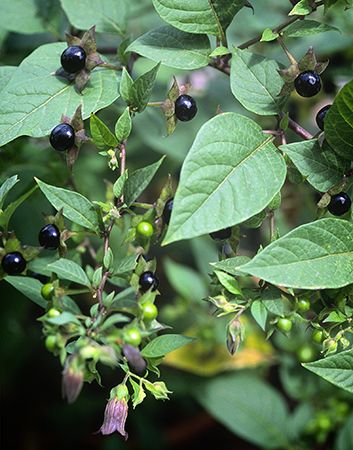
Belladonna (Atropa belladonna), also known as deadly nightshade, is a tall, bushy herb belonging to the nightshade family (Solanaceae). It is a highly poisonous plant characterized by dull green leaves, violet or greenish bell-shaped flowers, and sweet, shiny black berries roughly the size of cherries.14
Regarding its natural habitat, belladonna is native to wooded or waste areas throughout central and southern Eurasia. It is distinct from the belladonna lily (Amaryllis belladonna), an unrelated, autumn-flowering bulbous herb native to South Africa.15
Belladonna is cultivated commercially, particularly in France, for its medicinal alkaloids—specifically atropine, hyoscyamine, and hyoscine (scopolamine)—which are utilized in various sedatives, stimulants, and antispasmodics.1
What are some common names for belladonna and why is it called ‘deadly nightshade’?
Belladonna (Atropa belladonna) is most commonly referred to by the name deadly nightshade.46
The plant is called “deadly nightshade” because it is a highly poisonous member of the nightshade family (Solanaceae). While the term “nightshade” is broadly applied to various plants in the genus Solanum—some of which are common food crops like potatoes and tomatoes—the specific designation “deadly” highlights the extreme toxicity of Atropa belladonna due to its potent alkaloid content.46
The name “belladonna” itself is derived from Italian, literally meaning “beautiful lady,” a reference to the historical practice of using extracts from the plant to dilate the pupils for cosmetic purposes.4
How is belladonna used in modern medicine and what precautions are taken?
In modern medicine, belladonna is primarily valued as a source of potent alkaloids, including atropine, hyoscyamine, and scopolamine. These compounds are utilized in the formulation of various sedatives, stimulants, and antispasmodics to treat a range of medical conditions.1
Because the naturally occurring alkaloids found in the plant’s dried leaves and roots carry significant toxicity and can cause severe, undesirable side effects, medical science has developed safer alternatives. Researchers have created synthetic and semisynthetic derivatives—such as glycopyrrolate, propantheline, and methscopolamine—specifically designed to provide the therapeutic benefits of belladonna while minimizing the risks associated with the raw plant material.1
It is essential to recognize that the plant itself remains highly poisonous, and any medicinal use must be strictly controlled through standardized pharmaceutical preparations to ensure patient safety.
Sources
- belladonna — Encyclopædia Britannica
- scopolamine — Encyclopædia Britannica
- atropine — Encyclopædia Britannica
- belladonna — Merriam-Webster
- belladonna lily — Merriam-Webster
- Nightshade — Encyclopædia Britannica
- deadly nightshade — Merriam-Webster
Published on · 2 min read