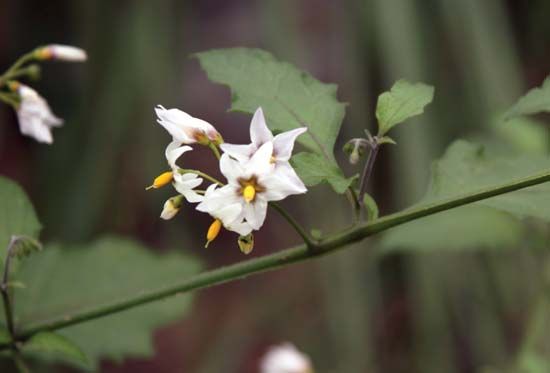
Withania Somnifera
Withania somnifera, commonly known as ashwagandha, is an evergreen shrub in the Solanaceae family. Native to India, North Africa, and the Middle East, it is…

What is Withania somnifera?
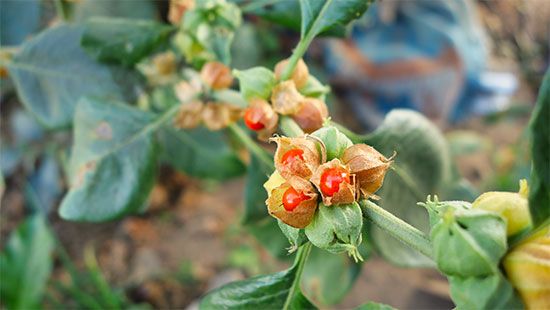
Withania somnifera, commonly known as ashwagandha, is an evergreen shrub in the Solanaceae family. Native to India, North Africa, and the Middle East, it is a drought-tolerant plant that grows up to 1.5 meters tall and produces poisonous orange-red berries.1
In Ayurvedic medicine, the plant is used for various conditions, including anxiety, fatigue, and stress. It is often marketed as an adaptogen, though scientific evidence supporting these health claims is currently lacking.1
Consumers should exercise caution, as the plant is associated with potential health risks, including liver injury and sedation. It may also be harmful to individuals with hormone-sensitive prostate cancer. Due to concerns regarding its impact on thyroid and sex hormone levels, as well as its potential to induce abortion, it was banned in Denmark in 2023.1
What are other plants in the nightshade family?
The Solanaceae family, commonly known as the nightshade or potato family, comprises over 100 genera and approximately 2,280 species. While the term “nightshade” is often associated with poisonous plants, the family includes a wide variety of economically and culturally significant food crops, ornamental plants, and pharmaceutical sources.234
Major Food Crops
Many staple foods belong to this family, particularly within the genus Solanum and the genus Capsicum:
- Potato (Solanum tuberosum)23
- Tomato (Solanum lycopersicum)23
- Eggplant (Solanum melongena)23
- Peppers (genus Capsicum), including bell pepper, chili pepper, cayenne, and tabasco pepper235
- Ground cherry (Physalis species), such as the tomatillo and Cape gooseberry25
Ornamental and Other Notable Plants
The family is also well-known for its diverse ornamental species and chemically active plants:
- Ornamentals: Petunia, angel’s trumpet (Brugmansia), and datura235
- Pharmaceutical/Toxic: Belladonna (Atropa belladonna), henbane, and jimsonweed235
- Recreational: Tobacco (Nicotiana species)265
- Wild Nightshades: Woody nightshade (Solanum dulcamara) and black nightshade243
How do adaptogens work in the human body?
An adaptogen is defined as a nontoxic substance, typically a plant extract, believed to increase the body’s ability to resist the damaging effects of stress and promote or restore normal physiological functioning.7
While these substances are frequently marketed for their health benefits, scientific evidence supporting specific mechanisms of action in the human body is often limited. Some traditional medicinal theories suggest that adaptogens act in a nonspecific manner to normalize physiological processes regardless of the underlying pathological situation. For instance, it has been hypothesized that certain agents in ginseng may increase the brain’s adrenocorticotropic hormone (ACTH) activity, thereby inducing generalized mental arousal.18
However, it is important to note that many health claims regarding adaptogens, such as those associated with ashwagandha, lack robust scientific validation. Furthermore, these substances can carry significant health risks, including potential liver injury, hormonal imbalances, and other adverse effects.1
What is the history of Ayurvedic medicine?
Ayurveda is a traditional system of Indian medicine with a history spanning approximately 3,000 years. Its origins are rooted in Hindu mythology, where it is attributed to Dhanvantari, the physician to the gods, who received the knowledge from Brahma.1011
Vedic Period (c. 2nd Millennium BCE – 800 BCE)
The earliest concepts of Ayurveda appear in the Atharvaveda, which contains magical practices and charms intended to expel demons believed to cause diseases such as fever, cough, and skin conditions. During this era, treatment relied heavily on numerous herbal remedies.1011
The Golden Age (800 BCE – 1000 CE)
This period saw the development of foundational medical treatises that shaped all subsequent Indian medical writing:
- Charaka-samhita: Attributed to the physician Charaka, this work focuses on internal medicine and reached its present form around the 1st century CE.1011
- Sushruta-samhita: Attributed to the surgeon Sushruta, this text is renowned for its advancements in surgery, including plastic surgery and the treatment of cataracts.1011
These texts analyzed the human body through the lens of five elements and three bodily humors (vata, pitta, and kapha), emphasizing that health requires a balance of these substances.1011
Sources
- Withania somnifera — Encyclopædia Britannica
- list of plants in the family Solanaceae — Encyclopædia Britannica
- Solanales - Family characteristics — Encyclopædia Britannica
- Nightshade — Encyclopædia Britannica
- Solanaceae — Encyclopædia Britannica
- list of economically important members of the family Solanaceae — Encyclopædia Britannica
- adaptogen — Merriam-Webster
- ginseng — Encyclopædia Britannica
- Endocrine system - The adrenal axis — Encyclopædia Britannica
- Ayurveda — Encyclopædia Britannica
- history of medicine - India — Encyclopædia Britannica
- medicine - India — Encyclopædia Britannica
Published on · 3 min read