Beluga
Beluga whales (Delphinapterus leucas) are primarily found in the coastal waters of the Arctic Ocean and adjacent seas. While they are most commonly…
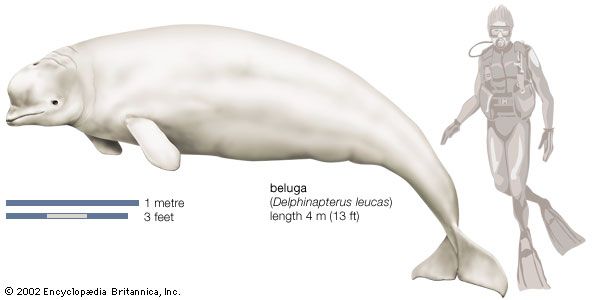
Where are beluga whales typically found, and what type of habitat do they prefer?
Beluga whales (Delphinapterus leucas) are primarily found in the coastal waters of the Arctic Ocean and adjacent seas. While they are most commonly associated with these frigid regions, they are also known to inhabit rivers and deep offshore waters.
Regarding their preferred habitat, belugas are highly adaptable. Arctic populations are particularly at home in pack ice, though they must migrate to warmer waters when the sea freezes over completely. Their ability to thrive in diverse environments—ranging from shallow coastal areas to deep marine zones—is a defining characteristic of the species.1
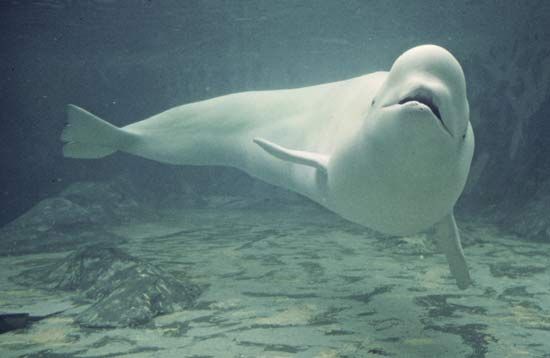
How long do beluga whales typically live, and at what age do they reach maturity?
Beluga whales typically have a life span of 35 to 50 years. A notable aspect of their life history is that females experience menopause, meaning they spend a significant portion of their later years in a post-reproductive state.12
Regarding their development, belugas reach sexual maturity at four to five years of age. This milestone is also associated with their physical appearance, as their skin color fades from gray or brown to the characteristic white seen in adults only after they have attained this maturity.1

What is the diet of beluga whales, and how do they hunt for food?
As toothed whales, beluga whales are active hunters that consume a varied diet consisting of fish, cephalopods, crustaceans, and worms.3
Because they belong to the suborder Odontoceti, belugas utilize echolocation to procure food. This physiological process involves emitting sound waves that reflect off objects, allowing the whales to locate and track their prey in the water. As active hunters, they use their teeth to catch individual prey, a method that distinguishes them from filter-feeding baleen whales.14
How do beluga whales communicate, and why are they sometimes called ‘sea canaries’?
Beluga whales are renowned for being among the most vocal of all cetaceans. Their reputation as the “canary of the sea” stems from their wide repertoire of high-pitched chirps, whistles, and clicks, which are often audible to humans and reminiscent of bird calls.5
Communication and Sound Production
Like other toothed whales, belugas produce sound primarily through their nasal passages rather than vocal cords. They possess specialized structures, including accessory air sacs and a fatty forehead organ known as the melon, which help them modify and emit sounds.1
These vocalizations serve two primary functions:
- Communication: Belugas use a variety of sounds to interact with one another within their pods, which can range from small groups to gatherings of over 1,000 individuals.15
- Echolocation: By emitting high-frequency clicks and listening for the returning echoes, belugas can navigate their environment and locate prey with remarkable precision.1
Beyond their natural vocalizations, belugas are also highly skilled at mimicry and can proficiently imitate a wide variety of other sounds.5
Sources
- beluga — Encyclopædia Britannica
- cetacean - Age and growth — Encyclopædia Britannica
- What do whales eat? — Encyclopædia Britannica
- Echolocation — Encyclopædia Britannica
- cetacean - Sound production and communication — Encyclopædia Britannica
Published on · 2 min read