Bonaire
Bonaire is an island located in the westernmost group of the Lesser Antilles within the Caribbean Sea. It is situated approximately 50 miles (80 km) north of…
What is the geographical location of Bonaire and how does it relate to the Netherlands Antilles?
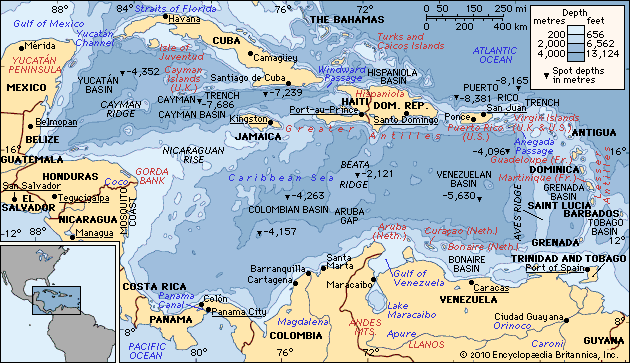
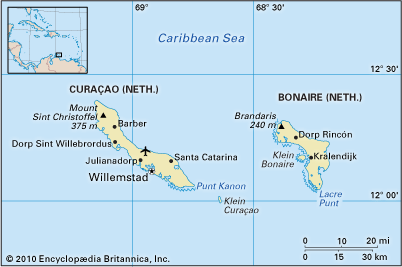
Bonaire is an island located in the westernmost group of the Lesser Antilles within the Caribbean Sea. It is situated approximately 50 miles (80 km) north of the Venezuelan coast and 20 miles (32 km) east of Curaçao.1
Regarding its political status, Bonaire was a member of the Netherlands Antilles, an autonomous federation within the Kingdom of the Netherlands, starting in 1954. Following an agreement reached in 2006, the Netherlands Antilles was officially dissolved in October 2010.12
Since the dissolution, Bonaire has held the status of a special municipality of the Netherlands, maintaining a direct relationship with the central government similar to that of municipalities within the metropolitan Netherlands. This transition distinguished it from islands like Curaçao and Sint Maarten, which became autonomous countries within the kingdom.12
How did Bonaire become a special municipality of the Netherlands and what does this status mean?
Bonaire became a special municipality of the Netherlands following a formal agreement to dissolve the Netherlands Antilles federation. In 2006, the people of the islands and the Dutch government reached this consensus, which was officially implemented on October 10, 2010.124
This status means that Bonaire, along with Saba and Sint Eustatius, maintains a direct relationship with the central government of the Netherlands. Unlike Curaçao and Sint Maarten, which became autonomous countries within the Kingdom of the Netherlands, Bonaire’s governance is structured similarly to that of municipalities within the metropolitan Netherlands. As a special municipality, the island is integrated into the Dutch administrative framework, ensuring closer oversight and connection to the national government compared to its previous status as part of an autonomous federation.1245
What languages are spoken on Bonaire and how does this reflect its history?
The primary languages spoken on Bonaire are Papiamentu and Dutch. This linguistic landscape serves as a direct reflection of the island’s complex colonial history and its position as a crossroads of cultural exchange.189
Papiamentu, an Iberian creole based on Portuguese and heavily influenced by Spanish, developed in the 17th century. Its origins are tied to the island’s history as a slave-trading center; after the Dutch took control from Spain in 1634, Portuguese-speaking colonists and their enslaved populations arrived from Brazil. The language evolved as enslaved Africans modified this Portuguese vernacular, incorporating Spanish elements through trade with mainland South America before spreading to Bonaire in the 18th century.1810
Dutch, meanwhile, serves as the language of administration. This reflects Bonaire’s long-standing status as a Dutch territory, beginning with its claim by the Dutch in 1634 and its subsequent role as a government plantation under the Dutch West India Company. Today, this administrative connection continues as Bonaire functions as a special municipality within the Kingdom of the Netherlands.1910
How does Bonaire’s government structure work as a special municipality of the Netherlands?
As a special municipality of the Netherlands, Bonaire maintains a direct administrative relationship with the central government in the European Netherlands. This status, established on October 10, 2010, following the dissolution of the Netherlands Antilles, integrates the island into the Dutch administrative framework in a manner similar to municipalities within the metropolitan Netherlands.142
Prior to this change, Bonaire operated under the structure of the Netherlands Antilles federation, which granted the island control over local matters through an Island Council, an Executive Council, and a lieutenant governor. While the island retains a local government, its current status as a special municipality—often referred to as a “public body”—means it is subject to closer oversight and integration with the national government compared to the autonomous countries of Curaçao and Sint Maarten, which maintain their own separate governmental structures within the Kingdom of the Netherlands.124
Sources
- Bonaire — Encyclopædia Britannica
- Netherlands Antilles — Encyclopædia Britannica
- Bonaire — Merriam-Webster
- Netherlands Antilles - Political developments since World War II — Encyclopædia Britannica
- Netherlands Antilles - People — Encyclopædia Britannica
- list of cities and towns in the Netherlands — Encyclopædia Britannica
- Netherlands - Local government — Encyclopædia Britannica
- Papiamentu — Encyclopædia Britannica
- Dutch language: Top Questions — Encyclopædia Britannica
- Netherlands Antilles - Bonaire — Encyclopædia Britannica
Published on · 3 min read