Biological Soil Crust
A biological soil crust is a thin, living layer formed in the uppermost millimeters of soil by a community of specialized organisms. These crusts are…
What is a biological soil crust?
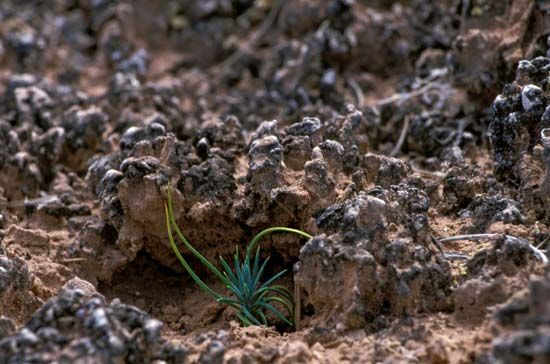
A biological soil crust is a thin, living layer formed in the uppermost millimeters of soil by a community of specialized organisms. These crusts are primarily found in dry or extremely cold regions where harsh conditions limit vascular plant growth, often covering over 70 percent of the ground in such areas.1
The crust is composed of cyanobacteria, bacteria, algae, microfungi, lichens, and mosses. These organisms secrete sticky mucilage that glues soil particles together, providing essential soil stabilization, water retention, and fertility.1
Ecologically, these crusts are vital for fixing carbon and converting atmospheric nitrogen into nutrients for the ecosystem. Because they are brittle when dry, they are highly susceptible to mechanical damage from trampling or vehicles, with recovery times ranging from decades to over a millennium.1
Which organisms make up a biological soil crust?
Biological soil crusts are composed of a diverse community of specialized organisms that aggregate soil particles. These include:
- Cyanobacteria: Often the first to colonize bare ground, these organisms—particularly the genus Microcoleus—secrete a sticky mucilage that glues soil particles together.1
- Bacteria: Various bacterial species contribute to the crust’s biological makeup.1
- Algae: Including green algae, which, like cyanobacteria, are early colonizers.1
- Microfungi: These microscopic fungi are integral components of the crust community.1
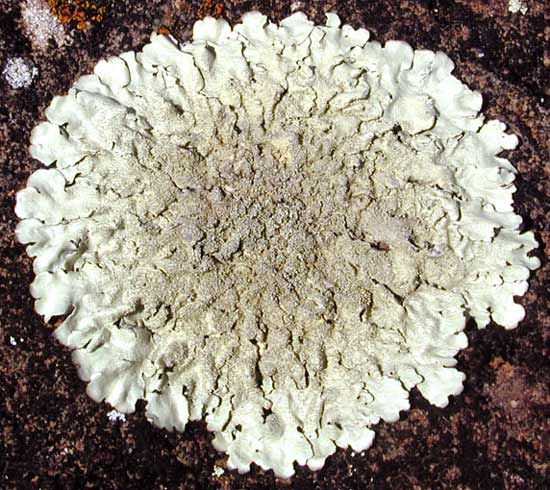
- Lichens: These typically colonize the soil after it has been stabilized by earlier microbial growth.1
- Mosses: Like lichens, mosses require stable soil strata to establish themselves.1
Where are biological soil crusts usually found?
Biological soil crusts are primarily found in open spaces within dry and extremely cold regions across all continents. These environments are characterized by harsh conditions that inhibit the growth of vascular plants, allowing the crusts to thrive and often cover more than 70 percent of the ground surface.1
Their specific distribution is often influenced by local climate and soil dynamics, particularly the presence of freezing temperatures and frost heaving, which dictate the morphology of the crusts:
- Flat: Found in areas where freezing is rare and cyanobacteria are the dominant organisms.1
- Rugose: Occur in areas where freezing is rare but lichens or mosses dominate.1
- Pinnacled: Found in regions where freezing and frost heaving are common, with cyanobacteria as the primary component.1
- Rolling: Prefer areas where freezing and frost heaving are common, but where lichens or mosses are the dominant cover.1
How do biological soil crusts help prevent soil erosion?
Biological soil crusts serve as a critical defense against soil erosion by physically stabilizing the ground surface. This stabilization is primarily achieved through the activity of specialized microorganisms, particularly filamentous cyanobacteria such as those in the genus Microcoleus.1
These organisms secrete a sticky, mucilaginous substance around their cells and filaments. As they move through the soil when moistened, they leave behind trails of this material, which acts as a biological glue that binds soil particles together. This process creates a cohesive crust that is far more resistant to wind and water displacement than loose, bare soil.1
Additionally, the physical structure of the crust plays a role in erosion control:
- Surface Roughness: Crusts with irregular or roughened surfaces effectively slow down rainwater runoff, which reduces the kinetic energy that would otherwise wash away topsoil.1
- Water Infiltration: By absorbing water and increasing the soil’s capacity to hold moisture, these crusts help manage surface flow, preventing the rapid runoff that often leads to erosion in arid environments.1
Sources
- Biological soil crust — Encyclopædia Britannica
- Tundra - Soils — Encyclopædia Britannica
- duricrust - Rock type, terrain, and water table fluctuations — Encyclopædia Britannica
- soil - Water runoff — Encyclopædia Britannica
Published on · 3 min read