Lichen
Most botanists agree that the primary method of lichen reproduction is vegetative, meaning portions of an existing lichen break off and disperse to establish…
How do lichens reproduce and spread to new habitats?
Most botanists agree that the primary method of lichen reproduction is vegetative, meaning portions of an existing lichen break off and disperse to establish new growth nearby. Because the natural reassociation of fungal spores and algae is rare or nonexistent in many species, these vegetative mechanisms are essential for the survival and spread of the lichen community.12
Methods of Propagation
Lichens utilize several specialized structures to distribute their symbiotic association:
- Soredia: These are small, effective structures consisting of one or more algal cells enveloped by fungal filaments (hyphae). They can develop into a new thallus under suitable conditions.2
- Isidia: These are small, thalloid extensions of the lichen body that serve in asexual propagation when they break off from the parent thallus.2
- Fragmentation: Lichens lacking specialized structures may simply propagate when pieces of their thalli break off and fall away.12
- Hymenial Algae: In a few specific cases, such as the genera Endocarpon and Staurothele, algal cells are discharged alongside fungal spores, allowing the association to be re-formed upon germination.2
While many lichen fungi produce numerous spores, these are often considered functionless regarding the propagation of the lichen association itself, as the necessary algal partners are not always available to re-form the community.2
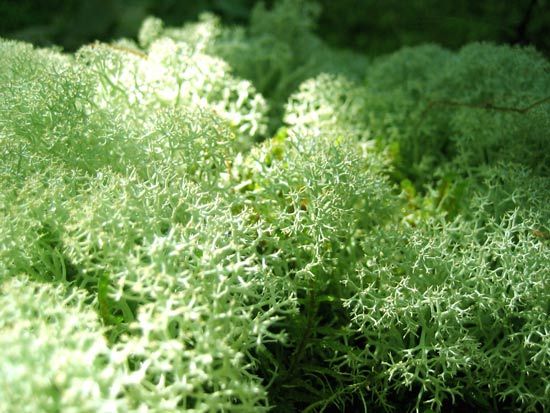
How do scientists use lichens as bioindicators of environmental health?
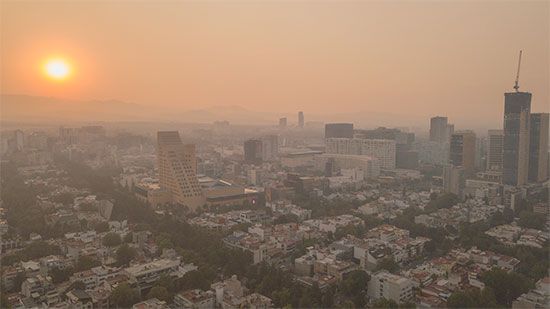
Lichens are widely recognized as effective biological indicators of air quality because they lack mechanisms to regulate the substances they absorb from their environment. Instead of having protective barriers, lichens incorporate atmospheric particles and pollutants directly into their thallus, or body, where these substances accumulate over time.4
How Lichens Indicate Air Quality
- Sensitivity to Pollution: Certain lichen species are highly sensitive to pollutants, particularly sulfur dioxide. As urban air pollution increases, these sensitive species often disappear, leading to the formation of “lichen deserts” in city centers where air quality is poor.4
- Monitoring Health: Scientists observe the presence, diversity, and health of lichen communities to assess environmental conditions. A decline in species richness or the absence of specific sensitive lichens serves as a warning sign of degraded air quality.4
- Slow Recovery: Because lichens grow very slowly, they are not always quick to recolonize areas even after air quality improves. Their recovery depends on factors like the ability of species to disperse from surrounding landscapes and the availability of suitable habitats.4
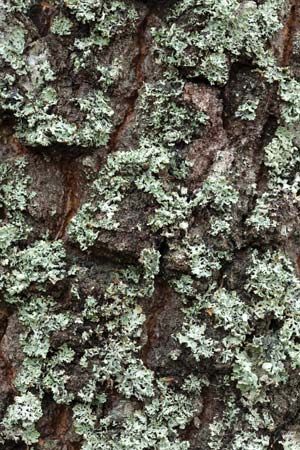
What is lichen and how does it form as a symbiotic organism?
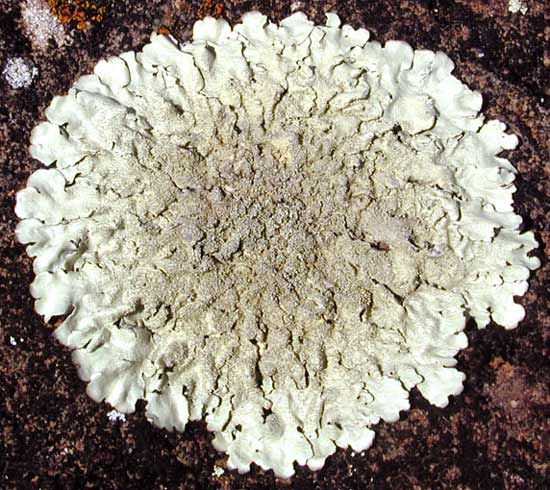
A lichen is a complex, plantlike organism that functions as a community rather than a single entity. It consists of a symbiotic association between a fungus (the mycobiont) and one or more photosynthetic partners, typically algae or cyanobacteria (the phycobiont).1
The Symbiotic Relationship
The formation of a lichen is based on a mutually beneficial exchange of resources:
- Photosynthetic Contribution: The algae or cyanobacteria produce simple carbohydrates through photosynthesis, which are then absorbed by the fungus and converted into other forms of energy. The photosynthetic partner also provides essential vitamins to the fungus.12
- Fungal Contribution: The fungus provides structural support and protection. It absorbs water vapor from the air and creates shade, which shields light-sensitive algae from intense exposure. Furthermore, the fungus is responsible for the characteristic shape of the thallus, the lichen’s body shape of the thallus, the lichen’s body.12
While once thought to be a simple two-part association, modern research reveals that many lichens also include specific yeasts and bacteria within their structure.1
How are lichens used by humans in science, medicine, and industry?
Humans have utilized lichens for centuries across various fields, leveraging their unique chemical properties and biological resilience.
Scientific and Industrial Applications
- Bioindicators: Lichens are widely used as biological indicators of air quality. Because they absorb substances directly from the atmosphere without protective barriers, their presence or absence in an area helps scientists monitor levels of air pollution.43
- Dyes: Historically, lichens were primary sources of natural dyes for wool and silk. One notable example is orchil, a purple or red-violet dye. While synthetic dyes have largely replaced them in textiles, lichen-derived litmus remains a standard acid-base indicator in laboratories.4
- Perfumes: Certain lichens, such as Evernia prunastri, are used in the manufacture of perfumes to provide unique aromatic qualities.4
Medicinal and Dietary Uses
- Medicine: While lichens generally have limited medical application, some have been used traditionally to treat conditions like diabetes, nephritis, and catarrh. Modern research is currently exploring their potential in the pharmaceutical industry due to their antibiotic and antiviral properties.43
- Food: Lichens serve as a food source for both animals and humans. For example, Iceland moss (Cetraria islandica) has been used in diets or mixed with bread. In some regions, such as parts of Asia, lichens are incorporated into stews and spice blends like garam masala.43
Sources
- lichen — Encyclopædia Britannica
- fungus - Form and function of lichens — Encyclopædia Britannica
- Little Lovely Lichens - “Little Lovely Lichens” transcript — Encyclopædia Britannica
- fungus - Basic features of lichens — Encyclopædia Britannica
- Acid rain - Effects on forested and mountainous regions — Encyclopædia Britannica
- oxide - Oxides of sulfur — Encyclopædia Britannica
- Little Lovely Lichens - Learn more — Encyclopædia Britannica
- lichen — Merriam-Webster
- Perfume — Encyclopædia Britannica
Published on · 4 min read