Bison
Bison are distinct from other large mammals, such as domestic cattle and true buffalo, due to several key physical characteristics. You can easily…
What are the physical characteristics that distinguish bison from other large mammals?
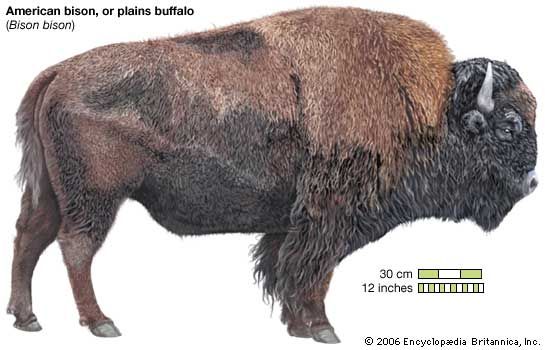
Bison are distinct from other large mammals, such as domestic cattle and true buffalo, due to several key physical characteristics. You can easily distinguish them by focusing on the “three H’s”: home, hump, and horns.12
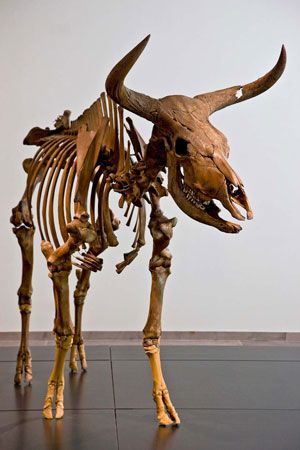
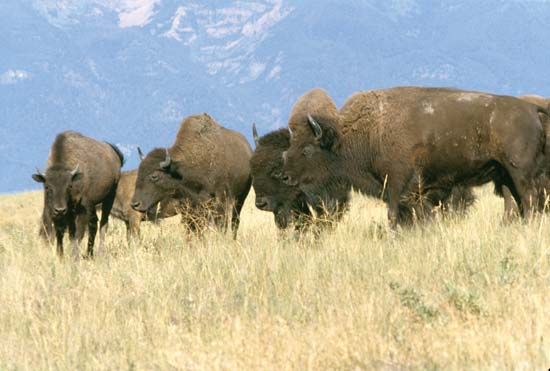
- Hump: Bison possess a pronounced muscular hump at the shoulders, which is absent in buffalo. This feature allows the bison’s head to function as a plow, enabling it to sweep away snow during winter.12
- Horns: Unlike the large, sweeping horns of buffalo—which can reach over 6 feet in length—bison have much shorter, sharper, and upcurved horns.12
- Head and Coat: Bison have a broad, heavy head that is carried low and cannot be raised to shoulder level. They are covered in a dense, coarse, dark brown coat that grows especially long on the head, neck, and shoulders, typically forming a beard on the chin.13
- Anatomy: Compared to domestic cattle, bison are larger and possess 14 ribs instead of 13.1
Where are bison found in the wild, and what is their natural habitat?
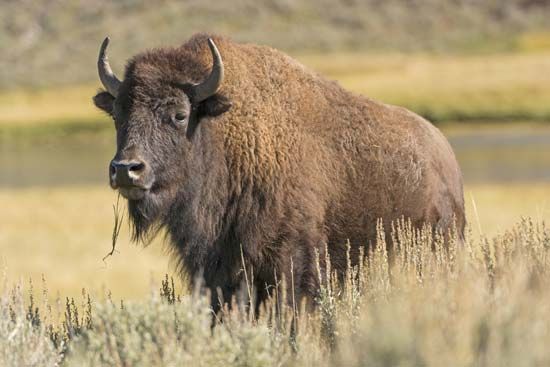
Bison are found in the wild today within small, protected areas that represent only a fraction of their historical ranges. Their natural habitats vary by species:2
- American Bison (Bison bison): Historically, the plains bison inhabited the Great Plains and most of the United States east of the Rocky Mountains, as well as parts of Canada. The wood bison subspecies historically occupied northwestern Canada and Alaska. Today, they are primarily found in protected preserves and ranches across North America.21
- European Bison (Bison bonasus): Unlike their American counterparts, European bison are adapted to woodlands. Their original range extended across Europe to the Volga River and the Caucasus Mountains. Following their extinction in the wild after World War I, they were reestablished in protected areas, most notably the Białowieża Forest in Poland and Belarus, with additional populations in Lithuania, Russia, and Ukraine.2
What are the differences between American bison and European bison?
The American bison (Bison bison) and the European bison (Bison bonasus), also known as the wisent, are distinct species within the genus Bison. While they share many oxlike characteristics, they differ in their physical build and natural habitats.2
Physical and Behavioral Differences
- Build and Stature: The European bison is slightly larger and longer-legged than the American bison, but it is less heavily built. The American bison is characterized by a more robust, heavy-set frame.2
- Habitat: A primary distinction lies in their preferred environments. The American bison is historically associated with the vast grasslands and plains of North America, whereas the European bison is adapted to life in woodlands.2
- Conservation Status: Both species suffered drastic population declines due to human activity. The European bison was once extinct in the wild following World War I but has since been reestablished through zoo-bred populations in protected areas like the Białowieża Forest. The American bison, which once numbered in the millions, is now primarily maintained in conservation herds and commercial ranches.2
What is a bison?
A bison (genus Bison) is a large, oxlike grazing mammal belonging to the family Bovidae. There are two distinct species: the American bison (B. bison), native to North America, and the European bison (B. bonasus), or wisent, native to Europe.2
American bison are characterized by a heavy, broad head, a pronounced shoulder hump, and dark brown, shaggy fur. They are powerful animals; a mature bull can weigh over 900 kg (1,980 pounds) and stand about 2 meters (6.5 feet) tall at the shoulder. They are social animals that live in bands, primarily grazing on grass and herbs.21
Both species were once decimated by hunting, leading to near-extinction in the 19th and early 20th centuries. Today, they survive primarily in protected areas, zoos, and ranches, where conservationists work to maintain their populations and genetic diversity.2
Sources
- American bison — Merriam-Webster
- bison — Encyclopædia Britannica
- What’s the Difference Between Bison and Buffalo? — Encyclopædia Britannica
- Water buffalo — Encyclopædia Britannica
- bovid — Encyclopædia Britannica
Published on · 3 min read