What Is the Largest Antelope?
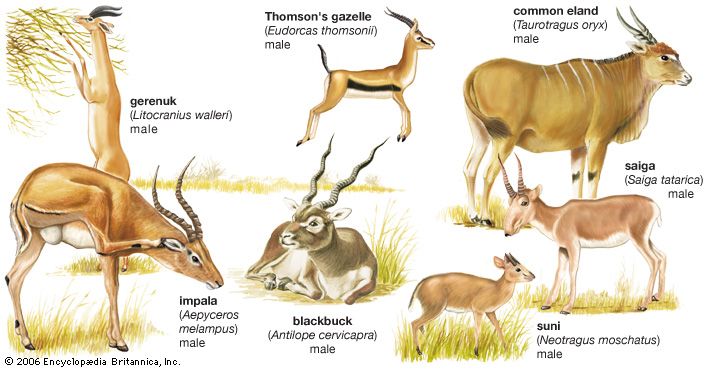
The eland is the largest antelope in the world. There are two species, the giant (or Derby) eland and the common (or Cape) eland, both of which are members…
What is the largest antelope?
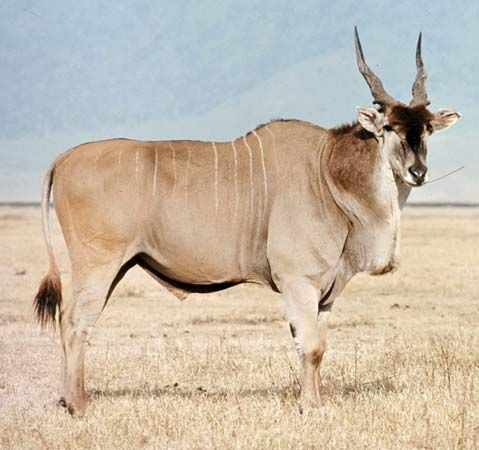
The eland is the largest antelope in the world. There are two species, the giant (or Derby) eland and the common (or Cape) eland, both of which are members of the bovid family.12
Bulls of both species can reach impressive sizes, with shoulder heights of up to 180 cm (6 feet), body lengths of 340 cm (11 feet), and weights reaching 1 metric ton (2,200 pounds). Despite their massive size, they are known for being agile jumpers, capable of clearing 2-meter (7-foot) fences. While the common eland is currently considered a species of least concern, the giant eland is classified as vulnerable due to habitat loss and hunting.12
What is the smallest species of antelope?
The royal antelope (Neotragus pygmaeus) is the world’s smallest species of antelope. This diminutive animal, which is native to the lowland rainforests of West Africa, stands approximately 25 cm (10 inches) tall and typically weighs between 2.5 and 3 kg (5.5 to 7 pounds).34
Physically, the royal antelope resembles a hare, featuring large eyes, a short tail, and overdeveloped hindquarters that allow for quick, bounding movements through dense vegetation. It is a secretive, largely nocturnal browser that feeds on leaves, forbs, and vines. While the similar dwarf antelope is only slightly larger, the royal antelope remains the smallest member of the Bovidae family.34
How do elands differ from deer in their family classification?
Elands and deer belong to distinct biological families within the order Artiodactyla. While both are hoofed ruminants, they are classified into separate families based on significant anatomical differences, primarily regarding their headgear.51
Family Classification
- Elands: These animals are members of the bovid family (Bovidae). This family also includes cattle, sheep, goats, and bison.61
- Deer: These animals belong to the family Cervidae.5
Key Differences
The primary distinction lies in the nature of their head appendages:1
- Horns: Bovids, including elands, possess true horns. These consist of a keratin sheath covering a bony core that grows from the skull’s frontal bones. Bovid horns do not branch and are never shed.1
- Antlers: Deer possess antlers, which are distinct from horns. Unlike horns, antlers are typically found only on males (with the exception of one species), are branched, and are shed and regrown annually.51
Why are giant elands considered a vulnerable species?
The giant eland (Tragelaphus derbianus) is classified as a vulnerable species by the International Union for Conservation of Nature (IUCN) primarily due to a significant decline in its population, which is now estimated at fewer than 10,000 adults.2
This decline is driven by two main factors:
- Habitat Loss: The ongoing conversion of the species’ natural habitat into land for agriculture has severely restricted its range.27
- Hunting: The species faces persistent pressure from both poachers and trophy hunters.27
The situation is particularly dire for the western giant eland (T. derbianus derbianus), which is considered highly endangered with a population of only about 250 individuals, restricted to a few reserves in Senegal. Conservationists emphasize that without effective protection in these remaining refuges, the survival of this subspecies may depend entirely on captive breeding programs.2
Sources
- What is the largest antelope? — Encyclopædia Britannica
- eland — Encyclopædia Britannica
- royal antelope — Encyclopædia Britannica
- antelope — Encyclopædia Britannica
- deer — Encyclopædia Britannica
- bovid — Encyclopædia Britannica
- eland: Top Questions — Encyclopædia Britannica
Published on · 2 min read