Black Elk Peak
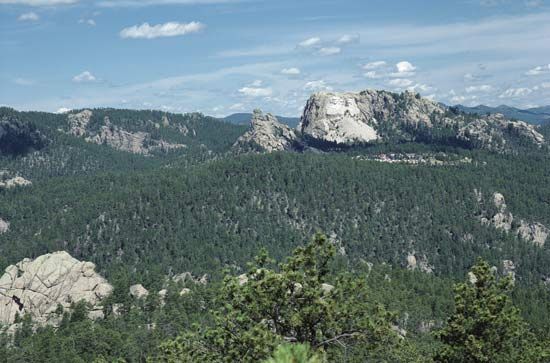
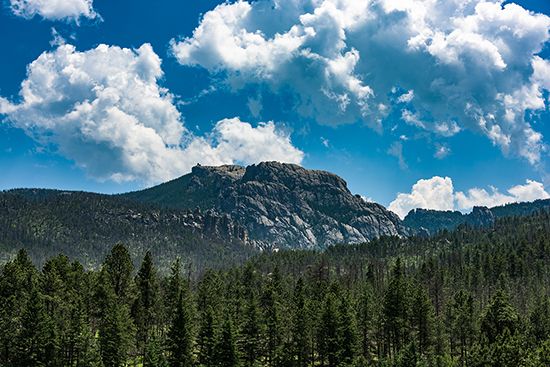
Black Elk Peak is the highest point in the Black Hills and in South Dakota, reaching an elevation of 7,242 feet (2,207 metres). It holds the distinction of…
What is Black Elk Peak?
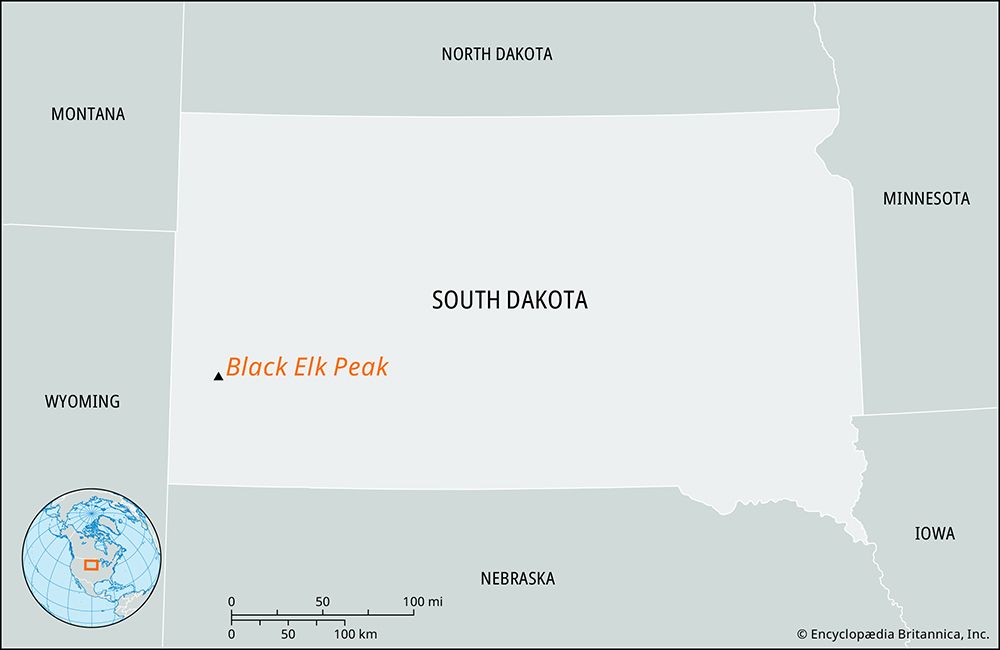
Black Elk Peak is the highest point in the Black Hills and in South Dakota, reaching an elevation of 7,242 feet (2,207 metres). It holds the distinction of being the highest point in North America east of the Rocky Mountains.12
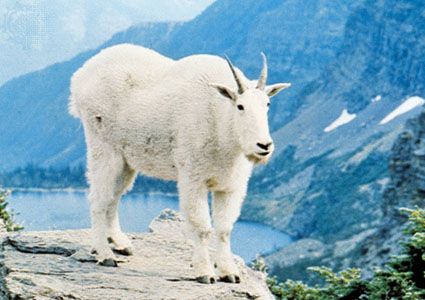
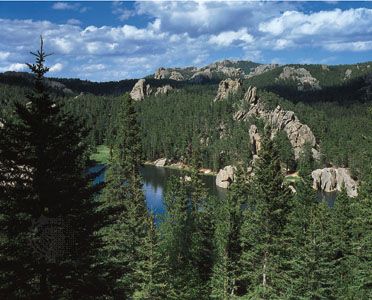
Located near the Mount Rushmore National Memorial, this granite peak is celebrated for its scenic vistas and the presence of mountain goats. The site was historically named for Gen. William S. Harney, a commander involved in the Plains Wars, but it was officially renamed Black Elk Peak by the U.S. Board on Geographic Names in 2016. Several hiking trails within Custer State Park lead to the summit, making it a popular destination for outdoor recreation.12
Who was Black Elk and why is the peak named after him?
Black Elk (born c. 1863) was an Oglala Lakota warrior, medicine man, and holy man who lived through a transformative and turbulent era in 19th-century American history. He is perhaps best known as the subject of the 1932 autobiography Black Elk Speaks, which documented his mystical visions, his participation in battles against the U.S. Army—including the Battle of the Little Bighorn—and his experiences with the Ghost Dance movement and the Wounded Knee Massacre. Later in life, he converted to Roman Catholicism, taking the name Nicholas, and served as a catechist until his death in 1950.1
The peak, formerly named for Gen. William S. Harney, was officially renamed Black Elk Peak by the U.S. Board on Geographic Names in 2016. This renaming honors Black Elk’s legacy and his deep connection to the Black Hills, a region held sacred by the Oceti Sakowin and other Native American peoples.34
What are the Black Hills and why are they culturally significant?
The Black Hills are an isolated, eroded mountain region spanning western South Dakota and northeastern Wyoming. Rising approximately 3,000 feet above the surrounding plains, the region is characterized by deep valleys and well-forested slopes, culminating in Black Elk Peak, the highest point in South Dakota.4
Cultural Significance
The Black Hills hold profound spiritual and historical importance, serving as a sacred territory for the Western Sioux (Lakota) and other Native American peoples, including the Cheyenne, Kiowa, Arapaho, and Crow.4
Despite the Second Treaty of Fort Laramie (1868) guaranteeing the region to the Sioux, the discovery of gold in 1874 led to an influx of miners and subsequent conflict. The U.S. government forced the Sioux to relinquish their rights in 1877. In 1980, the U.S. Supreme Court ruled the land was taken illegally and authorized compensation; however, the Sioux have refused the payment, maintaining that the Black Hills are their heritage and a fundamental treaty right.46
How did the Plains Wars shape the history of this region?
The Plains Wars were a series of conflicts driven by the westward expansion of the United States, the search for resources like gold, and the desire of Native American peoples to retain their sovereign lands and traditional ways of life. These wars fundamentally reshaped the region by dismantling the autonomy of Plains tribes and forcing them onto reservations.78
The conflict was characterized by:
- Territorial Encroachment: The discovery of gold in the Black Hills and the establishment of routes like the Bozeman Trail repeatedly violated treaties, such as the Treaties of Fort Laramie, leading to cycles of violence.91011
- Military Strategy: The U.S. Army utilized its logistical superiority and unconventional warfare to shatter the economic and physical resources of the tribes, often targeting entire communities.710
- Lasting Impact: The wars resulted in the loss of military prestige for Native peoples, devastating psychological effects, and long-standing legal and social struggles for justice and federal recognition.711
Sources
- Black Elk Peak — Encyclopædia Britannica
- Custer State Park — Encyclopædia Britannica
- Black Elk Speaks — Encyclopædia Britannica
- Black Hills — Encyclopædia Britannica
- Sioux: At a Glance — Encyclopædia Britannica
- South Dakota - Settlement and gold rush — Encyclopædia Britannica
- Plains Wars - Legacy of the Plains Wars — Encyclopædia Britannica
- Oceti Sakowin - The beginning of the struggle for the West — Encyclopædia Britannica
- Western colonialism - Advance of the U.S. frontier — Encyclopædia Britannica
- Plains Wars - Defeat of the Plains Indians — Encyclopædia Britannica
- What was Ulysses S. Grant’s relationship with the Lakota Indians? — Encyclopædia Britannica
Published on · 3 min read