Mountain Goat
The mountain goat (Oreamnos americanus) is a North American ruminant native to the continent's western regions. Their natural range extends from Alaska and…
Where are mountain goats found in the wild, and what type of habitat do they prefer?
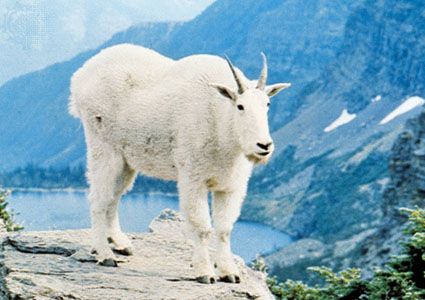
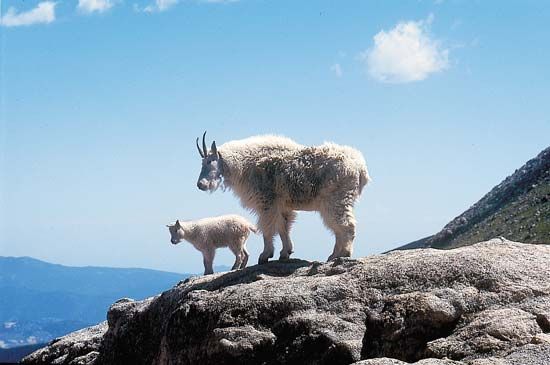
The mountain goat (Oreamnos americanus) is a North American ruminant native to the continent’s western regions. Their natural range extends from Alaska and the Yukon south to Utah, with the largest populations residing in British Columbia. Additionally, they have been introduced to areas outside their native range, including the Rocky Mountains of Colorado, the Black Hills of South Dakota, and the Olympic Peninsula.1
These animals are highly specialized for life on steep, rugged cliffs, which provide a secure habitat that protects them from predators. They are agile climbers capable of navigating icy, snow-covered terrain ranging from ocean shores to high-altitude glaciated mountain tops. While they prefer the security of these cliffs, they occasionally venture to lower elevations to visit mineral licks, particularly during the summer months to support hair growth and lactation.1
What are the main threats to mountain goat populations, and are there any conservation efforts in place to protect them?
Mountain goat populations are sensitive to human impacts, which can cause their numbers to fluctuate significantly. Because of this vulnerability, these animals are subject to ongoing monitoring to ensure that corrective management strategies can be applied in a timely manner.1
While specific threats are not detailed beyond their general sensitivity to human activity, conservation efforts have successfully restored mountain goats to their former abundance in several regions. These initiatives include reintroduction programs that have established populations in areas where they were not previously native, such as the Olympic Peninsula, Kodiak Island, and parts of the Rocky Mountains. However, not all restoration attempts have been successful; for instance, recent efforts to reintroduce the species to Vancouver Island failed.1
How do mountain goats compare to other goat species in terms of their climbing abilities?
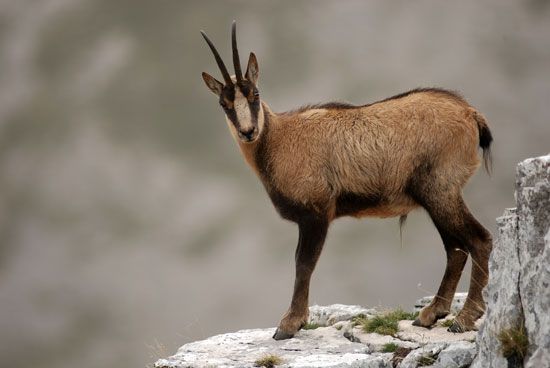
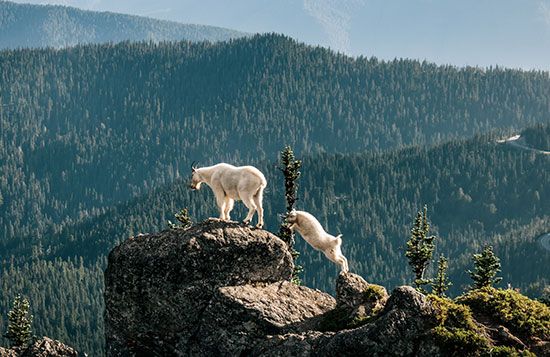
Mountain goats (Oreamnos americanus) are highly specialized, agile, and methodical climbers uniquely adapted to the insecure footing of steep, icy, and snow-covered cliffs. While they are members of the goat antelope tribe (Rupicaprini) and share this affinity for precipitous, rocky terrain with relatives like the chamois, serow, and goral, the mountain goat is specifically noted for its ability to navigate extreme vertical environments ranging from ocean shores to glaciated mountain tops.12
Their climbing prowess is supported by a stocky build, muscular legs, and broad hooves that provide stability on terrain where predators are reluctant to follow. Unlike true goats or sheep, which are more differentiated in their morphology, mountain goats have evolved specifically to exploit these cliff habitats as a primary defense mechanism. While other goat antelopes are also well-adapted to rocky landscapes, the mountain goat’s extreme specialization allows it to thrive in some of the most rugged and inaccessible environments in North America.12
What are the distinctive physical characteristics of mountain goats?
Mountain goats (Oreamnos americanus) possess several distinctive physical characteristics that allow them to thrive in rugged, high-altitude environments:
- Size and Build: They are stocky animals that stand approximately 1 metre (39 inches) at the shoulder. Males are generally larger, weighing over 120 kg (260 pounds), while females typically weigh between 60 and 90 kg (130–200 pounds).1
- Coat: Their appearance is defined by a coarse, white, shaggy outer coat that covers a thick, woolly underfur, providing insulation against extreme cold.1
- Horns: Both sexes bear sharp, black, slightly backward-curving horns that measure 5–25 cm (2–10 inches) in length. Unlike true goats, they do not butt heads; instead, they use these horns to stab rivals.1
- Adaptations for Terrain: They feature muscular legs and broad hooves that provide the stability necessary for navigating steep, icy, and snow-covered cliffs.1
- Other Features: A beard frames their slender muzzle. Additionally, mature males develop very thick skin, which serves as body armor during aggressive encounters, and they possess large supraoccipital glands that enlarge during the rut.12
Sources
- mountain goat — Encyclopædia Britannica
- goat antelope — Encyclopædia Britannica
Published on · 3 min read