Black Pepper
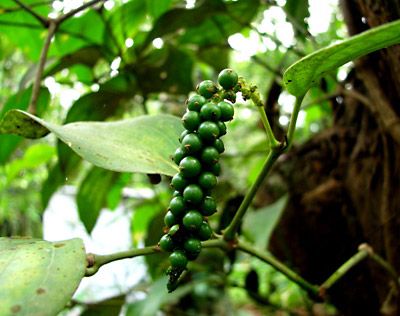
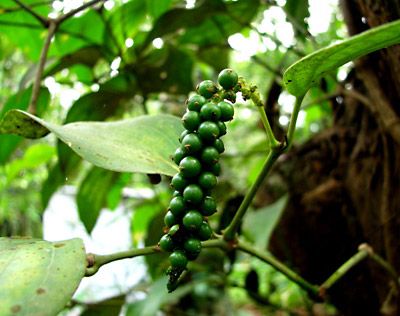
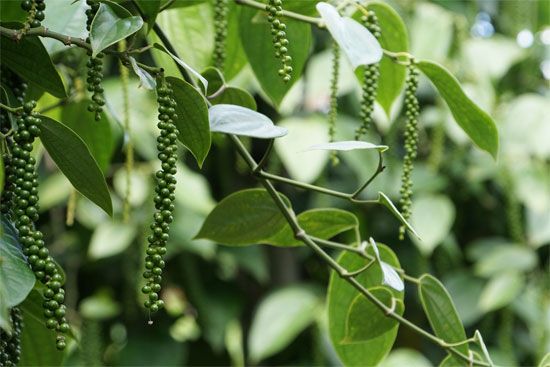
The black pepper plant (Piper nigrum) produces different spices based on how its drupes—commonly called peppercorns—are processed after harvest.
What parts of the black pepper plant are used to produce different spices?
The black pepper plant (Piper nigrum) produces different spices based on how its drupes—commonly called peppercorns—are processed after harvest.1
- Black Pepper: This spice is produced by picking the fruits when they begin to turn red and immersing them in boiling water for approximately 10 minutes. This process causes the outer skin to turn dark brown or black. The fruits are then sun-dried for several days before being ground.1
- White Pepper: This variety is obtained by removing the dark outer layer of the fruit, known as the pericarp. The outer coating is softened by soaking the berries in water or keeping them in moist heaps, after which the skin is removed through washing, rubbing, or mechanical grinding. Because the outer layer is removed, white pepper is generally less pungent than black pepper.1
It is important to note that while other plants like the Sichuan pepper are also called “pepper,” they are unrelated to the black pepper plant and utilize different parts of their respective plants, such as the dried papery fruit husks.2
How has black pepper influenced history and trade?
Black pepper (Piper nigrum) has been a primary driver of global commerce and exploration for millennia. Native to India’s Malabar Coast, it was one of the earliest spices known to humanity, serving not only as a highly valued condiment but also as a medium of exchange in ancient Greece and Rome, where it was even used to levy tributes.3
During the Middle Ages, the distribution of pepper in Europe was controlled by a virtual monopoly held by Venetian and Genoese merchants. This exclusivity created immense wealth for these city-states and incentivized other European powers to seek direct maritime routes to the spice-producing regions of the East. The resulting “voyages of discovery” fundamentally reshaped world history:13
- Exploration: The quest for pepper and other spices spurred the expeditions of explorers like Christopher Columbus, Vasco da Gama, and Ferdinand Magellan.14
- Colonialism: The desire to control the spice trade led to the rise of powerful entities like the Dutch East India Company and the French East India Company, as well as the establishment of the Portuguese empire in the East.14
How is black pepper cultivated and harvested?
The black pepper plant (Piper nigrum) is a perennial woody climber that thrives in tropical climates with high temperatures, consistent soil moisture, and partial shade. It is typically propagated through stem cuttings, which are planted near trees or poles that serve as support for the vines as they grow.15
Cultivation
The plants begin to bear fruit within two to five years of planting and can remain productive for up to 40 years. They are often cultivated as standalone crops or interspersed within tea or coffee plantations.1
Harvesting and Processing
The fruits, known as drupes or peppercorns, are harvested when they begin to turn red. The processing method determines the final spice:1
- Black Pepper: The harvested fruits are immersed in boiling water for approximately 10 minutes, which turns them dark brown or black. They are then sun-dried for three to four days.1
- White Pepper: The dark outer layer (pericarp) is removed by softening the berries in moist heaps or submerged water for several days, followed by washing, rubbing, or mechanical grinding.1
What is black pepper and where does it originate from?
Black pepper (Piper nigrum) is a perennial, woody climbing vine belonging to the Piperaceae family. It is widely cultivated in tropical regions for its fruits, known as peppercorns, which are processed into a hot, pungent spice used globally in cooking and medicine.51
The plant is native to the Malabar Coast of India. Its historical significance is profound; the word “pepper” is derived from the Sanskrit term pippali, which originally referred to long pepper (Piper longum) before being conflated with P. nigrum.16
It is important to note that black pepper is distinct from the various chili peppers (Capsicum genus) native to the Americas. The two were conflated during the Age of Discovery when European explorers, including Christopher Columbus, mistook the spicy plants they found in the New World for the Indian pepper they were seeking.6
Sources
- black pepper — Encyclopædia Britannica
- Sichuan pepper — Encyclopædia Britannica
- spice trade — Encyclopædia Britannica
- India - The Portuguese — Encyclopædia Britannica
- Piperaceae — Encyclopædia Britannica
- 11 Questions About Useful Plants Answered - What have spices been used for across human history? — Encyclopædia Britannica
- List of English Words from India - Pepper — Encyclopædia Britannica
Published on · 3 min read