Peperomia
Peperomia plants are typically found in tropical and subtropical regions across the globe. These fleshy herbs are native to various environments within these…
Where are Peperomia plants typically found in their natural habitats?
Peperomia plants are typically found in tropical and subtropical regions across the globe. These fleshy herbs are native to various environments within these climates, where they often grow close to the soil. Additionally, some species are epiphytic, meaning they naturally grow on the branches of trees rather than in the ground.12
Specific examples include the watermelon peperomia (P. argyreia), which is native to Brazil, and the baby rubberplant (P. obtusifolia), which is also native to tropical areas.1
What is the etymology of the name ‘Peperomia’ and how does it relate to the plant’s characteristics?
The name Peperomia is derived from New Latin, combining the Greek word peperi (meaning “pepper”) and homoios (meaning “like” or “similar”).2
This etymology directly reflects the plant’s botanical classification, as Peperomia is a genus within the pepper family (Piperaceae) the pepper family (Piperaceae). The name highlights the morphological similarities between these fleshy herbs and the true black pepper plant, despite their distinct appearances. While Peperomia species are primarily cultivated for their attractive, thick, and often variegated foliage rather than for culinary spice, their placement within the Piperaceae family confirms their evolutionary relationship to the common pepper plant.12
How many species are included in the Peperomia genus, and what are some popular varieties?
The Peperomia genus is quite extensive, comprising more than 1,000 species of tropical and subtropical fleshy herbs, annuals, and perennials.1
Several species have become popular houseplants due to their attractive, waxy, and often patterned foliage. Notable varieties include:
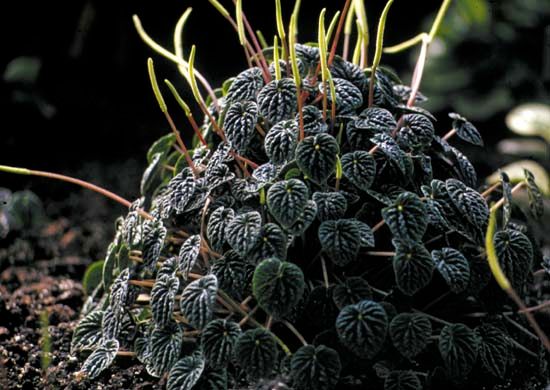
- Watermelon peperomia (P. argyreia): A Brazilian native known for its dark red leafstalks and leaves marked with broad, creamy bands that run parallel to the veins.1
- Baby rubberplant (P. obtusifolia): A popular tropical species that grows close to the soil, featuring reddish stems and leaves with small notches near the tips and red or white margins.1
- General Houseplant Varieties: Many Peperomia species are cultivated for their growth habits, which range from miniature rosettes to trailing vines, often featuring corrugated leaves decorated with silver or creamy white patterns.3
What are the common care requirements for Peperomia plants as houseplants?
While the provided search results detail the botanical characteristics and origins of Peperomia, they do not contain specific information regarding the light, water, or humidity requirements for their care as houseplants.
Because the provided source material focuses on the taxonomy and physical description of the genus rather than horticultural maintenance, I cannot provide accurate care instructions based on these results.
Sources
- Peperomia — Encyclopædia Britannica
- peperomia — Merriam-Webster
- houseplant - Foliage plants — Encyclopædia Britannica
Published on · 2 min read