Black Rat Snake
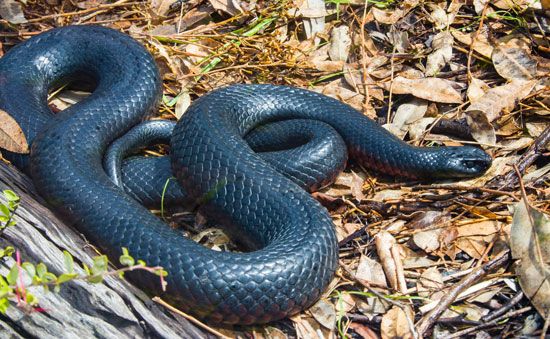
The black rat snake (Pantherophis obsoletus) is a heavy-bodied, nonvenomous snake native to the eastern and central United States. While the term has…
What is Black rat snake?
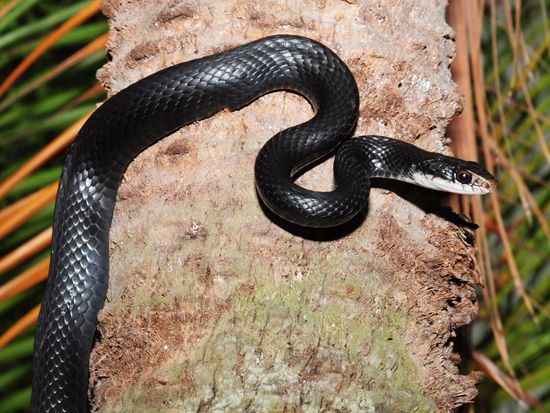
The black rat snake (Pantherophis obsoletus) is a heavy-bodied, nonvenomous snake native to the eastern and central United States. While the term has historically been used for various species, genomic data has clarified that it belongs to a complex of four North American rat snake species.1
Physical Characteristics and Behavior
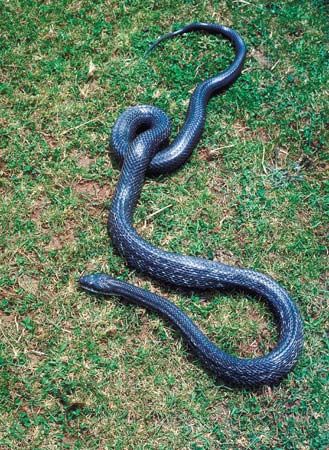
Adults typically feature a glossy black back with a white underside, chin, and throat, though coloration can vary based on environmental factors like temperature. They are proficient climbers and are known to hunt rodents, birds, and other small animals by constriction.1
When threatened, they may vibrate their tails to mimic the sound of a rattlesnake, a defensive behavior that often leads to them being mistaken for venomous species. Despite this, they are beneficial to ecosystems as they help control rodent populations. They are generally considered a species of least concern by the International Union for Conservation of Nature.1
How do black rat snakes use constriction to hunt their prey?
Black rat snakes (Pantherophis obsoletus) are nonvenomous predators that rely on constriction to secure and kill their prey, which includes rodents, birds, and other small animals.42
The process of constriction typically follows these steps:
- Strike and Hold: The snake first strikes its prey and secures it firmly using its teeth.5
- Coiling: Once the prey is gripped, the snake rapidly throws a series of body coils around the animal.5
- Suffocation: The snake tightens these coils until the prey can no longer breathe, leading to death by suffocation.5
Contrary to common belief, this method rarely results in crushed or broken bones; the primary mechanism is the prevention of respiration. After the prey has been subdued, the black rat snake swallows it whole.52
What is the difference between brumation and hibernation in reptiles?
While the terms are often used interchangeably to describe winter dormancy, they refer to distinct physiological processes in different groups of animals. Hibernation is a state of dormancy typically exhibited by heterotherms, such as mammals, while brumation is the term specifically used for winter dormancy in ectothermic vertebrates like reptiles.6
The primary differences include:
- Physiological Regulation: Hibernation involves complex metabolic changes in warm-blooded animals. In contrast, brumation is a state of torpor directly induced by low environmental temperatures. Reptiles remain physiologically active in a sense, but their activity is restricted by the cold.67
- Activity Levels: Unlike true hibernators that may remain in a deep, sustained sleep, brumating reptiles often stir occasionally to drink water, even though they may go without food for several months.7
- Temperature Dependence: Because reptiles are ectotherms, their dormancy is highly dependent on external heat sources. They seek out underground niches to avoid freezing, and their emergence is triggered by rising temperatures rather than internal biological clocks alone.7
Why do some snakes mimic the behavior of venomous species like rattlesnakes?
Some snakes mimic venomous species as a passive defense strategy to avoid predation. This phenomenon is often categorized as Batesian mimicry, where a harmless or mildly venomous species evolves to resemble a dangerous “model” species that possesses a known warning system, such as conspicuous coloration or specific behaviors.89
By mimicking these dangerous traits, the harmless snake gains protection because predators mistake it for the more hazardous model and choose to avoid it. Examples include:8
- Behavioral Mimicry: Many non-venomous snakes, such as the fox snake, vibrate their tails when threatened. When this tail movement occurs against dry leaves, it produces a sound deceptively similar to the rattle of a rattlesnake.10
- Coloration Mimicry: Some harmless species, such as the scarlet snake, display bright, banded patterns of red, black, and yellow that closely resemble the warning colors of highly venomous coral snakes.1112
This strategy relies on predators learning to associate these specific signals with the risk of injury or death, thereby protecting the mimic from attack.11
Sources
- black rat snake — Merriam-Webster
- Black rat snake — Encyclopædia Britannica
- black-tailed rattlesnake — Encyclopædia Britannica
- Black rat snake: Top Questions — Encyclopædia Britannica
- snake - Specializations for securing food — Encyclopædia Britannica
- brumation — Merriam-Webster
- Dormancy - Effects of temperature — Encyclopædia Britannica
- reptile - Avoidance and noise — Encyclopædia Britannica
- reptile - Display of colour — Encyclopædia Britannica
- Batesian mimicry — Encyclopædia Britannica
- Batesian mimicry — Merriam-Webster
- snake - Coloration — Encyclopædia Britannica
- mimicry - Other forms — Encyclopædia Britannica
Published on · 3 min read