Black Rhinoceros
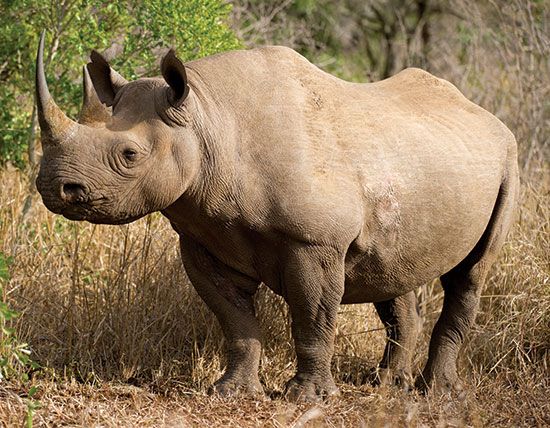
The black rhinoceros (Diceros bicornis) typically lives for 30 to 40 years.
How long do black rhinoceroses typically live, and what is their reproductive cycle like?
The black rhinoceros (Diceros bicornis) typically lives for 30 to 40 years.1
Regarding their reproductive cycle, the species is characterized by a low reproductive rate. Key aspects of their biology include:2
- Sexual Maturity: Females generally reach sexual maturity between the ages of four and five years.1
- Gestation: The gestation period for the black rhinoceros is approximately 15 to 17 months.1
- Births: Females typically give birth to a single calf at a time.2
- Calving Interval: Under normal conditions, females are capable of calving at intervals of approximately 2.5 years.1
Because of this slow reproductive cycle, the loss of breeding-age females—often due to poaching—can significantly hinder the recovery of their populations.2
Where do black rhinoceroses live, and what type of habitat do they prefer?
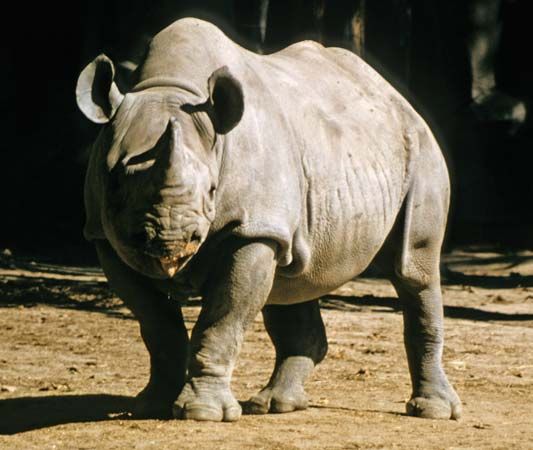
The black rhinoceros (Diceros bicornis) is native to Africa, though its historical range has been significantly reduced due to poaching and habitat loss. Originally found across much of eastern, southern, and central Africa—from the Cape of Good Hope to Sudan and westward toward Nigeria—the species is now restricted to scattered pockets, primarily within protected parks and reserves. Current populations are found in South Africa, Namibia, Zimbabwe, Angola, Mozambique, Malawi, Zambia, Tanzania, Kenya, Botswana, and Swaziland.15
These rhinoceroses are highly adaptable and occupy a diverse array of habitats, including:
- Open plains and savannas
- Sparse thorn scrub and thickets
- Dry forests
- Mountain forests and high-altitude moorlands15
As selective browsers, they thrive in environments where they can forage for vegetation, and in particularly dry regions, they can survive without regular access to surface water by consuming succulent plants like euphorbias.15
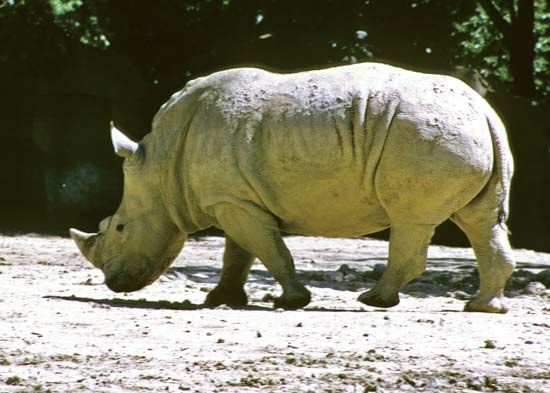
How does the black rhinoceros differ from other rhinoceros species?
The black rhinoceros (Diceros bicornis) is distinct from other rhinoceros species in several key ways, primarily regarding its physical anatomy, behavior, and diet.
Physical and Behavioral Differences
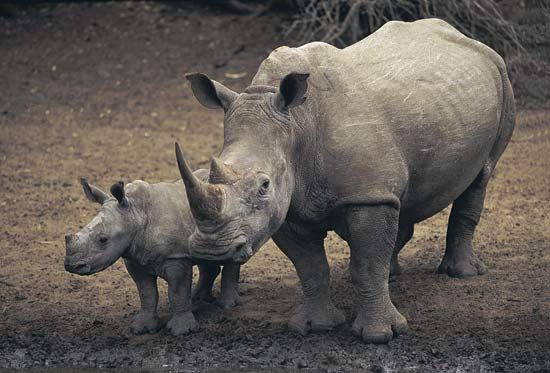
- Lip Structure: The most notable feature of the black rhinoceros is its prehensile upper lip, which protrudes in the middle and is adapted for grasping leaves and twigs. In contrast, the white rhinoceros has a broad, square muzzle adapted for grazing on grass.621
- Fighting Style: Unlike the three Asian species (Indian, Javan, and Sumatran), which fight using razor-sharp lower outer incisor teeth, the black rhinoceros and other African species lack these long tusklike incisors and fight using their horns.5
- Temperament: The black rhinoceros is known for being ill-tempered and unpredictable, often charging at unfamiliar sounds or smells. While other species generally prefer to avoid humans, the black rhinoceros is particularly noted for this aggressive behavior.52
Ecological Distinctions
- Diet: The black rhinoceros is a selective browser, feeding primarily on shrubs and trees rather than grass.21
- Size: It is the third-largest rhinoceros species, standing about 1.5 meters (5 feet) at the shoulder, whereas the white and Indian rhinoceroses are significantly larger.52
How do black rhinoceroses compare to white rhinoceroses in terms of behavior and habitat?
The black rhinoceros (Diceros bicornis) and the white rhinoceros (Ceratotherium simum) are the two African species of rhinoceros. While both are often grayish or brownish in color, they differ significantly in their behavior, dietary needs, and habitat preferences.
Behavioral Differences
- Social Structure: Most rhinoceroses are solitary, but the white rhinoceros is an exception, often living in groups of up to 10 animals.1
- Temperament: The black rhinoceros is notoriously ill-tempered and unpredictable, frequently charging at unfamiliar sounds or smells. While all rhinoceroses may charge if provoked, the black rhinoceros is particularly noted for this aggressive behavior.51
Habitat and Dietary Preferences
- Dietary Specialization: The black rhinoceros is a selective browser that feeds primarily on shrubs, trees, and succulent plants like euphorbias. Because of this, it can survive in dry habitats even without regular access to surface water. In contrast, the white rhinoceros is a grazer with a broad, square muzzle specifically adapted for eating short grasses.52
- Habitat: The black rhinoceros occupies a wide range of environments, including open plains, savannas, thickets, dry forests, and even high-altitude mountain forests. The white rhinoceros is more dependent on surface water and often utilizes shade trees for resting.52
Sources
- black rhinoceros — Encyclopædia Britannica
- rhinoceros — Encyclopædia Britannica
- perissodactyl - Reproduction — Encyclopædia Britannica
- perissodactyl - Social organization and territory — Encyclopædia Britannica
- perissodactyl - Rhinoceroses — Encyclopædia Britannica
- black rhinoceros — Merriam-Webster
Published on · 3 min read