Javan Rhinoceros
The Javan rhinoceros (Rhinoceros sondaicus) functions primarily as a browser within its ecosystem, feeding on vegetation in forests, marshy areas, and…
What role does the Javan rhinoceros play in its ecosystem?
The Javan rhinoceros (Rhinoceros sondaicus) functions primarily as a browser within its ecosystem, feeding on vegetation in forests, marshy areas, and regions of thick bush and bamboo. These animals are known to feed on pioneer plants that dominate gaps in the forest created by fallen trees, which helps shape the structure of their habitat.12
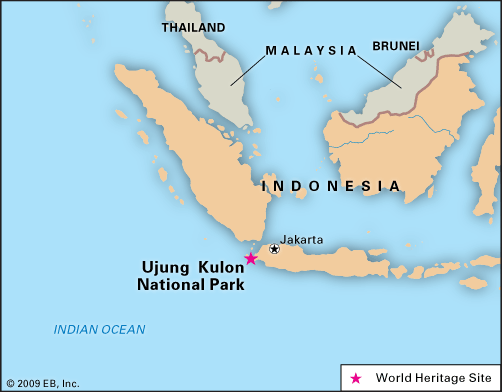
While specific details regarding the Javan rhinoceros’s unique ecological contributions are limited due to its extreme rarity and restricted range in Ujung Kulon National Park, it is recognized as a member of the “charismatic megafauna”. Conservation efforts focused on protecting such species are ethically vital, as they often serve as an “umbrella” to preserve the broader, complex ecosystems and the many lesser-known organisms that share their environment.13
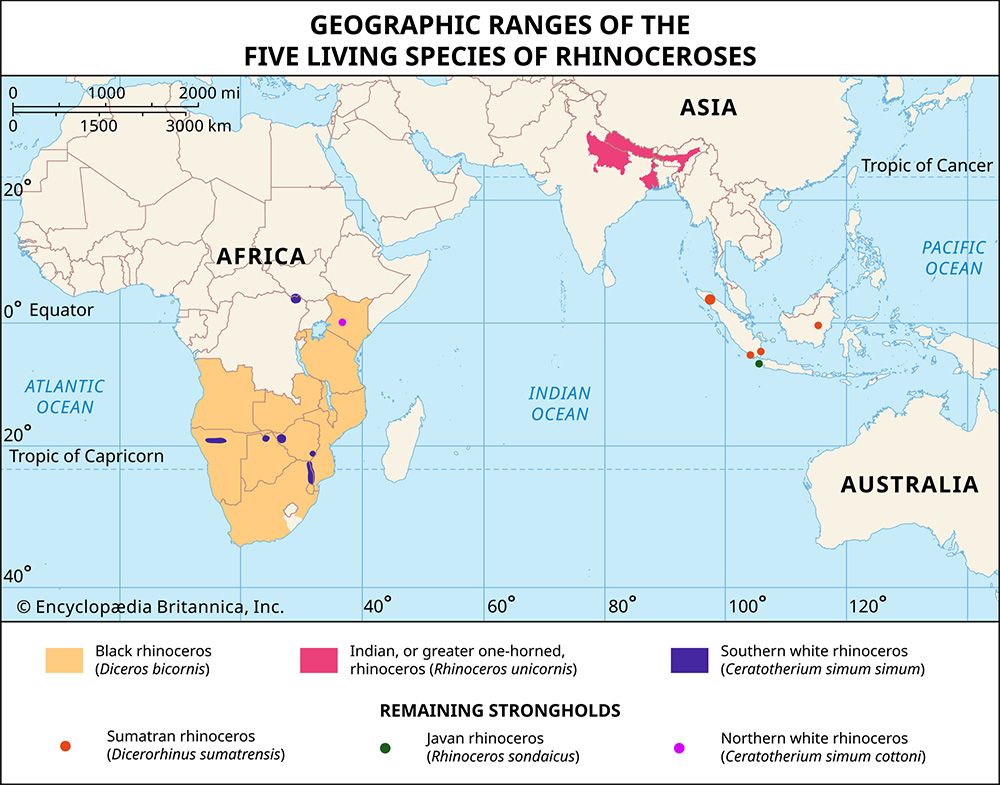
What are the unique physical characteristics of the Javan rhinoceros?
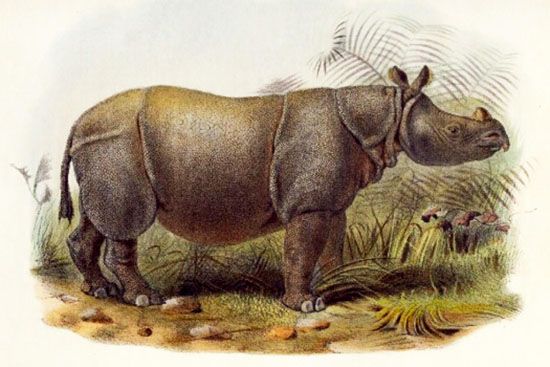
The Javan rhinoceros (Rhinoceros sondaicus) possesses several distinct physical characteristics that define the species:
- Size and Build: It is comparable in size to the black rhinoceros, measuring approximately 2–3.2 metres (6–11 feet) in length and weighing between 900 and 2,300 kg (2,000–5,100 pounds).1
- Skin and Armor: Like the great Indian rhinoceros, the Javan rhinoceros is covered in large, thick, and practically immovable plates of skin. These plates are separated by joints of thinner skin, which allow the animal to move.4
- Horns and Teeth: Both males and females possess lower incisors that resemble tusks, which are used for fighting. Regarding horns, the male Javan rhinoceros typically has a short horn measuring about 25 cm (10 inches), while the female’s horn is rudimentary.14
- Hair: Similar to other rhinoceros species, the Javan rhinoceros has sparse or absent hair.4
What is the diet of a Javan rhinoceros, and how does it impact their habitat?
The Javan rhinoceros (Rhinoceros sondaicus) is primarily a browser, meaning its diet consists of leaves, twigs, and other vegetation found in its habitat of forests, marshy areas, and regions of thick bush and bamboo.13
Regarding their impact on the environment, Javan rhinoceroses often feed on pioneer plants that dominate gaps in the forest created by fallen trees. By foraging in these areas, they play a role in shaping the structure of their habitat. While specific research on the Javan rhinoceros’s ecological role is limited due to its extreme rarity, it is understood that large herbivores often influence forest dynamics through their feeding habits and movement patterns.1
It is ethically imperative that we protect the remaining Javan rhinoceros population in Ujung Kulon National Park, as preserving such species is essential for maintaining the integrity of their native ecosystems.14
What are the main threats to the survival of the Javan rhinoceros?
The survival of the Javan rhinoceros is primarily threatened by two critical factors: poaching and disease.1
Because the entire remaining population is restricted to a single location, Ujung Kulon National Park, the species is exceptionally vulnerable to localized catastrophes. While historical declines across their former range were driven by the expansion of human settlements and hunting, current conservation efforts are focused on mitigating these persistent risks to ensure the species does not face extinction. Protecting this critically endangered mammal is a moral imperative, as the loss of such a unique species would represent an irreversible decline in global biodiversity.314
Sources
- Javan rhinoceros — Encyclopædia Britannica
- Falling Stars: 10 of the Most Famous Endangered Species — Encyclopædia Britannica
- Ujung Kulon National Park — Encyclopædia Britannica
- perissodactyl - Rhinoceroses — Encyclopædia Britannica
- Indian rhinoceros — Encyclopædia Britannica
- perissodactyl - Integument — Encyclopædia Britannica
Published on · 3 min read