Black River
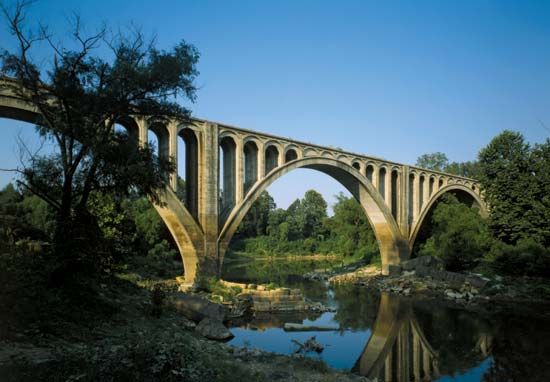
The name "Black River" refers to several distinct waterways in the United States. Two prominent examples include:
What is Black River?
The name “Black River” refers to several distinct waterways in the United States. Two prominent examples include:
- Black River (Missouri and Arkansas): This river rises in the Ozark Mountains of Missouri and flows 280 miles southeast and southwest before joining the White River in Arkansas. It features the Clearwater Dam, a significant flood-control project completed in 1948, and receives the Current River as its primary tributary.1
- Black River (Wisconsin): This river originates in central Wisconsin and travels approximately 160 miles south and southwest to empty into the Mississippi River near La Crosse. The final stretch of this river is maintained to support seasonal barge traffic.2
How do dams like the Clearwater Dam affect local ecosystems?
Dams, such as the Clearwater Dam, significantly alter local ecosystems by transforming natural river environments to serve human needs, often resulting in profound environmental and social consequences.3
Key impacts include:
- Disruption of Aquatic Life: Dams act as physical barriers that block or impede the migration of fish species to their spawning grounds. This can lead to dramatic population declines and, in some cases, the potential extinction of native fish. While technologies like fish passes—such as fish ladders and locks—are used to mitigate these effects, their success can be difficult to sustain as more dams are constructed along a river system.34
- Habitat Alteration and Loss: The creation of reservoirs leads to the inundation of large areas, which can destroy flora, fauna, and picturesque landscapes. This process often results in the loss of land that could otherwise support agriculture or livestock.3
- Displacement: Large-scale dam projects frequently force the relocation of human populations, including the loss of cultural homelands for native peoples.3
- Environmental Debate: Because dams transform the environment on a massive scale, they remain a subject of contentious debate, balancing their utility for flood control, irrigation, and hydroelectric power against their ecological costs.3
What makes a river’s water appear black or dark in color?
A river’s water may appear black or dark brown primarily due to the decomposition of organic matter, such as leaves and wood, in swamp environments.89
When water flows through these wetlands, the slow movement and lack of turbulence result in low oxygen levels, which prevents the complete decay of organic materials. This process leads to the accumulation of resistant compounds, specifically humates and tannins, which leach into the water. These substances act as natural dyes, turning the water a deep brown or black color that often resembles strong tea or coffee.9
In addition to the presence of these organic compounds, rivers like the Negro River appear black because they have a low silt content, which allows the dark, tannin-rich water to remain clear rather than becoming clouded by suspended sediments.8
How do rivers contribute to the formation of mountain ranges?
Rivers do not create mountain ranges; rather, they act as powerful agents of landscape evolution that modify and lower existing mountainous terrain through erosion.1212
Mountain ranges are primarily formed by orogenic (mountain-building) processes, such as the collision of tectonic plates or volcanic activity, which uplift the Earth’s crust. Once these landforms are elevated, rivers begin to shape them by incising the surface, carving out valleys and canyons as they transport sediment toward a base level, typically sea level.131415
The interaction between rivers and mountains is a constant struggle between tectonic uplift and denudation:
- Denudation: Rivers and glaciers remove rock mass from mountain systems, which can lead to the overall lowering of the range over millions of years.14
- Steady-State Systems: In some active mountain ranges, such as the Andes, the rate of uplift from subduction can exceed the rate of erosion, allowing the mountains to increase in elevation despite the constant scouring action of rivers.14
- Landscape Shaping: Rivers transform nondescript geologic settings into distinct topographic forms, effectively molding the character of the mountain landscape through the simultaneous processes of erosion and deposition.13
Sources
- Black River — Encyclopædia Britannica
- Black River — Encyclopædia Britannica
- dam - Rise of environmental and economic concerns — Encyclopædia Britannica
- dam - Fish passes — Encyclopædia Britannica
- river - Falls attributable to constructional processes — Encyclopædia Britannica
- dam - Construction techniques — Encyclopædia Britannica
- dam - General characteristics — Encyclopædia Britannica
- Negro River — Encyclopædia Britannica
- Swamp — Encyclopædia Britannica
- River Blackwater — Encyclopædia Britannica
- tannin — Encyclopædia Britannica
- river - Rivers as agents of landscape evolution — Encyclopædia Britannica
- erosion — Encyclopædia Britannica
- continental landform - Orogenic geomorphic systems — Encyclopædia Britannica
- valley - Geomorphic characteristics — Encyclopædia Britannica
Published on · 3 min read