Bloodhound
The Bloodhound is an ancient hound breed renowned for its extraordinary sense of smell. With approximately 230 million to 300 million scent receptors—roughly…
What is a Bloodhound?
The Bloodhound is an ancient hound breed renowned for its extraordinary sense of smell. With approximately 230 million to 300 million scent receptors—roughly 40 times that of a human—it is considered one of the most capable tracking dogs in existence.12
Contrary to its name, the term “Bloodhound” does not imply aggression; it refers to the breed’s “blooded” or aristocratic ancestry. Developed in the Middle Ages, likely by monks at the Saint Hubert Monastery in Belgium, these dogs were refined specifically for their ability to track prey and people over vast distances. Their physical features, including long, drooping ears and loose facial skin, help stir up and trap scent particles near their nose.21
While they are calm, affectionate, and gentle, they are also relentless trackers that can be difficult to distract once on a trail. Their unique olfactory accuracy is so highly regarded that they were the first animal to have their evidence admitted in U.S. courts.12
What does a Bloodhound look like?
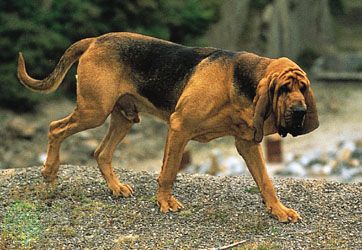
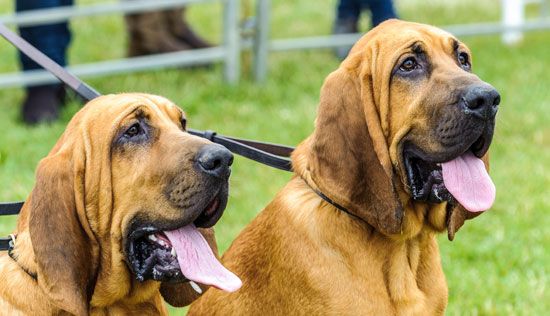
The Bloodhound is a large, powerful dog characterized by its distinct, loose skin that falls into folds and wrinkles around the head and neck. These physical features are not merely aesthetic; they serve a functional purpose by helping to trap scent particles near the nose, which enhances the breed’s remarkable tracking ability.21
Key physical characteristics include:
- Build: A large, strong frame standing 23–27 inches (58–69 cm) at the withers and weighing between 80–110 pounds (36–50 kg).2
- Ears: Long, drooping ears that help stir up scent from the ground.21
- Coat: Short hair that comes in colors of black and tan, red-brown and tan, or tawny.2
- Facial Features: Deep wrinkles and loose, hanging lips. While these features aid in scent retention, they also contribute to the breed’s tendency to drool, which may require owners to use a bib.2
Due to their anatomy, Bloodhounds require regular care, including cleaning their deep skin folds to prevent infection and monitoring their long ears to ensure they remain free of moisture and bacteria.2
Where did the Bloodhound breed originally come from?
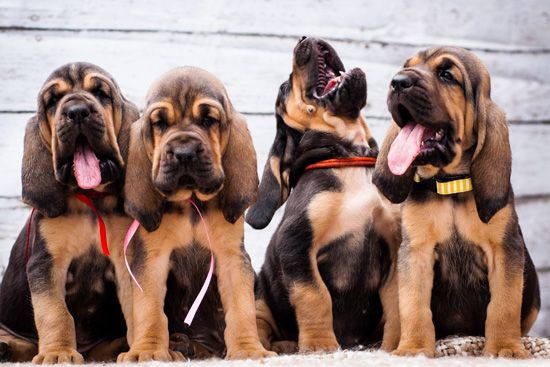
The Bloodhound is an ancient breed with origins in ancient Europe. While the breed was known in ancient Greece and Rome, it was refined as a specialized tracker during the Middle Ages.1
According to historical accounts, the modern Bloodhound is believed to derive from the St. Hubert Hound, which was developed by monks in the 8th and 9th centuries at the Saint Hubert Monastery in Belgium. These monks established one of history’s earliest dog-breeding programs, creating these hounds in honor of St. Hubert, the patron saint of hunters. The dogs were often presented to the king of France as an annual tribute, and they were subsequently exported to England in the 11th century, where the breed was further refined.1
What are Bloodhounds famous for?
Bloodhounds are world-renowned for their unparalleled olfactory capabilities. Possessing approximately 230 million to 300 million scent receptors—roughly 40 times that of a human—they are considered the most skilled scent-hunting dogs in existence.12
Their fame is built on several key factors:
- Tracking Prowess: Their physical anatomy, including long ears that stir up scent and loose facial skin that traps it, allows them to follow trails over vast distances and difficult terrain.12
- Legal Recognition: They hold the distinction of being the first animal whose tracking evidence was deemed admissible in U.S. courts, a fact noted by The Guinness Book of World Records.12
- Historical Significance: Originally developed by monks in the Middle Ages, the breed has a long history of assisting in high-profile searches, including the 1888 hunt for Jack the Ripper.12
- Etymological Impact: The modern word “sleuth” originates from the Scottish sleuthhound, a term for the Bloodhound that eventually became synonymous with detectives.2
Sources
- Why are bloodhounds used as police dogs? — Encyclopædia Britannica
- Bloodhound — Encyclopædia Britannica
Published on · 3 min read