Bluestem
Bluestem grasses, belonging to the genus Andropogon, have long served as essential resources for human agricultural and environmental needs.
What are the traditional and modern uses of bluestem grasses by humans?
Bluestem grasses, belonging to the genus Andropogon, have long served as essential resources for human agricultural and environmental needs.
Agricultural and Forage Uses
Historically and in modern practice, several bluestem species are valued as high-quality hay and forage plants for livestock. For example:
- Big bluestem (Andropogon gerardii) is recognized as a productive pasture grass and a characteristic species of the North American tallgrass prairie.1
- Sand bluestem (A. gerardii, subspecies hallii) is widely utilized for forage in the central and western United States.12
- Silver bluestem (Bothriochloa saccharoides) serves as a forage grass in the southwestern United States.1
Environmental Applications
Beyond livestock feed, these grasses play a critical role in land management. Specifically, sand bluestem is utilized as a soil binder, helping to stabilize soil and prevent erosion in sandy environments. While some species like big bluestem are highly beneficial, others, such as broom sedge and bushy beardgrass, are considered coarse and unsuitable for agricultural forage.21
What is the etymology of the name ‘bluestem’ and how does it relate to the plant’s appearance?
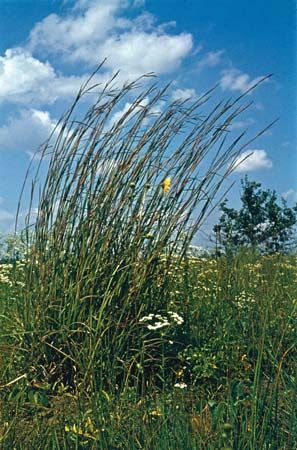
The name “bluestem” is a descriptive common name derived directly from the physical appearance of these grasses. Specifically, the term refers to the smooth, bluish-colored leaf sheaths found on plants such as the big bluestem (Andropogon gerardii).1
While the genus Andropogon—which includes many species referred to as bluestems—is scientifically named from the New Latin andr- and -pogon (meaning “man” and “beard,” respectively, in reference to the flower structure), the common name “bluestem” focuses on the plant’s coloration. Although the stems themselves can sometimes appear reddish or greenish depending on the species and conditions, the characteristic blue tint of the leaf sheaths remains the primary visual trait associated with the name. The term was first recorded in usage around 1818.341
How are bluestem grasses distributed geographically, and in what type of habitats do they typically grow?
Bluestem grasses, belonging to the genus Andropogon, are widely distributed across the globe, thriving in both temperate and tropical zones.17
Geographic Distribution and Habitats
The distribution and preferred habitats of these grasses vary significantly by species:
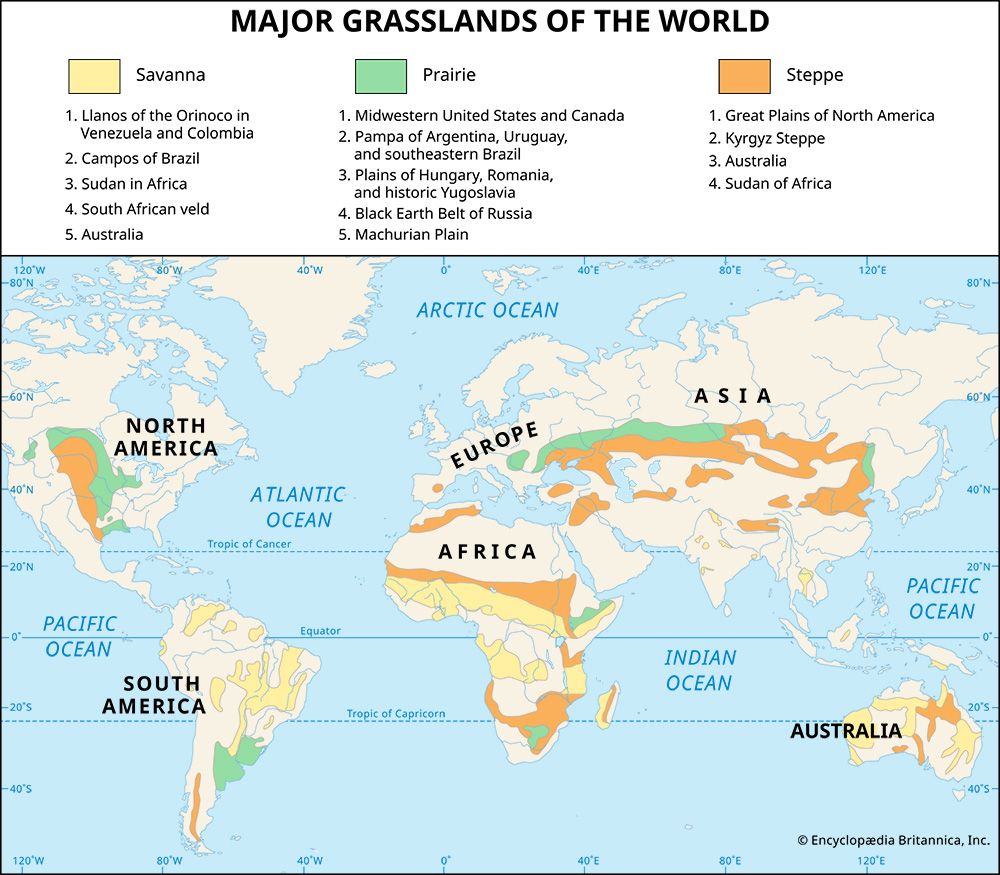
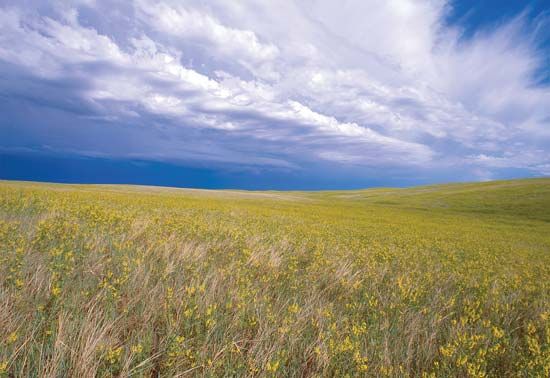
- North American Prairies: Bluestems are iconic components of North American grasslands. Big bluestem (Andropogon gerardii) is the characteristic species of the tallgrass prairie in the eastern portion of the continent’s central grasslands. Little bluestem (Schizachyrium scoparium) is also found throughout North American dry prairie areas.15
- Diverse Soil Conditions: While many thrive in prairie ecosystems, specific species have adapted to distinct environmental niches. For instance, sand bluestem (A. gerardii, subspecies hallii) is specialized for growth on sand hills in the central and western United States. Conversely, species such as broom sedge (A. virginicus) and bushy beardgrass (A. glomeratus) are adapted to poor soils in eastern and southern North America.1
- Global Presence: Beyond North America, the genus is considered almost cosmopolitan, appearing in various tropical and temperate regions, including the campos of South America, where they are among the common grass species.57
How do bluestem grasses reproduce and spread in their natural habitats?
Bluestem grasses (genus Andropogon) reproduce and spread through two primary methods: sexual reproduction via seeds and vegetative propagation.
Sexual Reproduction
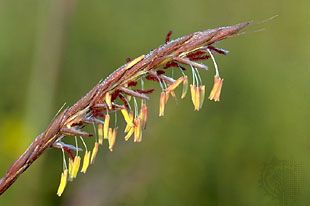
Bluestem grasses produce flower spikelets, which are typically clustered at the tips of the stems or within the leaf axils. These spikelets develop into fruits equipped with straight or twisted awns, which aid in the dispersal of seeds throughout their natural habitats.1
Vegetative Spread
In addition to seed production, many bluestem species utilize rhizomes—specialized underground stems—to expand their reach. This allows the plants to spread vegetatively, effectively colonizing surrounding areas and establishing dense stands. This rhizomatous growth is particularly notable in species like the sand bluestem, which serves as an effective soil binder in its native environment.12
Sources
- Bluestem — Encyclopædia Britannica
- sand bluestem — Merriam-Webster
- bluestem — Merriam-Webster
- little bluestem — Merriam-Webster
- Andropogon — Merriam-Webster
- beard grass — Merriam-Webster
- Grassland - Biota — Encyclopædia Britannica
- orchid - Self-pollination — Encyclopædia Britannica
Published on · 3 min read