Prairie
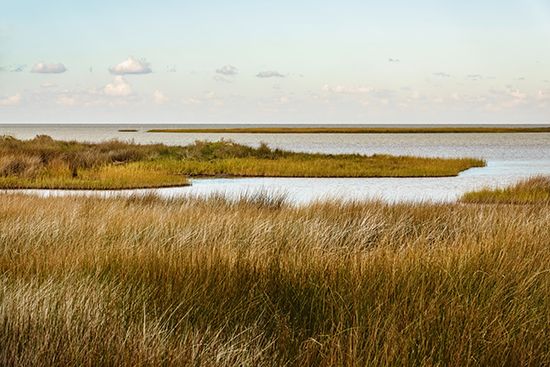
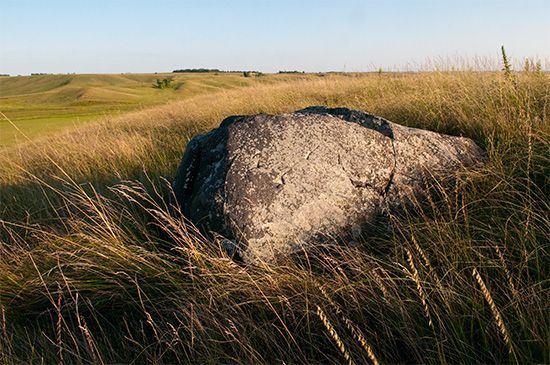
Prairie ecosystems are primarily defined by perennial grasses, with species composition varying based on moisture levels across tallgrass, midgrass, and…
What are some of the key plant species found in prairie ecosystems?
Prairie ecosystems are primarily defined by perennial grasses, with species composition varying based on moisture levels across tallgrass, midgrass, and shortgrass subtypes.1
Key Grass Species
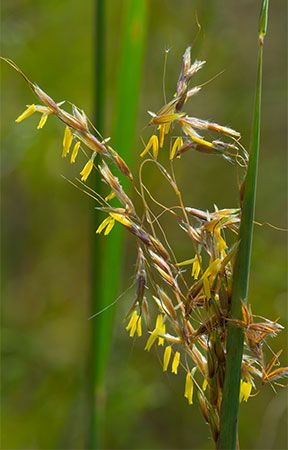
- Tallgrass Prairie: Dominated by sod-forming grasses like big bluestem (Andropogon gerardii) and prairie cordgrass in wet areas, alongside bunchgrasses such as needlegrass and prairie dropseed. Indian grass and little bluestem are also characteristic.123
- Midgrass and Shortgrass Prairie: These drier regions feature grama grass (such as blue grama), buffalo grass, and various wheatgrass species.124
Other Vegetation
While grasses dominate, prairies also support a wide variety of herbaceous flowering plants, particularly from the pea and composite families. In some areas, vegetation includes small berry bushes, wild roses, and stunted trees like aspen. Additionally, plants such as cacti and sagebrush are found in the drier western reaches of the plains.13
What are the major types of prairies found in North America?
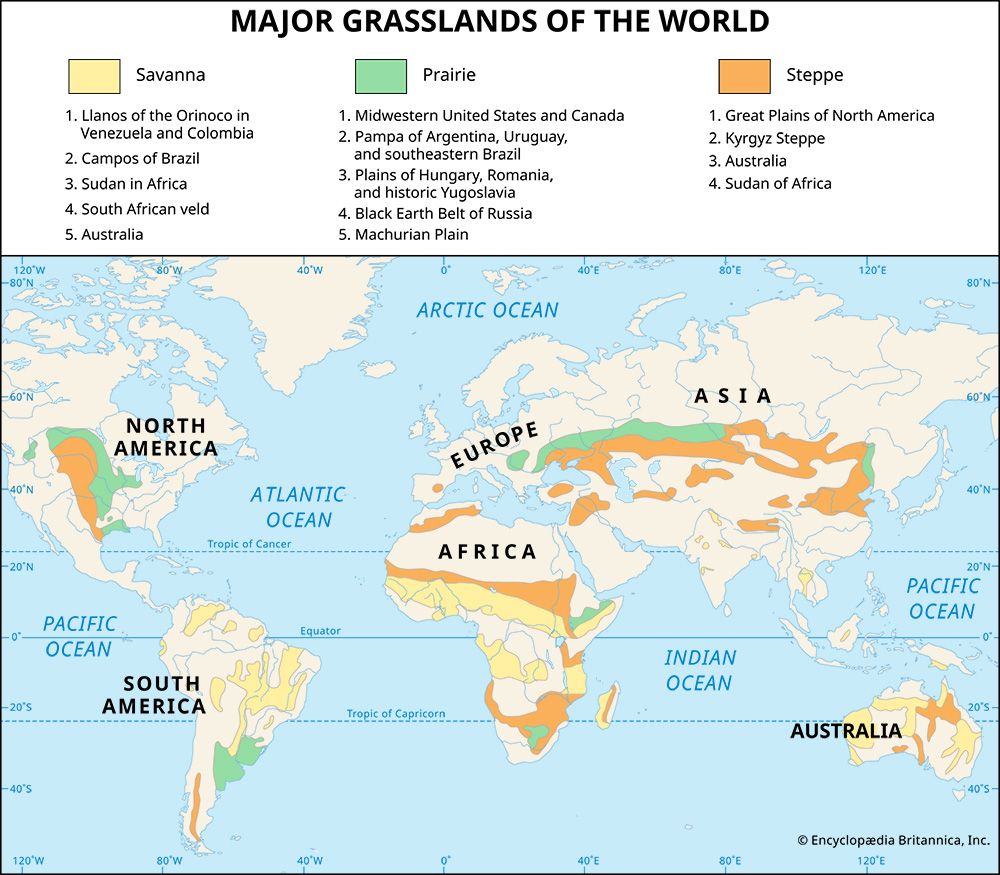
North American prairies are primarily categorized into three major subtypes, with their distribution largely determined by decreasing rainfall from east to west.1
The Three Major Prairie Subtypes
- Tallgrass Prairie: Located in the humid eastern region bordering deciduous forests, this subtype is characterized by lush vegetation. It features sod-forming grasses like big bluestem and prairie cordgrass in lowlands, and bunchgrasses such as needlegrass and prairie dropseed on drier uplands.18
- Midgrass (Mixed-Grass) Prairie: Occupying the central portion of the prairie region, this is the most extensive subtype. It supports a mix of bunchgrasses and sod-forming grasses, including grama grass, wheatgrass, and buffalo grass.1
- Shortgrass Plains: Found in the driest western areas, these plains are dominated by shorter species such as buffalo grass and grama grass. In the westernmost reaches, vegetation becomes sparse, often accompanied by cacti and sagebrush.18
Other regional variations, such as coastal, Pacific, and Palouse prairies, are primarily composed of combinations of these mixed-grass and shortgrass species.1
What are some of the endangered species associated with prairie habitats?
Prairie habitats have faced significant pressure from agricultural development and habitat loss, leading to the endangerment of several species that rely on these ecosystems.
Notable Endangered Species
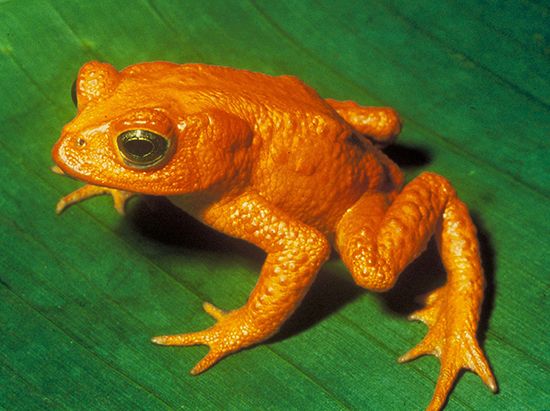
- Black-footed Ferret (Mustela nigripes): Once nearly driven to extinction due to the decline of prairie dog populations—their primary food source—the black-footed ferret is a well-known endangered species of the Great Plains. Following a successful captive breeding program initiated in the late 1980s, the species has been reintroduced into several states and Mexico, though it remains listed as endangered by the International Union for Conservation of Nature (IUCN).9
Conservation and Legal Status
The Endangered Species Act (ESA) in the United States plays a critical role in identifying and protecting species threatened with extinction. The status of prairie-associated species can be complex; for instance, the lesser prairie chicken and the dune sagebrush lizard were listed under the ESA due to habitat degradation from industrial activities but were later delisted in 2026 following legal challenges regarding data collection.1
What conservation efforts are being made to protect and restore prairie ecosystems?
Conservation efforts for prairie ecosystems focus heavily on habitat restoration, as very little native prairie remains due to intense cultivation and grazing. Because these ecosystems are often highly degraded, restoration requires a combination of scientific research, volunteer labor, and active management.111
Key Restoration Strategies
- Restoring Natural Fire Regimes: Historically, naturally occurring fires prevented trees from encroaching on grasslands. In modern conservation, prescribed fire is used to mimic these conditions. Controlled burns reduce competition from invasive species, decrease disease, and promote the growth of native, fire-adapted prairie plants.1211
- Species Reintroduction: Restoration practitioners often look to historical records—such as 19th-century botanical lists—to identify the original plant communities of a specific site. By gathering seeds from small, surviving remnants of native prairie (often found along railways or in cemeteries), volunteers can reintroduce locally rare species to degraded lands.11
- Invasive Species Management: A critical component of restoration is the removal of nonnative plants, such as European buckthorn, which can outcompete native vegetation.11
Successful restoration relies on the principle that one must save all component species of the original community to ensure a self-sustaining ecosystem.11
Sources
- Prairie — Encyclopædia Britannica
- bluestem — Encyclopædia Britannica
- Grassland - Biota — Encyclopædia Britannica
- Did you know? — Merriam-Webster
- North America - Temperate grasslands — Encyclopædia Britannica
- bluestem — Merriam-Webster
- grama grass — Encyclopædia Britannica
- Great Plains - Relief and drainage — Encyclopædia Britannica
- ferret — Encyclopædia Britannica
- endangered species - The United States Endangered Species Act — Encyclopædia Britannica
- prescribed fire — Encyclopædia Britannica
- conservation - Habitat restoration — Encyclopædia Britannica
Published on · 3 min read