Bluethroat
The bluethroat (Erithacus svecicus or Luscinia svecica) is a small chat-thrush belonging to the thrush family, Turdidae. Measuring approximately 14…
What is Bluethroat?
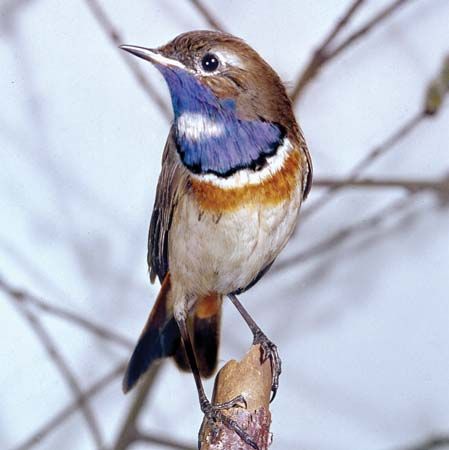
The bluethroat (Erithacus svecicus or Luscinia svecica) is a small chat-thrush belonging to the thrush family, Turdidae1. Measuring approximately 14 centimetres (5 1/2 inches) in length, the bird is distinguished by its vibrant blue throat, which features a crescent-shaped spot of either red or white, depending on the specific subspecies.1
These birds are found across a vast range, stretching from western Europe through Asia and as far east as western Alaska. While they are primarily associated with damp thickets in mountainous regions, they are also known to inhabit lowlands in parts of western Europe. The species is well-regarded for its rich, varied, and melodic warbling song.12
What are some other birds in the thrush family?
The Turdidae family includes a diverse range of songbirds found worldwide. These birds are generally characterized by slender bills and stout legs, and they are well-known for their melodic songs.34
Other notable members of the thrush family include:
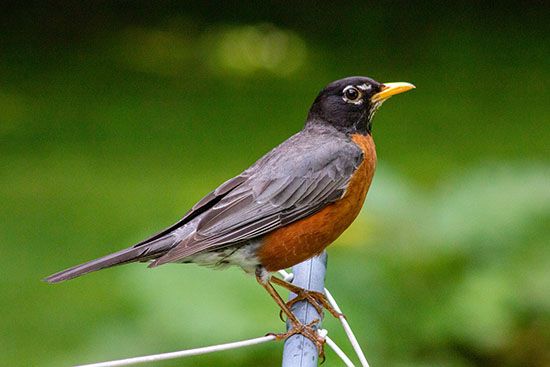
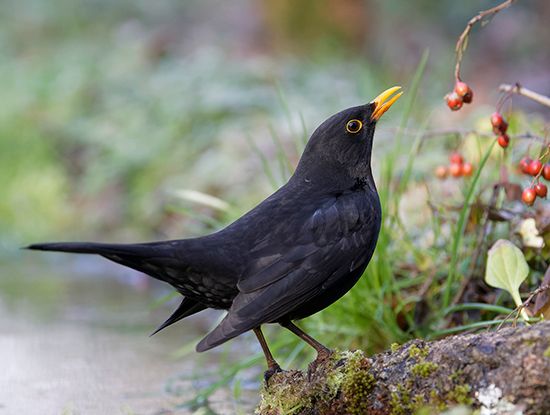
- True Thrushes (Turdus): This group includes the American robin, the European blackbird, the fieldfare, the ouzel, and the redwing.4
- Nightingale Thrushes (Catharus): These New World birds are known for their rich songs and include species such as the wood thrush and the hermit thrush.2
- Ground Thrushes (Zoothera): This group consists of about 37 species, such as the golden mountain thrush (also known as White’s or tiger thrush), the varied thrush, and the Aztec thrush.1
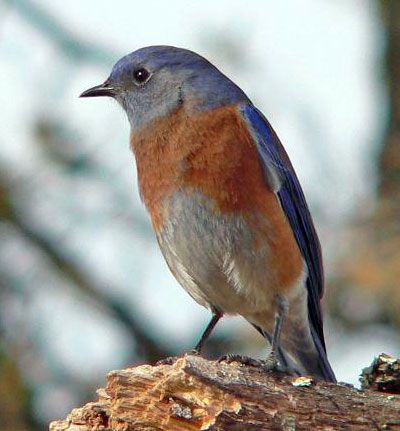
- Chat-Thrushes: These are typically smaller and more colorful than other thrushes, including the bluebird and the nightingale.34
How do birds use their songs to communicate?
Birds use vocalizations to communicate essential information, primarily for attracting mates and defending territories during the breeding season. While “song” refers to complex, often melodic vocalizations used for species-specific communication, birds also utilize various other calls to convey immediate needs.78
Functions of Vocal Communication
- Territorial Defense: Males use advertising songs to establish boundaries, warn off rivals, and signal their identity or species to others.78
- Mate Attraction: Songs are critical for courtship, and some species engage in duetting or antiphonal singing to strengthen pair bonds.89
- Survival and Coordination: Birds use specific calls to alert others to danger, such as distinguishing between aerial and ground predators, or to keep flocks and pairs together. Begging calls are also vital for stimulating parents to feed their young.8
Adaptation and Environment
The structure of these signals is often shaped by the bird’s habitat to minimize degradation. For instance, birds in dense forests typically use long, whistle-like notes, while those in open grasslands favor rapid trills and buzzes. Additionally, some birds use the natural degradation of their songs to estimate the distance of competitors, helping them determine if a rival is close enough to pose a threat.10
What are the main differences between migratory and non-migratory birds?
The primary distinction between migratory and non-migratory birds lies in their response to seasonal fluctuations in food availability and environmental conditions. While many species are sedentary, others have evolved to travel long distances to exploit resources that are only seasonally abundant in specific regions.1112
Key Differences
- Physiological Adaptations: Migratory birds undergo significant internal changes, often controlled by the endocrine system and the pituitary gland. Before migration, they accumulate fat in their body tissues to provide energy for long journeys, a metabolic fluctuation not observed in non-migratory species.1314
- Environmental Response: Migratory behavior is often triggered by a combination of internal rhythms and external cues, such as decreasing day length in autumn. In contrast, non-migratory birds remain in the same general region throughout the year, as they are adapted to the local environment’s year-round conditions.131415
- Flexibility and Transitions: The distinction is not always absolute. Many intermediate types exist, and some species exhibit “partial migration,” where only a portion of a population migrates while the rest remains sedentary. Furthermore, some birds are nomadic, moving unpredictably in response to irregular ecological events like rainfall, rather than following a fixed seasonal schedule.12
Sources
- Bluethroat — Encyclopædia Britannica
- bluethroat — Merriam-Webster
- Turdidae — Encyclopædia Britannica
- Thrush — Encyclopædia Britannica
- Nightingale thrush — Encyclopædia Britannica
- Ground thrush — Encyclopædia Britannica
- Birdsong — Encyclopædia Britannica
- Bird - Sound — Encyclopædia Britannica
- Animal communication - Signal transmission — Encyclopædia Britannica
- Passeriform - Sound production — Encyclopædia Britannica
- How do birds know when to fly south? — Encyclopædia Britannica
- Migration - Physiological stimulus of migration — Encyclopædia Britannica
- Migration - In Europe — Encyclopædia Britannica
- Migration - Origin and evolution of migration — Encyclopædia Britannica
- Migration - Ecological significance of migration — Encyclopædia Britannica
- Migration - Modes of migration — Encyclopædia Britannica
- Migration - Birds — Encyclopædia Britannica
Published on · 3 min read