Bolívar Peak
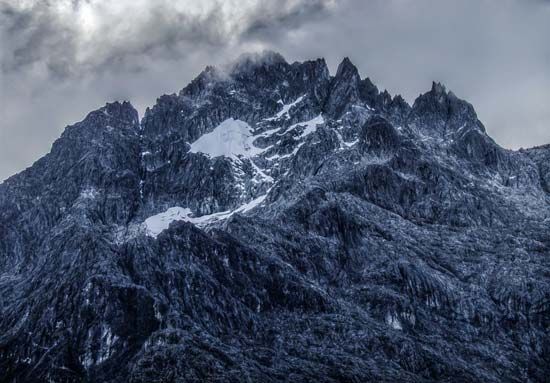
Bolívar Peak (Pico Bolívar) is a mountain located within Sierra Nevada National Park in northwestern Venezuela. It serves as the highest point in the…
What is Bolívar Peak?
Bolívar Peak (Pico Bolívar) is a mountain located within Sierra Nevada National Park in northwestern Venezuela. It serves as the highest point in the Cordillera de Mérida, which is a northeastern spur of the Andes Mountains, and it holds the title of the highest peak in the country.1
While sources vary slightly on its precise elevation—with some citing 16,332 feet (4,978 meters) and others noting 16,427 feet (5,007 meters)—it remains a prominent geographical landmark in the region.12
Who was Simón Bolívar and why is the peak named after him?
Simón Bolívar (1783–1830) was a prominent Venezuelan soldier and statesman who served as a central figure in the South American independence movement against Spanish colonial rule. Often referred to as “the Liberator,” he led military campaigns that resulted in the independence of several territories, including New Granada (modern-day Colombia and Panama), Venezuela, Ecuador, Peru, and Bolivia—the latter of which was named in his honor.345
Bolívar Peak is named after him to commemorate his monumental role in securing the freedom of these nations. His legacy as a revolutionary leader, president of Gran Colombia, and a visionary figure in Latin American history remains deeply significant, leading to his name being memorialized across the continent on various landmarks, including the highest peak in his home country of Venezuela.36
What kind of wildlife lives in the Sierra Nevada National Park?
The wildlife found in Sierra Nevada National Park in Venezuela includes a variety of animals adapted to its diverse elevations. The park is home to:
- Mammals: The park’s fauna includes deer and bears.7
- Birds: The area supports a diverse population of many bird species.7
The park’s environment ranges from heavily forested lower slopes to alpine vegetation and glacier lakes above the timberline, providing distinct habitats for these species.7
How do the Andes Mountains affect the climate of South America?
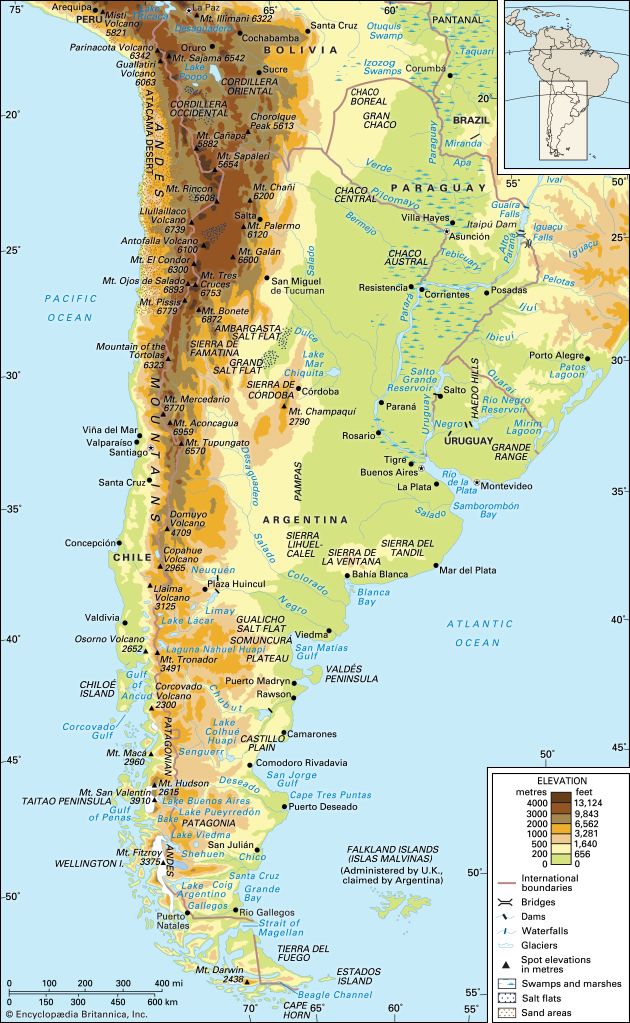
The Andes Mountains exert a profound influence on the climate of South America, primarily by acting as a massive physical barrier to atmospheric circulation and by creating distinct vertical climatic zones.1213
Orographic Barrier and Rain Shadows
The Andes function as an orographic barrier that significantly alters precipitation patterns. As moisture-laden mid-latitude westerlies rise over the mountains in the southern tier of the continent, they release most of their moisture as orographic precipitation. This process creates a vast rain shadow on the leeward side, resulting in the arid desert and semidesert regions of Patagonia. Similarly, in the north, the mountains prevent most water vapour from the Amazon Basin from moving westward, leading to high levels of precipitation on the eastern Andean flanks while contributing to the aridity of regions to the west.1214
Vertical Climatic Zones
Temperature in the Andes varies dramatically with altitude, creating well-defined vertical zones:
- Tierra caliente: Warm and humid conditions at the base or foothills.12
- Tierra templada: Temperate and semi-humid conditions at mid-levels.12
- Tierra fría: Cool and dry conditions in the highlands.12
- Tierra helada: Cold to freezing conditions near glacial summits.12
These zones allow for diverse microclimates, where tropical forests and tundra-like puna can exist within a few miles of each other.13
Sources
- Bolívar Peak — Encyclopædia Britannica
- Bolívar, Pico — Merriam-Webster
- Simón Bolívar: Top Questions — Encyclopædia Britannica
- Simón Bolívar — Encyclopædia Britannica
- Venezuela - The independence movement — Encyclopædia Britannica
- Simón Bolívar - Civil war — Encyclopædia Britannica
- Sierra Nevada National Park — Encyclopædia Britannica
- Sierra Nevada - Animal life — Encyclopædia Britannica
- Venezuela - Flora — Encyclopædia Britannica
- Andes Mountains - Physiography of the Northern Andes — Encyclopædia Britannica
- Sierra National Forest — Encyclopædia Britannica
- South America - Factors influencing climate — Encyclopædia Britannica
- Amazon River - Climate — Encyclopædia Britannica
- Andes Mountains - Climate — Encyclopædia Britannica
- Andes Mountains - Plant and animal life — Encyclopædia Britannica
- Climate - Circulation, currents, and ocean-atmosphere interaction — Encyclopædia Britannica
Published on · 2 min read