Bregenzerwald
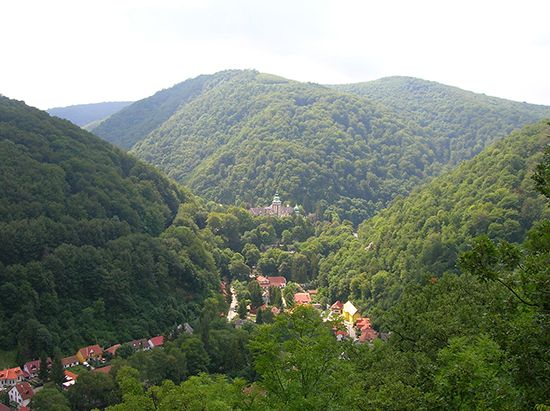
Bregenzerwald is a forested mountain range located in western Austria. As part of the Allgäuer Alps, the region is characterized by the Bregenzer Ache stream…
What is Bregenzerwald?
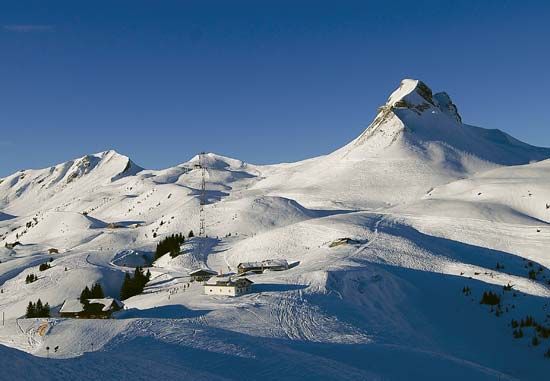
Bregenzerwald is a forested mountain range located in western Austria. As part of the Allgäuer Alps, the region is characterized by the Bregenzer Ache stream and is divided into two distinct areas:1
- Vorderwald: The foothill region near Bregenz, which is primarily utilized for pasture and dairy farming.1
- Hinterwald: The mountainous interior, which serves as a significant hub for the tourist industry, featuring numerous winter-sports centers and climatic health resorts.1
What are the Allgäuer Alps?
The Allgäuer Alps are a mountain range located in the Eastern Alps, forming part of the border region between Austria and Germany.23
Key characteristics of the Allgäuer Alps include:
- Geological Composition: They are part of the outer limestone (or calcareous) Alps. Along their base, older Paleogene and Neogene deposits—specifically flysch and molasse—were incorporated into the later stages of the Alpine orogeny, creating a pre-Alpine belt of hills and low mountains composed primarily of sandstone.2
- Regional Context: The range includes the Bregenzerwald, a forested mountain area in western Austria1.
- Landscape: The region is noted for its distinct relief, which transitions from these pre-Alpine hills to higher mountainous terrain.2
The Alps as a whole, including ranges like the Allgäuer, are a primary destination for tourism and winter sports, which have become vital economic drivers for the region since World War II.4
How does dairy farming shape the local economy?
Dairy farming plays a specific role in the local economy of regions like the Bregenzerwald, where it serves as a foundational land-use activity in foothill areas. While agriculture generally accounts for a small portion of Austria’s GDP, it remains vital for maintaining the cultural landscape.89
The economic impact of dairy farming and pastoralism includes:
- Landscape Maintenance: Farmers receive subsidies from the government and the EU to prevent natural reforestation, which preserves the open terrain essential for tourism.9
- Quality Specialization: Small-scale farmers increasingly focus on high-quality production to remain competitive within the European market, evidenced by a significant rise in organic farming.9
- Supplemental Income: In many high-altitude valleys, traditional pastoralism often functions as a hobby or a source of secondary income, as many farmers rely on nonfarm employment to sustain their livelihoods.109
While the broader Austrian economy has shifted toward a service-oriented model, these agricultural practices remain critical for regional identity and environmental management.91
What is unique about the architecture in the Bregenzerwald region?
Sorry, the Britannica knowledge base does not contain information regarding the unique architecture of the Bregenzerwald region.
Sources
- Bregenzerwald — Encyclopædia Britannica
- Bavarian Alps — Encyclopædia Britannica
- Germany - The Alps and the Alpine Foreland — Encyclopædia Britannica
- Alps - Tourism — Encyclopædia Britannica
- Alps - Physiography — Encyclopædia Britannica
- Alps - Geology — Encyclopædia Britannica
- Exploring 7 of Earth’s Great Mountain Ranges - Alps — Encyclopædia Britannica
- Alps - Agriculture — Encyclopædia Britannica
- Austria - Agriculture and forestry — Encyclopædia Britannica
- Austria - Economy — Encyclopædia Britannica
Published on · 2 min read