Boll Weevil
The boll weevil (Anthonomus grandis) had a profound and transformative impact on the American South after its introduction from Mexico in the 1890s. As a…
What was the historical impact of the boll weevil on the American South?
The boll weevil (Anthonomus grandis) had a profound and transformative impact on the American South after its introduction from Mexico in the 1890s. As a devastating agricultural pest, it caused crop losses ranging from 30 to 50 percent in infested areas, severely damaging the region’s cotton-dependent economy.1
This economic disruption was a significant catalyst for social and agricultural change:
- Migration: Between 1910 and 1920, the destruction caused by the boll weevil, combined with floods, deepened an agricultural depression. This pushed approximately 500,000 African Americans to migrate from the rural South to Northern cities in search of industrial employment.2
- Agricultural Reform: The infestation forced farmers to abandon their total reliance on cotton. It highlighted the necessity of crop rotation and diversification, leading to more sustainable farming practices.1
The pest remained a major threat for nearly 90 years until an aggressive eradication program using malathion began in 1978, eventually leading to increased yields and reduced insecticide use.1
How did the boll weevil spread from its native habitat to other regions?
The boll weevil (Anthonomus grandis) was introduced to the United States from Mexico in the 1890s. While the provided search results confirm its arrival from Mexico and its subsequent status as a severe agricultural pest across cotton-producing states, they do not detail the specific mechanisms or pathways by which the insect physically spread from its native habitat into the United States.13
What are the physical characteristics of a boll weevil?
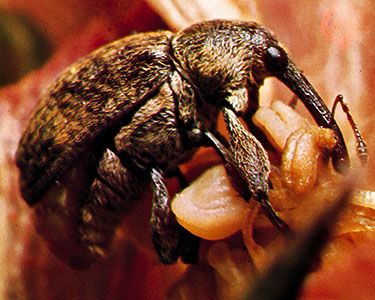
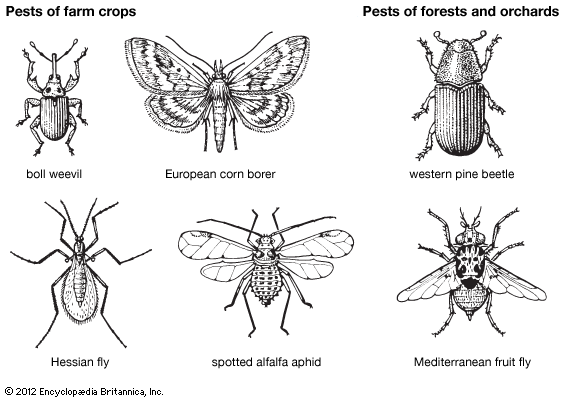
The boll weevil (Anthonomus grandis) is a beetle characterized by several distinct physical features:
- Size: A mature boll weevil typically averages about 6 mm (1/4 inch) in length. Its final size is determined by the amount of food it consumes during its larval stage.4
- Snout: A defining feature is its long, curved snout, which accounts for approximately one-half of the insect’s total body length.4
- Coloration: The insect’s color changes over time. When adult boll weevils emerge from a partially dormant state in the spring, they are light yellow; over the following weeks, their color darkens to gray or black.14
As a member of the family Curculionidae, the boll weevil is specifically adapted to feed on the squares and bolls of the cotton plant.14
How has genetic engineering of cotton plants helped in combating boll weevils?
Genetic engineering has primarily focused on developing Bt cotton, which is modified to produce bacterial proteins from Bacillus thuringiensis that are toxic to certain herbivorous insects. While these modifications have been highly effective against pests like the cotton bollworm and the pink bollworm, the provided information does not indicate that genetic engineering has been a primary tool for combating the boll weevil (Anthonomus grandis).13
Historically, the boll weevil was managed through aggressive eradication campaigns, most notably the use of the insecticide malathion, alongside cultural practices such as crop rotation, early destruction of cotton stalks, and the planting of early-maturing cotton varieties. Unlike the bollworm, which is directly targeted by the toxins in Bt cotton, the boll weevil remains a distinct challenge that has been addressed primarily through these traditional cultivation and chemical control methods.513
Sources
- Boll weevil — Encyclopædia Britannica
- African Americans - The impact of World War I and African American migration to the North — Encyclopædia Britannica
- cotton - Pests and diseases — Encyclopædia Britannica
- boll weevil — Merriam-Webster
- genetically modified organism - GMOs in agriculture — Encyclopædia Britannica
Published on · 3 min read