Bollworm
A bollworm is the larva of various moths within the order Lepidoptera. While the term is most commonly associated with the damage these insects inflict on…
What is Bollworm?
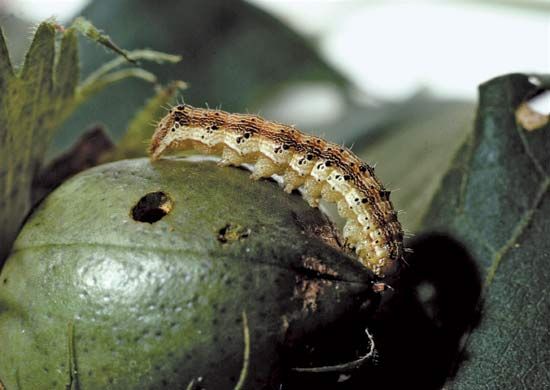
A bollworm is the larva of various moths within the order Lepidoptera. While the term is most commonly associated with the damage these insects inflict on cotton bolls, they are known to feed on a wide range of commercial crops, including peas, alfalfa, beans, soybeans, flax, and peanuts.1
Notable species include the pink bollworm (Pectinophora gossypiella) and the corn earworm (Helicoverpa zea). The corn earworm typically feeds on corn kernels but is also known to burrow into tomatoes and cotton, sometimes earning the name “tomato fruitworm” or “cotton bollworm” depending on the host plant.12
Farmers manage these pests through several strategies, including the use of insecticides, early crop planting, trap crops, and biological control methods such as natural parasites.1
How does the life cycle of a bollworm progress?
The term “bollworm” refers to the larval stage of various moths in the order Lepidoptera, such as the pink bollworm and the corn earworm. While your query asks for the life cycle of a bollworm, it is important to clarify that the provided search results do not contain specific details regarding the complete life cycle stages (egg, larva, pupa, adult) of these specific moths.1
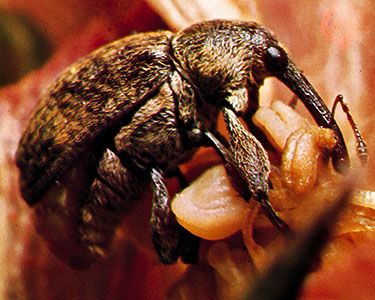
The search results provide information on the life cycle of the boll weevil (Anthonomus grandis), which is a beetle in the order Coleoptera, not a moth. It is a common misconception to conflate the two, but they are distinct agricultural pests with different biological classifications and developmental processes. Because the Britannica knowledge base does not contain the specific life cycle progression for the bollworm moth, I cannot provide those details here.31
What are some examples of biological control methods for pests?
Biological control is the practice of managing pest populations by utilizing their natural enemies—such as predators, parasites, or disease-causing organisms—to reduce their numbers or eliminate them entirely. This approach is a cornerstone of integrated pest management, which seeks to minimize reliance on chemical pesticides by combining various ecologically harmonious strategies.5678
Common examples of biological control methods include:
- Introduction of Natural Enemies: Importing and releasing predators or parasites that target specific pests. A classic example is the use of the vedalia beetle (Rodolia cardinalis) to control the cottony cushion scale in California.58
- Microbial Agents: Utilizing pathogens like bacteria, viruses, or fungi to infect and kill pests. For instance, Bacillus thuringiensis (Bt) is a soil-dwelling bacterium that produces toxins fatal to specific herbivorous insects, such as caterpillars and bollworms.59
- Genetic Engineering: Incorporating genes from microbial agents (like Bt) directly into crops, allowing plants to produce their own protective toxins.9
- Sterile-Insect Technique: Releasing large numbers of sterilized male insects into the wild to disrupt the reproductive cycle of the pest population.810
- Pheromone Traps: Using the pest’s own sex attractants to lure them into traps, thereby monitoring or reducing their numbers.78
- Host-Plant Resistance: Breeding or selecting crop varieties that are naturally resistant to specific pests.710
While these methods are environmentally sound, they must be implemented carefully to avoid the unintended introduction of invasive species, such as the cane toad in Australia, which can cause significant ecological harm.5
How do bollworms damage cotton crops specifically?
Bollworms are the larvae of various moths, such as the pink bollworm and the corn earworm, that cause significant damage to cotton crops primarily by feeding on the cotton bolls.13
While the specific mechanics of their feeding are often confused with the boll weevil—a beetle that burrows inside bolls to destroy both seeds and fibers—bollworms are widely recognized for the direct damage they inflict on the fruiting structures of the plant. The pink bollworm, in particular, is a major global pest capable of causing annual crop losses of up to 25 percent in several countries.1113
To manage these pests, farmers employ various strategies, including:
- Biological control: Utilizing natural parasites to reduce populations.1
- Cultural practices: Implementing early crop planting and the use of trap crops.13
- Chemical intervention: Applying insecticides at properly timed intervals.13
- Genetic modification: Using Bt cotton, which is engineered to produce proteins toxic to these herbivorous insects.3
Sources
- Bollworm — Encyclopædia Britannica
- bollworm — Merriam-Webster
- Boll weevil — Encyclopædia Britannica
- Coleoptera - Pupae — Encyclopædia Britannica
- Biological control — Encyclopædia Britannica
- Integrated pest management — Encyclopædia Britannica
- biological control — Merriam-Webster
- Pest — Encyclopædia Britannica
- Agricultural technology - Biological controls — Encyclopædia Britannica
- Bacillus thuringiensis — Encyclopædia Britannica
- cotton: Top Questions — Encyclopædia Britannica
- cotton - Pests and diseases — Encyclopædia Britannica
Published on · 3 min read