Bongo
The bongo (Tragelaphus eurycerus) is the largest, most colorful, and most sociable of the African forest antelopes. A member of the Bovidae family, it is…
What is a bongo antelope and where is it native to?
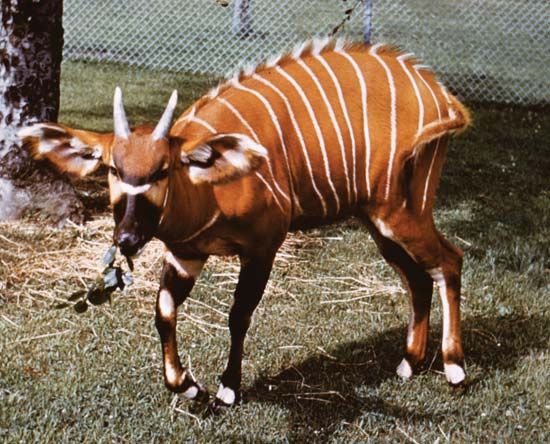
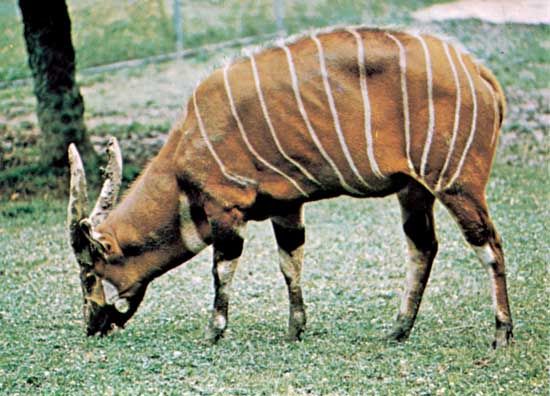
The bongo (Tragelaphus eurycerus) is the largest, most colorful, and most sociable of the African forest antelopes. A member of the Bovidae family, it is characterized by its striking reddish-brown coat featuring vertical white stripes, which helps it blend into its forest environment.1
The species is divided into two distinct populations:
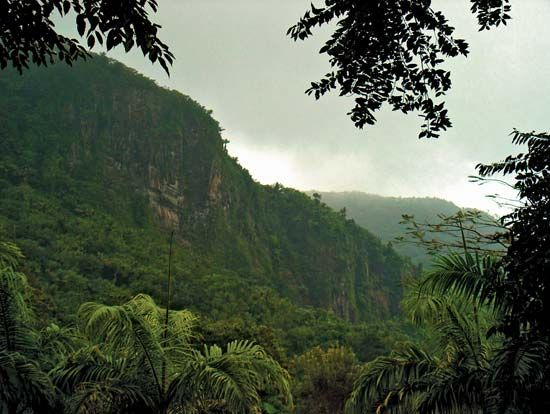
- Mountain Bongo: This subspecies is found in isolated pockets of protected mountain forests in the Kenya highlands, typically at elevations between 2,000 and 3,000 meters.1
- Lowland Bongo: This subspecies inhabits lowland rainforests and forest-savanna mosaics across western Africa and the Congo basin, extending as far as southwestern Sudan.1
Both subspecies face significant threats from habitat loss, poaching, and ecological changes, making their conservation a critical priority for protecting biodiversity.1
What are the distinctive physical characteristics of a bongo antelope?
The bongo (Tragelaphus eurycerus) is the largest and most colorful of the African forest antelopes. Its physical build is characterized by short, sturdy legs and hindquarters that are more developed and higher than its forequarters.1
Key physical features include:
- Coat and Markings: The animal has a glossy, chestnut-colored coat that darkens on the legs and underside. Males often grow darker with age, with some in the Kenya highlands appearing nearly black. This base color is contrasted by 12 to 14 vertical white or yellow stripes on the torso, along with cheek blotches, nose and chest chevrons, and banded legs.1
- Horns: Both sexes possess horns, a unique trait among tragelaphines. Males have massive, single-spiral horns averaging 75 cm in length, while females have thinner, more parallel horns of similar length.1
- Size: Despite a relatively short shoulder height of 122–128 cm, they are heavy animals. Males typically weigh 300–400 kg, while females weigh approximately 240 kg.1
- Ears: They feature large, rounded ears with distinct white or yellow bands.1
How do bongo antelopes behave in their natural habitat?
Bongo antelopes exhibit distinct social and behavioral patterns adapted to their forest environments. They are primarily browsers, consuming foliage from a wide variety of trees, bushes, and vines.1
Social Structure
Bongos are considered the most sociable of the African forest antelopes, though their social organization varies by sex:
- Females and Young: These individuals typically form small herds, often numbering around a dozen animals, though groups of 10–20 have been observed. These herds congregate in dense forest areas during the day and move to clearings at dusk to socialize, drink, and forage.1
- Adult Males: Mature males are generally solitary and nonterritorial.1
- Mating Season: During the mating season (October–January for mountain bongos), a bull may trail or accompany a herd of females.1
Habitat and Activity
Bongos are elusive and rely on their striking coloration to disrupt their outline within the forest. Their activity is closely tied to their environment:1
- Clearings: They frequently visit forest openings, such as water holes and mineral licks created by elephants, to consume clay soil and water.1
- Movement: Mountain bongos exhibit seasonal migration, moving between bamboo and mountain heath zones in the dry season and dispersing into cloud forests during the rains.1
- Reproduction: A single calf is born after a nine-month gestation period and remains hidden in dense cover for the first week or more of its life.1
How do bongo antelopes compare to other antelope species in terms of size and behavior?
The bongo (Tragelaphus eurycerus) occupies a unique position among antelopes due to its size and social habits.
Size Comparison
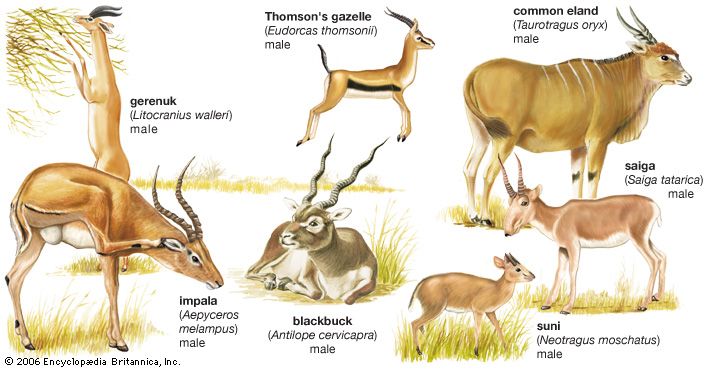
While antelopes range from the diminutive 2-kg royal antelope to the 1,000-kg giant eland, the bongo is the third heaviest antelope species, surpassed only by the common and giant elands. Despite its relatively short stature—with a shoulder height of 122–128 cm—it is a heavy animal, with males weighing between 300 and 400 kg.14
Behavioral Comparison
The bongo’s behavior reflects its adaptation to closed forest environments, which contrasts sharply with open-habitat species:
- Social Organization: Unlike many cover-dependent antelopes that are solitary or live in mated pairs, the bongo is the most sociable of the African forest antelopes. Females and young form herds of up to 20 individuals, whereas most other forest-dwelling species, such as duikers, are solitary.14
- Territoriality: Like other members of the Tragelaphini tribe, adult male bongos are nonterritorial, a trait that distinguishes them from many open-habitat antelopes that rely on male territoriality for their mating systems.14
- Defense: While open-habitat antelopes are built for speed and have revealing coloration, the bongo uses its striking, striped coat to disrupt its outline for concealment, relying on camouflage as its primary defense against predators.14
Sources
- bongo — Encyclopædia Britannica
- artiodactyl - Reproduction — Encyclopædia Britannica
- artiodactyl - Social behaviour — Encyclopædia Britannica
- antelope — Encyclopædia Britannica
Published on · 4 min read