Bovid
Bovids have developed a variety of specialized adaptations that allow them to thrive in diverse environments, ranging from dense forests to open plains. Key…
What are some unique adaptations that bovids have developed for survival?
Bovids have developed a variety of specialized adaptations that allow them to thrive in diverse environments, ranging from dense forests to open plains. Key adaptations include:1
- Horns: Unlike the antlers of deer, bovid horns consist of a permanent, unbranched keratin sheath covering a bony core. These serve as essential tools for defense against predators and for competition between males.234
- Digestive Efficiency: As advanced ruminants, bovids possess a complex, four-chambered stomach (rumen, reticulum, omasum, and abomasum). This allows them to ferment and extract nutrients from fibrous plant matter that other animals cannot digest, enabling them to occupy specific ecological niches efficiently.56
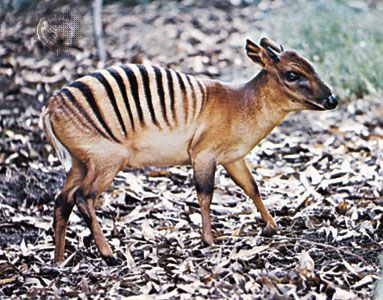
- Habitat-Specific Morphology: Through evolutionary convergence, bovids have adapted their body plans to their surroundings. Closed-habitat species (such as duikers) are built for navigating dense undergrowth and rely on hiding and concealing coloration. Conversely, open-habitat species are typically larger, built for speed, and often form herds for protection.1
- Water Conservation: Some species, such as certain gazelles, have evolved to survive in arid conditions by requiring very little water, often obtaining necessary moisture directly from their diet.5
What is the social structure like in different bovid species?
Bovid social organization is primarily categorized by habitat, with a clear distinction between species inhabiting closed environments and those in open ones.2
Habitat-Based Social Structures
- Closed-Habitat Bovids: Species such as duikers and dik-diks are adapted for dense undergrowth. They typically rely on hiding and concealing coloration to avoid predators. These bovids are generally solitary or monogamous and maintain territories to protect their resources.2
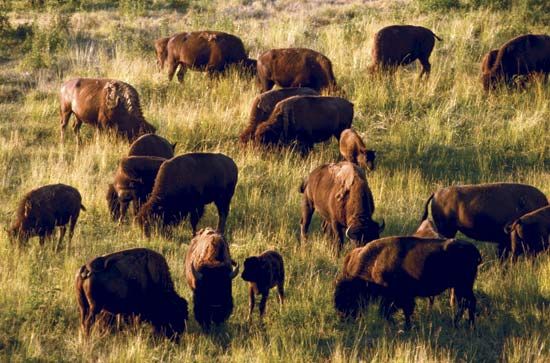
- Open-Habitat Bovids: These species are typically medium to large and form herds. They do not rely on hiding, instead using their speed and conspicuous coloration to survive in plains or mountainous regions. Herding provides significant survival advantages, including social facilitation—where the flight of one individual triggers a collective response—and the ability of older generations to guide the group to water or food.28
Mating and Hierarchy
Bovid mating systems are generally either territorial or based on a male dominance hierarchy.2
- Territoriality: In many groups, such as the Antilopinae and the duiker tribe, breeding males defend specific areas to secure mating opportunities.2
- Non-territorial Systems: Members of the subfamilies Caprinae and Bovinae are largely non-territorial. Instead, these species often organize themselves through dominance hierarchies, where males compete for status rather than fixed land.2
What are some endangered bovid species, and what conservation efforts are in place to protect them?
Many bovid species are currently facing significant threats to their survival, primarily due to habitat loss, competition with domestic livestock, and overhunting. Because the survival of these wild populations is now largely dependent on human intervention, conservation efforts are critical to preventing further extinctions.1011
Endangered Species and Threats
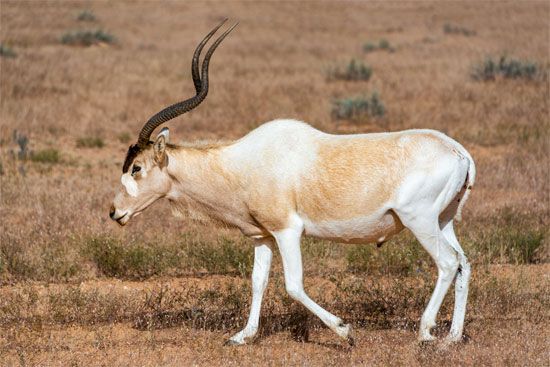
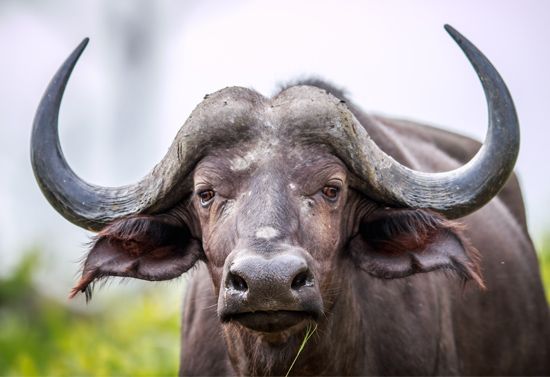
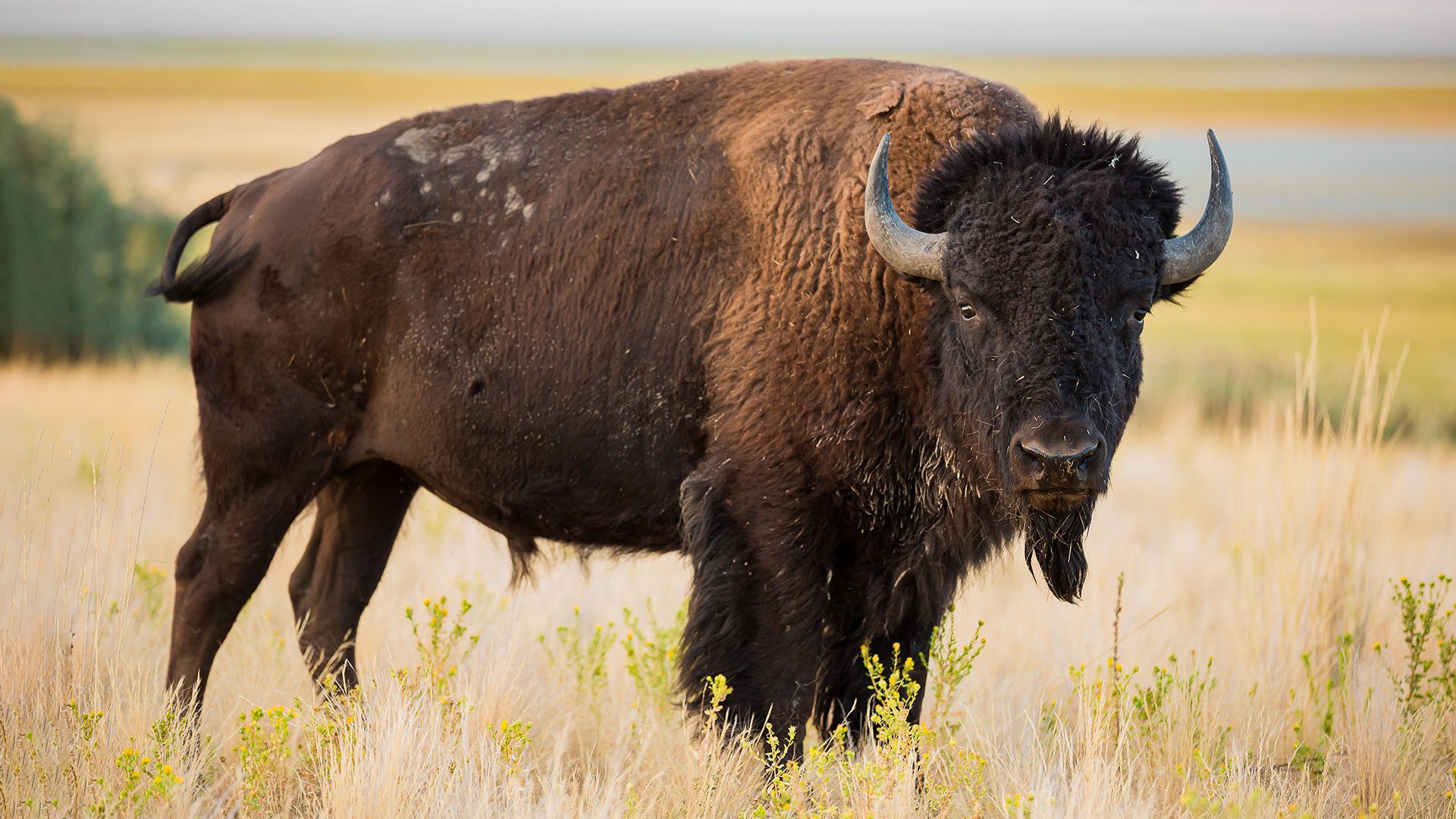
The addax (Addax nasomaculatus) is a prime example of a critically endangered species. Once widespread across the Sahara, it was nearly exterminated by poaching from motorized vehicles. Other species, such as the Cape buffalo, face ongoing pressures from habitat loss, competition with cattle, and susceptibility to diseases. Historically, the bison was also brought to the verge of extinction by commercial hunting in the 19th century.12310
Conservation Efforts
To protect these animals, conservationists employ several key strategies:
- Protected Areas: Establishing a global network of reserves is essential for preserving natural habitats, though these currently cover less than 10 percent of the ecosystems they were intended to protect.10
- Legal Protections: National and international laws, such as the Endangered Species Act and the Convention on International Trade in Endangered Species, are used to prohibit the killing or commercial trade of threatened species.1314
- Captive Breeding and Reintroduction: For species like the addax, breeding in zoos and on private ranches provides a vital safety net, with the ultimate goal of reintroducing populations into securely protected areas within their original range.12
- Monitoring and Policy: Tools like the IUCN Red List of Threatened Species help decision-makers prioritize conservation, while international agreements like the Convention on Biological Diversity encourage governments to set and meet habitat protection goals.14
How diverse is the bovid family, and what are some examples of different species?
The bovid family (Bovidae) is remarkably diverse, encompassing 143 species across 50 genera. These hoofed mammals are distinguished from other cud-chewing artiodactyls by their permanent, unbranched horns, which consist of a keratin sheath covering a bony core1.1
Diversity and Examples
Bovids exhibit a vast range of sizes, horn shapes, and ecological adaptations. The family is organized into several subfamilies, each with unique characteristics:
- Bovinae: Includes large grazers such as cattle, bison, and buffaloes, as well as the spiral-horned eland, kudu, and bushbuck.2
- Caprinae: Primarily mountain-dwelling or agile species, including sheep, goats, the musk-ox, chamois, and the Rocky Mountain goat.2
- Antilopinae: Graceful, long-legged antelopes of arid regions, such as gazelles, the springbok, and the blackbuck.2
- Cephalophinae: Small, forest-dwelling antelopes known as duikers.2
- Hippotraginae: Stocky, grazing antelopes like the oryx, addax, and reedbuck.2
- Alcelaphinae: Plains-living species such as wildebeests and hartebeests.2
Additionally, the family continues to surprise researchers, as evidenced by the discovery of the saola in the 1990s.1
Sources
- bovid — Encyclopædia Britannica
- bovid - Social organization — Encyclopædia Britannica
- bovid - Evolution and diversification — Encyclopædia Britannica
- artiodactyl - Digestive system — Encyclopædia Britannica
- horn — Encyclopædia Britannica
- artiodactyl - Horns and antlers — Encyclopædia Britannica
- Avoidance behaviour - Protection reflexes, armour, and spines — Encyclopædia Britannica
- Territorial behaviour — Encyclopædia Britannica
- artiodactyl - Social behaviour — Encyclopædia Britannica
- addax — Encyclopædia Britannica
- bovid - Natural history — Encyclopædia Britannica
- conservation - Protecting species — Encyclopædia Britannica
- biodiversity loss - Solutions to biodiversity loss — Encyclopædia Britannica
- Cape buffalo: Top Questions — Encyclopædia Britannica
- artiodactyl - Annotated classification — Encyclopædia Britannica
Published on · 4 min read