Bony Fish
Bony fish (superclass Osteichthyes) have been a vital resource for humanity since ancient times, serving as a primary food source and a cultural staple.…
How have humans utilized bony fish throughout history, and what is their current economic importance?
Bony fish (superclass Osteichthyes) have been a vital resource for humanity since ancient times, serving as a primary food source and a cultural staple. Archaeological evidence, such as shell mounds in Scotland and mummified fish in Egyptian tombs, highlights their long-standing role in human diets. Historically, certain species were highly prized; for instance, goatfish were valued in Roman archives, and various species have held significant places in Japanese culinary and artistic traditions for centuries.12
Today, bony fish represent the vast majority of the world’s commercial and sport fishes. Their economic importance is multifaceted:1
- Food and Industry: Beyond direct consumption, they provide products like isinglass for food and beverage processing, leather from wolffish skin, and guanin for artificial pearls.2
- Aquaculture: Species like Tilapia are cultivated globally as a low-cost protein source.2
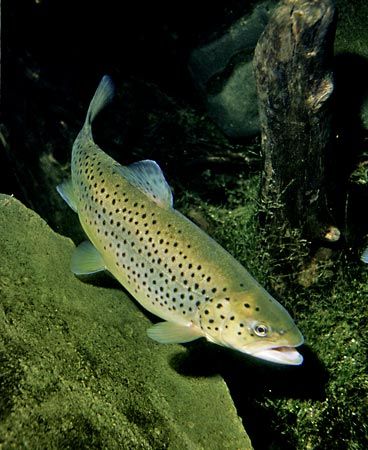
- Sport and Commerce: Governments and private industries invest heavily in rearing and stocking species like trout and salmon to meet high demand.3
- Global Trade: Coastal nations leverage their exclusive economic zones to generate income by managing or selling fishing rights for valuable pelagic species like tuna.4
How do bony fish reproduce, and what are some unique reproductive strategies found in this group?
Most bony fishes (superclass Osteichthyes) are oviparous, meaning they lay eggs that undergo external fertilization. In this process, females release large numbers of eggs into the water, while males release milt to fertilize them externally. Because these eggs are often left unprotected, they face high mortality rates.6
However, bony fishes exhibit a remarkable diversity of reproductive strategies to improve offspring survival:
- Live-bearing: Some species are ovoviviparous (nourishing embryos with yolk) or viviparous (nourishing embryos directly via the female body), giving birth to fewer, larger, and more resilient young.67
- Hermaphroditism: This is more common in bony fishes than in any other vertebrate group. Many species are protogynous, functioning as females when young and transitioning to males as they grow larger, which can be advantageous in specific mating systems.7
- Parental Care: Many species engage in elaborate behaviors, such as building nests or guarding eggs. Some are mouthbreeders, where parents incubate eggs or protect young within their mouths to ensure safety.68

How did bony fish evolve, and when did they first appear in the fossil record?
The evolution of bony fishes (superclass Osteichthyes) is a long-term process characterized by the development of a body plan optimized for swimming efficiency, particularly through the refinement of fins and tail structures.9
Evolutionary Origins
Bony fishes are divided into two main classes: the Actinopterygii (ray-finned fishes) and the Sarcopterygii (fleshy-finned fishes). Both groups likely share a common ancestor among unknown jawed freshwater fishes from the Silurian Period.910
The evolution of bone itself was a critical development, providing a reservoir for phosphate and calcium that allowed vertebrates to maintain internal fluid homeostasis, a necessary step for the eventual emergence of terrestrial life.11
Appearance in the Fossil Record
- Ray-finned fishes: The Actinopterygii have been present for approximately 400 million years, appearing in the fossil record during the Early Devonian. Modern bony fishes, or teleosts, first appeared about 200 million years ago.9
- Fleshy-finned fishes: The remains of Sarcopterygians, including lungfish, also first appear in Lower Devonian strata.10
While these groups were well-established by the Devonian, their more primitive ancestors remain elusive, as early vertebrate history is poorly represented in the fossil record.2
What are some of the largest and smallest known species of bony fish?
Bony fishes (superclass Osteichthyes) exhibit a vast range of sizes, from massive oceanic giants to some of the smallest vertebrates on Earth.
Largest Bony Fishes
- Beluga (Huso huso): Recognized as the largest freshwater fish in the world, this sturgeon can reach lengths of up to 8 meters (26.2 feet) and weigh as much as 3.2 metric tons.14
- Giant Oarfish (Regalecus): An elongated, ribbonlike fish that can grow to 8 meters (25 feet) in length.1
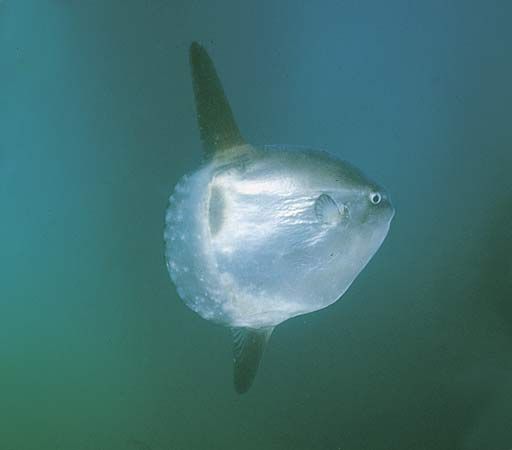
- Molas (Family Molidae): These are the most massive of the bony fishes. The largest species, M. alexandrini, can measure 3.32 meters (10.9 feet) and weigh up to 2,300 kg (roughly 2.5 tons).15
- Marlins and Swordfishes: Members of the family Istiophoridae can reach lengths of up to 4.5 meters (15 feet).16
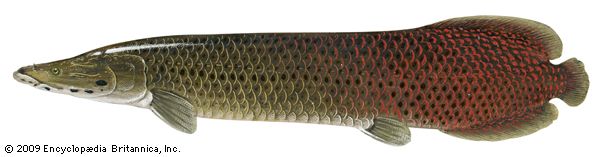
- Pirarucu (Arapaima gigas): A notable freshwater giant of the Amazon that can attain a length of 3 meters (about 10 feet).17
Smallest Bony Fishes
Sources
- bony fish — Encyclopædia Britannica
- bony fish — Merriam-Webster
- perciform - Use as food — Encyclopædia Britannica
- protacanthopterygian - Importance — Encyclopædia Britannica
- Indian Ocean - Fisheries — Encyclopædia Britannica
- How do fish reproduce? — Encyclopædia Britannica
- Reproductive behaviour - Fishes — Encyclopædia Britannica
- mouthbreeder — Encyclopædia Britannica
- fish - Actinopterygii: ray-finned fishes — Encyclopædia Britannica
- bone - Evolutionary origin and significance — Encyclopædia Britannica
- fish - Sarcopterygii: fleshy-finned fishes — Encyclopædia Britannica
- fish - Agnatha: early jawless fishes — Encyclopædia Britannica
- fish - Acanthodii: early jawed fishes — Encyclopædia Britannica
- mola — Encyclopædia Britannica
- osteoglossomorph - General features — Encyclopædia Britannica
- chondrostean - Size range — Encyclopædia Britannica
- atheriniform - General features — Encyclopædia Britannica
Published on · 4 min read