Bougainvillea
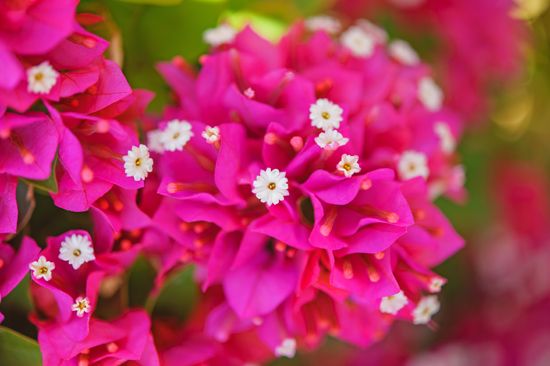
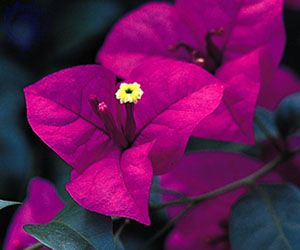
The colorful structures often mistaken for flowers on a bougainvillea are actually called bracts.
What are the colorful ‘flowers’ of bougainvillea actually called, and what is their purpose?
The colorful structures often mistaken for flowers on a bougainvillea are actually called bracts.1
While the true flowers of the plant are small and inconspicuous, these papery, brightly colored bracts serve to surround them. Together, the combination of the bracts and the tiny flowers creates an appearance that resembles a single, showy flower with conspicuous petals. By providing this vibrant display, the bracts help attract pollinators to the otherwise subtle flowers.12
How is bougainvillea used in landscaping and gardening?
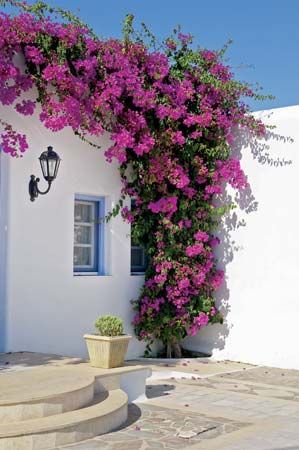
Bougainvillea is a versatile genus of shrubs, vines, and small trees widely utilized in landscaping and gardening, particularly in warm climates where they are hardy.1
Because of their vigorous growth, the woody vine species are especially popular for covering large areas. In suitable environments, stems can reach lengths of 20 to 30 meters (about 60 to 100 feet), making them excellent for climbing walls, trellises, or fences. Their ability to remain in flower throughout most of the year provides a long-lasting, vibrant display of color through their papery [bracts].1
Beyond outdoor landscaping, these plants are also frequently grown in containers, indoors, and in conservatories, where their showy cultivated varieties serve as ornamental features. Gardeners often select specific varieties based on the color of their bracts, which range from purple and magenta to yellow, orange, and crimson.1
In which regions or climates does bougainvillea typically grow?
Bougainvillea is native to South America, with specific species originating from regions including Brazil, Colombia, and Peru.1
These plants are hardy in warm climates, where they thrive and can remain in flower throughout most of the year. In such favorable environments, the woody vines are capable of significant growth, with stems reaching lengths of 20 to 30 meters (approximately 60 to 100 feet). Because they are not frost-tolerant, they are often grown in conservatories or as indoor plants in cooler regions.1
What is the history of bougainvillea’s discovery and cultivation?
The plant genus Bougainvillea is named after the French navigator Louis-Antoine de Bougainville, who led a French expedition that completed the first French circumnavigation of the globe between 1766 and 1769. While the genus is native to South America—specifically regions including Brazil, Colombia, and Peru—the name honors the explorer who encountered these plants during his travels.31
The botanical classification of the genus was established in New Latin, derived directly from his surname. Although the plants were discovered in their native tropical habitats, their widespread cultivation as ornamental shrubs and vines gained significant traction later, with the first known use of the term in English recorded in 1849. Today, the genus is celebrated for its showy, papery [bracts], which have been hybridized into various colors, including yellow, orange, and crimson, to suit diverse gardening and landscaping needs.21
Sources
- bougainvillea — Encyclopædia Britannica
- bougainvillea — Merriam-Webster
- Louis-Antoine de Bougainville — Encyclopædia Britannica
Published on · 2 min read