Fothergilla
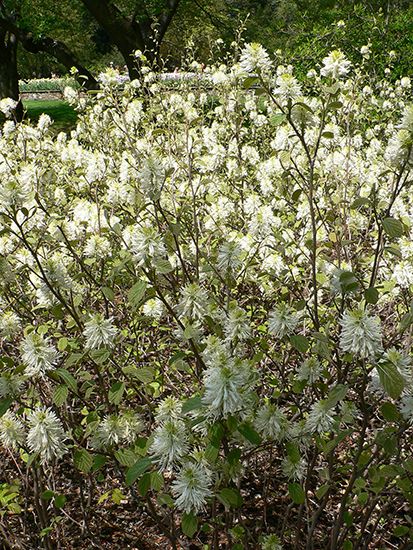
Fothergilla is a genus comprising approximately five species of deciduous shrubs belonging to the witch hazel family (Hamamelidaceae). Native to the…
What is Fothergilla?
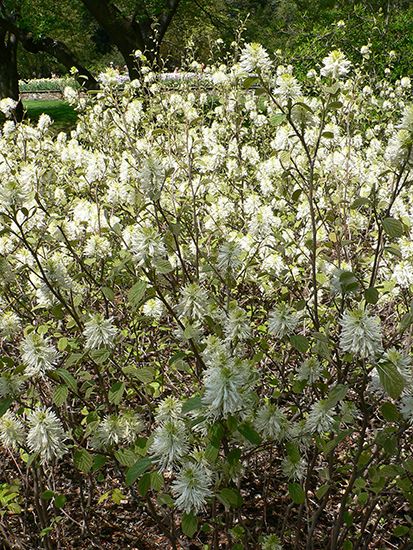
Fothergilla is a genus comprising approximately five species of deciduous shrubs belonging to the witch hazel family (Hamamelidaceae). Native to the southeastern United States, these plants are frequently cultivated as ornamentals due to their attractive seasonal displays.1
In the spring, they produce distinctive, petal-less flowers characterized by conspicuous white to yellow puffs of stamens. While the foliage is coarse in texture, the leaves are highly valued for their vibrant autumn transformation, turning brilliant shades of orange to crimson. All species within the genus are commonly referred to as witch alder, a name particularly associated with F. gardenii, which typically reaches heights of up to 1 meter (3 feet).1
What other plants belong to the witch hazel family?
The Hamamelidaceae family, or witch hazel family, includes approximately 30 genera and 100 species of trees and shrubs. Beyond Fothergilla, several other notable plants belong to this group:
- Witch hazel (Hamamelis): Widely cultivated in temperate regions for its early spring flowers.
- Winter hazel (Corylopsis): Another popular ornamental known for its early spring blooms.
- Persian ironwood (Parrotia persica): A small tree valued for its strong wood and vibrant autumn foliage that shifts from golden yellow to scarlet.
- Parrotiopsis jacquemontiana: A related Himalayan plant with strong twigs often used for weaving baskets and constructing bridges.
- Disanthus cercidifolius: A Japanese shrub featuring dark purple flowers and leaves that turn a striking crimson red in the fall.
- Exbucklandia (also known as Symingtonia): A genus native to the Himalayas and tropical Asia, prized for its valuable timber.
Why do some flowers lack petals?
Flowers may lack petals for several reasons, primarily related to their method of pollination.
In many plants, petals serve as showy, fragrant, or nectar-rich structures designed to attract animal pollinators like insects, birds, or bats. However, plants that rely on wind pollination (anemophily) do not require these visual or olfactory attractants. Consequently, wind-pollinated flowers are often inconspicuous and lack petals entirely, as these structures would only serve to obstruct the movement of pollen in the breeze.4567
In other cases, a flower may appear to lack petals, but the function has simply been assumed by other parts:
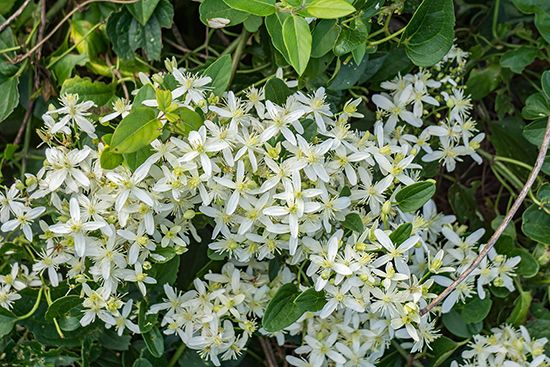
- Petaloid Sepals: Some flowers, such as Clematis and Bougainvillea, lack true petals. Instead, their sepals have become brightly colored and petal-like to perform the role of attracting pollinators.85
- Tepals: When sepals and petals are indistinguishable in appearance, as seen in many lilies and tulip trees, the structures are collectively referred to as tepals rather than distinct petals and sepals.845
What makes a plant considered native to North America?
A plant is considered native to North America if it occurs naturally in the region without having been introduced by human activity.1213
In botanical and ecological contexts, the term native implies that a species originated in a specific place or region and has developed compatibility with its environment over time. This is distinct from indigenous species, which are not only native but, as far as can be determined, have never been introduced or brought to the area from elsewhere.12
Conversely, plants that are not native to North America are often categorized as introduced or nonnative species. While many introduced plants do not survive in new habitats, some become invasive if they possess a competitive advantage—such as a lack of natural predators—that allows them to disrupt local ecosystems, reduce biodiversity, and displace native flora.13
Sources
- Fothergilla — Encyclopædia Britannica
- Hamamelidaceae — Encyclopædia Britannica
- Hamamelidaceae — Merriam-Webster
- sepal — Encyclopædia Britannica
- petal — Encyclopædia Britannica
- pollination - Wind — Encyclopædia Britannica
- angiosperm - General features — Encyclopædia Britannica
- Caryophyllales - Other families — Encyclopædia Britannica
- angiosperm - Pollination — Encyclopædia Britannica
- Asteraceae - Pollination — Encyclopædia Britannica
- petal: Top Questions — Encyclopædia Britannica
- native — Merriam-Webster
- invasive species — Encyclopædia Britannica
- North America - The North American Indian heritage — Encyclopædia Britannica
- Native American - Native American ethnic and political diversity — Encyclopædia Britannica
Published on · 3 min read