Box Elder
The box elder (Acer negundo) is a hardy, fast-growing tree belonging to the soapberry family. Native to the central and eastern United States, it is unique…
What is box elder?
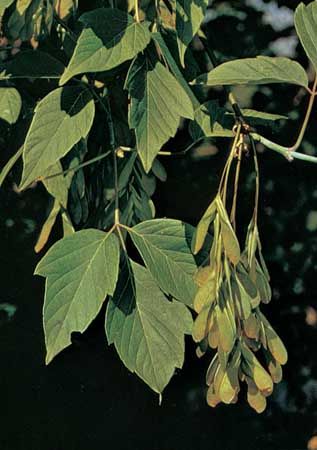
The box elder (Acer negundo) is a hardy, fast-growing tree belonging to the soapberry family. Native to the central and eastern United States, it is unique among maples for its compound leaves, which consist of three to seven coarsely toothed leaflets.12
The tree typically reaches heights of 9–15 meters (30–50 feet) and produces seeds in a samara, a winglike structure often called a key. Because of its rapid growth and drought resistance, it was historically favored by settlers for shade in prairie regions. Its wood is utilized for various products, including furniture, crates, paper pulp, and charcoal, and it can also be tapped for maple syrup and sugar.1
It is important to distinguish the tree from the box-elder bug (Leptocoris trivittatus), a red-and-black insect that feeds on the tree and often seeks shelter in buildings during colder months.3
How do box elder bugs affect homes?
Box-elder bugs (Leptocoris trivittatus) are primarily a nuisance to homeowners because they seek shelter in buildings to hibernate during colder months. While they are sap-sucking insects that feed on the box elder tree and occasionally fruit, they do not cause structural damage to homes. Their presence is typically considered an annoyance due to the large numbers in which they may congregate when entering structures to enter a state of partial dormancy.3
What makes the leaves of a box elder unique among maples?
The box elder (Acer negundo) is distinguished from most other maples by its unique leaf structure. While many maple species are characterized by simple, lobed leaves, the box elder features compound leaves that consist of three, five, or seven coarsely toothed leaflets.1
Although a few other maple species also possess leaves separated into leaflets, this compound arrangement is considered rare within the Acer genus. This distinct foliage is a primary reason the tree is sometimes referred to as the ash-leaved maple.12
How is maple syrup produced from trees?
Maple syrup is produced by concentrating the sweet-water sap of specific maple trees, primarily the sugar maple and black maple. This process occurs during late winter or early spring when the trees are dormant and temperatures fluctuate between freezing and thawing, causing the sap to flow.65
The production process involves several key steps:
- Tapping: A hole is drilled into the sapwood of the tree, and a spigot-like device is inserted to collect the sap.6
- Collection: Traditionally, sap was drained into buckets; however, modern methods often use plastic tubing to transport sap from entire stands of trees, known as a sugar bush, to central storage tanks.6
- Evaporation: The raw sap, which contains 1.5 to 3 percent solids (mostly sucrose), is boiled in open pans. This evaporation process concentrates the liquid and imparts the characteristic colour and flavour of the syrup.65
It takes approximately 30 to 50 gallons of sap to produce just one gallon of finished syrup.65
Sources
- box elder — Encyclopædia Britannica
- box elder — Merriam-Webster
- box-elder bug — Merriam-Webster
- maple — Encyclopædia Britannica
- sugar maple — Encyclopædia Britannica
- maple syrup — Encyclopædia Britannica
Published on · 2 min read