Broad Bean
The broad bean (Vicia faba), also known as the fava bean, is a species of legume in the family Fabaceae. It is the principal bean of Europe, though it is…
What is Broad bean?
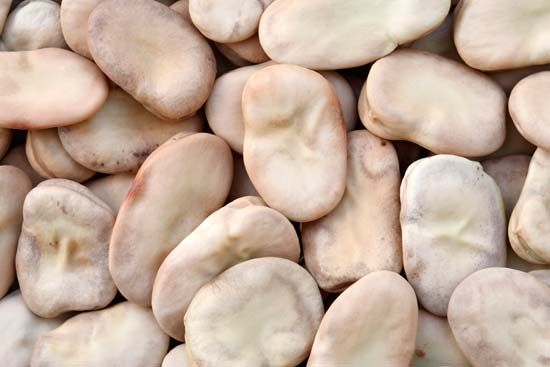
The broad bean (Vicia faba), also known as the fava bean, is a species of legume in the family Fabaceae. It is the principal bean of Europe, though it is less commonly known in the United States.123
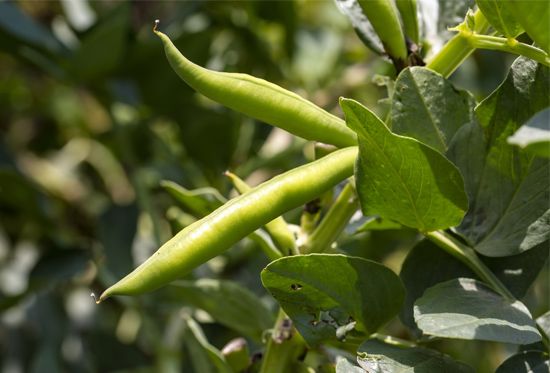
The plant is an erect, sparsely branched herb reaching 60 to 150 cm (2 to 5 feet) in height. It features compound leaves and produces clusters of nearly erect pods containing large, irregularly flattened seeds. Unlike many other beans, the broad bean thrives in cool weather and can tolerate slight freezing, making it suitable for winter cultivation in warmer regions or summer growth in cool temperate zones.13
Beyond its use as a food crop rich in protein, iron, thiamin, and riboflavin, the plant is frequently used as a cover crop and green manure because it adds nitrogen to the soil through nitrogen-fixing bacteria. It is also used as livestock fodder. Note that individuals with favism, a genetic disorder, may experience acute hemolytic anemia if they ingest the beans.14
How do nitrogen-fixing bacteria help plants grow?
Nitrogen-fixing bacteria are essential to plant growth because they convert atmospheric nitrogen—which is abundant but unusable by most plants—into inorganic compounds like ammonia that plants can metabolize for development.567
This process occurs primarily through two methods:
- Symbiotic Relationships: Certain bacteria, such as Rhizobium, invade the root hairs of host plants (notably legumes) to form root nodules. Within these nodules, the bacteria and plant engage in a mutualistic exchange: the plant provides the bacteria with a home and nutrients, while the bacteria fix nitrogen into compounds the plant uses to build proteins and support metabolism.57
- Free-living Bacteria: Other microorganisms, including cyanobacteria, fix nitrogen independently in the soil or aquatic environments, eventually making these nutrients available to the broader ecosystem.57
When host plants die or decay, these nitrogen products are released into the soil, enriching it for other vegetation. This natural fertilization is a cornerstone of crop rotation and sustainable agriculture.7
What is the difference between a legume and other types of vegetables?
A legume is specifically the fruit of a plant belonging to the pea family (Fabaceae). While often categorized as vegetables in culinary contexts, legumes are botanically distinct due to their unique reproductive structure and ecological capabilities.87
Key Differences
- Botanical Structure: A legume is a type of fruit that typically develops from a single ovary and, in most cases, splits open along two seams to release its seeds. While many vegetables are harvested for their leaves, roots, or stems, legumes are primarily cultivated for their protein-rich seeds.84
- Nitrogen Fixation: A defining characteristic of the Fabaceae family is its ability to engage in a symbiotic relationship with Rhizobium bacteria. These bacteria live in root nodules and convert atmospheric nitrogen into compounds the plant can use. This process is almost unique to legumes and makes them vital for soil health, whereas other vegetables generally rely on existing soil nutrients or external fertilizers.910
- Nutritional Profile: While all vegetables provide essential vitamins and minerals, legumes are particularly noted for their high protein content and essential amino acids, making them a critical food staple in many parts of the world.847
Why are some people sensitive to fava beans due to favism?
People are sensitive to fava beans due to a condition called favism, which is a hereditary disorder linked to a deficiency of the enzyme glucose-6-phosphate dehydrogenase (G6PD).1112
The Biological Mechanism
G6PD is essential for protecting red blood cells from oxidative damage. Individuals with a G6PD deficiency lack sufficient levels of this enzyme, making their red blood cells more fragile and susceptible to destruction, a process known as hemolysis. When these individuals consume fava beans or inhale their pollen, the body undergoes an oxidative reaction that the deficient cells cannot counteract, leading to hemolytic anemia.131112
Inheritance and Prevalence
- Genetic Basis: Susceptibility to favism is inherited as a sex-linked trait, meaning it is most commonly expressed in males.111213
- Demographics: The condition is most frequently found in populations with ancestry from the Mediterranean basin and Africa.1113
- Evolutionary Context: It has been suggested that this metabolic abnormality may offer a protective effect against malaria, which may explain its prevalence in certain regions.13
Sources
- Broad bean — Encyclopædia Britannica
- broad bean — Merriam-Webster
- vetch — Encyclopædia Britannica
- Bean — Encyclopædia Britannica
- Nitrogen-fixing bacteria — Encyclopædia Britannica
- Bacteria: Top Questions — Encyclopædia Britannica
- Fabaceae - Nitrogen fixation — Encyclopædia Britannica
- Legume — Encyclopædia Britannica
- vegetable processing - Nutritional value — Encyclopædia Britannica
- Fabaceae: Top Questions — Encyclopædia Britannica
- favism — Encyclopædia Britannica
- favism — Merriam-Webster
- glucose-6-phosphate dehydrogenase deficiency — Encyclopædia Britannica
Published on · 3 min read