Box Jellyfish
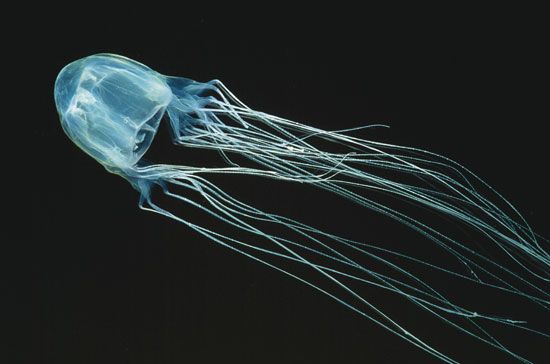
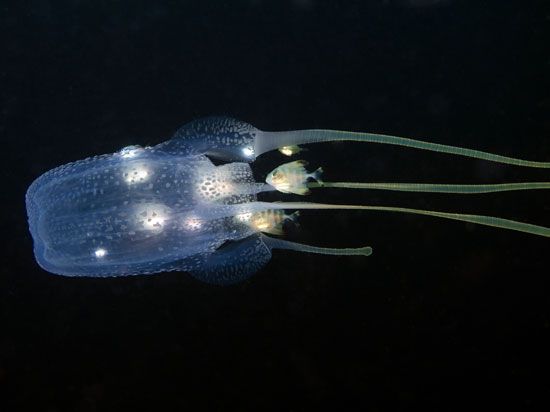
A box jellyfish is any cnidarian belonging to the class Cubozoa, characterized by a semitransparent, cube-shaped bell. These marine invertebrates are found…
What is a box jellyfish?
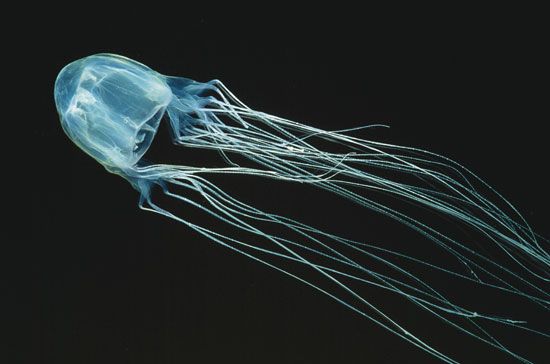
A box jellyfish is any cnidarian belonging to the class Cubozoa, characterized by a semitransparent, cube-shaped bell. These marine invertebrates are found in warm coastal waters worldwide, particularly in the Indian and Pacific Oceans.12
Unlike many other jellyfish that drift with currents, box jellyfish are strong swimmers capable of navigating toward prey. They possess a unique feature among cnidarians: 24 eyes arranged in clusters around the bell, some of which are sophisticated “true eyes” with lenses and retinas. They capture prey—such as fish, shrimp, and crustaceans—using long, trailing tentacles equipped with nematocysts, which are stinging cells that inject potent venom.2
While some species have mild toxins, others, such as the Australian box jellyfish (Chironex fleckeri), are among the most venomous creatures on Earth. Their stings can cause extreme pain, paralysis, and even cardiac arrest within minutes. Due to these risks, many regions implement safety warnings at swimming destinations.12
Why is it called a box jellyfish?
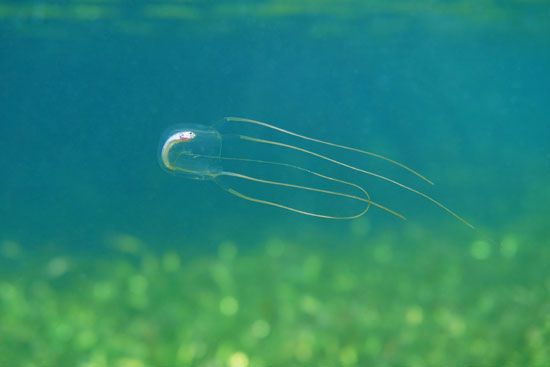
The box jellyfish is so named because of its distinct, cube-shaped bell. While many other types of jellyfish have a more rounded or saucer-shaped body, the members of the class Cubozoa possess a semitransparent, box-like structure that gives rise to their common name.123
Where are box jellyfish commonly found?
Box jellyfish are found in warm coastal marine waters throughout the world. Species known for their toxic venom are primarily located in the Indian and Pacific Oceans.5
Specific regions where these jellyfish are commonly found include:
- The waters between Thailand and the Philippines.5
- The coastal waters of northern Australia, particularly along the northern coast where the deadly Chironex fleckeri resides.25
- Areas extending from Queensland northward to Malaya, where certain species known as sea wasps are found.3
Because of the serious risks associated with their venom, many governments in these regions post warnings and implement safety measures at beaches and other swimming destinations when box jellyfish are present.25
What makes the box jellyfish dangerous to humans?
Box jellyfish are dangerous to humans primarily due to their highly potent venom, which is delivered through specialized cells called nematocysts. These capsules contain tiny, barbed hooks that fire upon contact, injecting a complex mixture of proteins into the victim.25
The severity of a sting depends on the amount of skin contact with the tentacles. The effects of the venom can be life-threatening and rapid:2
- Immediate Impact: Victims often experience extreme pain.25
- Systemic Effects: Highly toxic species, such as the Australian box jellyfish, can cause paralysis, cardiac arrest, and death within as little as five minutes.25
- Irukandji Syndrome: Some stings result in this condition, characterized by severe muscle cramps, vomiting, agitation, and potential heart failure.2
While scientists continue to study how these toxins affect human cells, the combination of their potent venom and their ability to actively hunt makes them significant hazards in their marine environments.25
Sources
- box jellyfish — Merriam-Webster
- box jellyfish — Encyclopædia Britannica
- jellyfish — Encyclopædia Britannica
- cnidarian - Annotated classification — Encyclopædia Britannica
- What is the most venomous jellyfish? — Encyclopædia Britannica
Published on · 2 min read