Tabulata
Tabulata refers to a major division of extinct coral animals that existed from the Ordovician to the Jurassic periods, approximately 488 million to 146…
What is Tabulata?
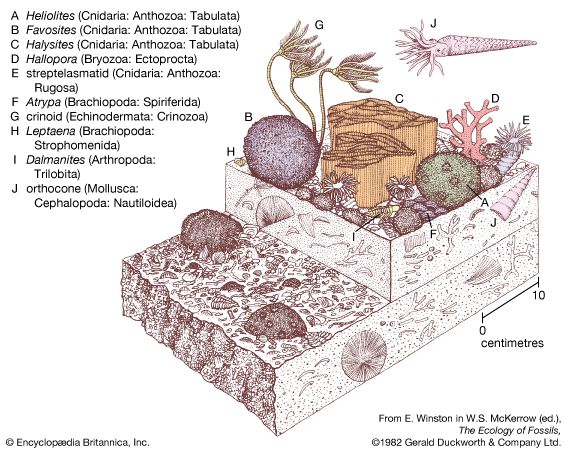
Tabulata refers to a major division of extinct coral animals that existed from the Ordovician to the Jurassic periods, approximately 488 million to 146 million years ago.1
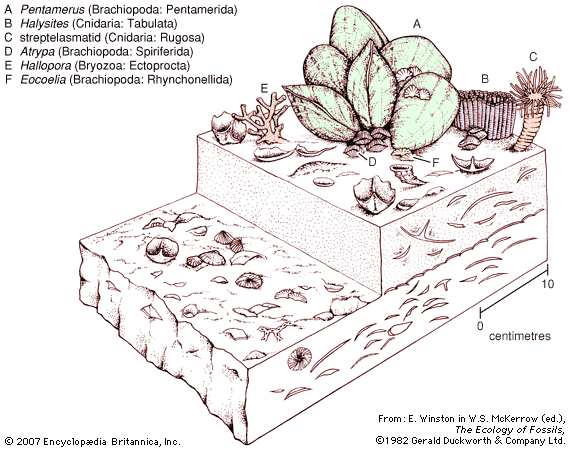
These organisms are primarily identified by the presence of interior horizontal platforms known as tabulae. Unlike many other coral groups, they are generally characterized by a lack of vertical walls, or septa. Tabulate corals typically grew in colonial masses, which occasionally formed sizable reef-like structures. While some classifications describe them as an artificial group of stony corals, they are widely recognized in the fossil record for their distinct tubular calicles.12
What are the main differences between tabulate and rugose corals?
The query asks for a comparison between tabulate and rugose corals; however, the provided search results only contain information regarding Tabulata. Consequently, I cannot provide a comprehensive comparison between the two groups based on the available data.
Tabulate corals are defined by their interior horizontal platforms, known as tabulae, and a general absence of vertical walls, or septa. They existed as colonial masses from the Ordovician to the Jurassic periods and are frequently found in the fossil record as components of ancient marine structures.
How do fossils help scientists understand ancient marine environments?
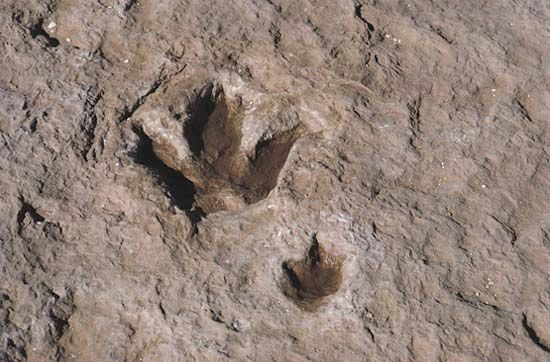
Fossils serve as essential tools for scientists to reconstruct and understand ancient marine environments. By analyzing the remains and traces of organisms preserved in sedimentary rock, researchers can infer the physical and chemical conditions of past oceans.34
Environmental Indicators
Fossilized organisms act as proxies for the conditions of their time. For example, the presence of specific coral species indicates that the environment was once characterized by warm, shallow water, as these organisms have specific temperature and depth requirements. Similarly, the distribution of plant and animal fossils helps scientists map past climates and track shifts in Earth’s crust, such as when fossils of warm-water species are discovered in regions that are now polar.345
Stratigraphy and Correlation
Fossils allow geologists to assign relative ages to rock layers, a process known as biostratigraphy. By using index fossils—species that were abundant, widespread, and existed for a short geologic time—scientists can correlate strata across different geographic locations to build a continuous history of marine life and environmental change.4678
Advanced Analysis
Beyond simple identification, modern techniques involve analyzing microfossils from core samples to study subsurface stratigraphy and chemical signatures, such as oxygen isotope ratios in fossil corals, which provide precise data on past temperatures and ice volume.569
What are some other types of extinct marine life from the Ordovician period?
The Ordovician Period (485.4 million to 443.4 million years ago) was characterized by the “Ordovician radiation,” an intense diversification of marine life that saw the evolution of almost every modern phylum of marine invertebrate. Beyond the well-known trilobites, the seas were populated by a vast array of organisms:13
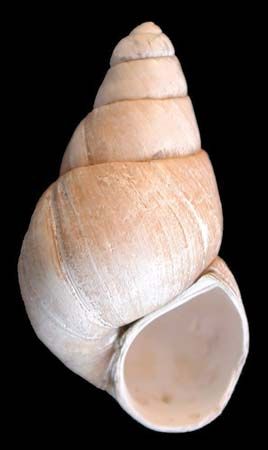
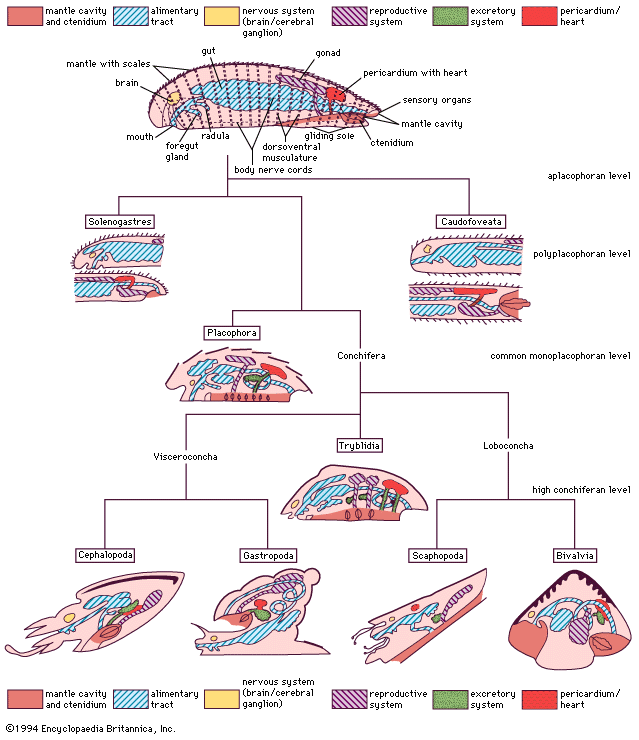
- Mollusks: This diverse group included gastropods, bivalves, cephalopods, monoplacophorans, chitons, scaphopods, and rostroconchs.14
- Echinoderms: Reaching a peak diversity of 20 classes, these included crinoids, cystoids, starfishes, edrioasteroids, and homalozoans.14
- Brachiopods and Bryozoans: Brachiopods (lamp shells) and bryozoans (moss animals) were dominant components of many marine assemblages.1314
- Sponges and Corals: Both calcareous and siliceous sponges were present, alongside the first appearances of stromatoporoids, Tabulata, and rugosa corals.14
- Other Invertebrates: The period featured graptolites, conodonts, and various arthropods such as ostracods, eurypterids (sea scorpions), and primitive horseshoe crabs.14
Sources
- Tabulata — Encyclopædia Britannica
- Tabulata — Merriam-Webster
- index fossil — Encyclopædia Britannica
- fossil record — Encyclopædia Britannica
- fossil — Encyclopædia Britannica
- Climate change - Evidence for climate change — Encyclopædia Britannica
- Marine ecosystem - Origins of marine life — Encyclopædia Britannica
- Tertiary Period - Correlation of Tertiary strata — Encyclopædia Britannica
- dating - Principles and techniques — Encyclopædia Britannica
- geology - Invertebrate paleontology — Encyclopædia Britannica
- coral reef - Winds , currents, temperature, and salinity — Encyclopædia Britannica
- Quaternary - Paleoclimate — Encyclopædia Britannica
- A Journey Through Time Since the Precambrian - Ordovician Period: 485.4 million to 443.4 million years ago — Encyclopædia Britannica
- Ordovician Period - Invertebrates — Encyclopædia Britannica
- Ordovician Period - Mass extinction at the end of the Ordovician — Encyclopædia Britannica
- trilobite — Encyclopædia Britannica
- Ordovician Period - Exploitation of habitats — Encyclopædia Britannica
Published on · 3 min read