What Is the Most Venomous Jellyfish?
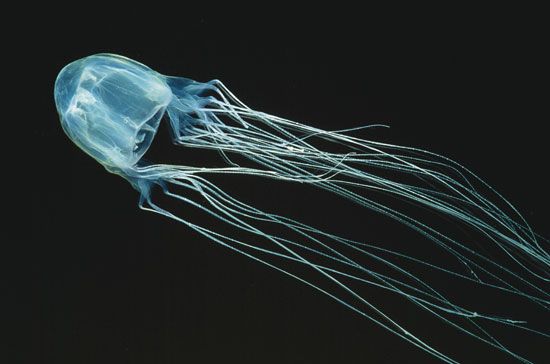
The Australian box jellyfish, scientifically known as Chironex fleckeri, is widely recognized as the world’s most venomous jellyfish. Found primarily in the…
What is the most venomous jellyfish?
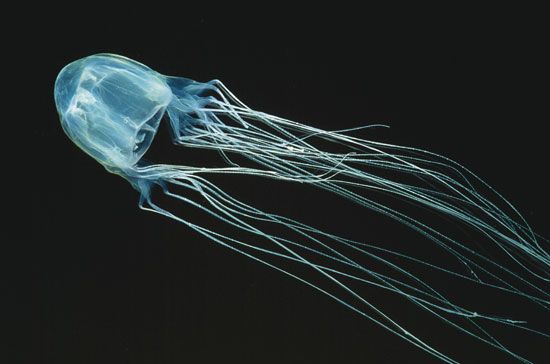
The Australian box jellyfish, scientifically known as Chironex fleckeri, is widely recognized as the world’s most venomous jellyfish. Found primarily in the coastal waters of northern Australia, this species is both the largest and deadliest of the approximately 50 identified box jellyfish species.12
Its venom is a complex mixture of proteins delivered via nematocysts—specialized cells equipped with barbed threads that inject toxins into prey. A sting can cause extreme pain, paralysis, cardiac arrest, and death within minutes. Unlike many other jellyfish that drift with currents, C. fleckeri is a strong swimmer that uses its 24 eyes to actively hunt prey, such as fish and crustaceans. Due to the severity of these stings, many regions implement safety warnings and beach closures to protect the public.12
How do box jellyfish use their 24 eyes to navigate?
Box jellyfish possess a unique visual system among cnidarians, featuring 24 eyes arranged in clusters around their bell. These eyes vary in complexity: some are simple pigment-filled structures capable only of discerning light from dark, while others are sophisticated “true eyes” equipped with a lens, cornea, iris, and retina, similar to those found in higher animals.3
Rather than drifting passively with ocean currents, box jellyfish use this vision to actively navigate their environments and avoid stationary obstacles. Their visual capabilities allow them to pursue and capture prey with precision. For instance, the mangrove jellyfish (Tripedalia cystophora) has been observed using visual cues from the mangrove canopy to navigate through complex root systems and locate areas where copepods congregate.3
Because they lack a centralized brain, these jellyfish rely on a nerve net—a diffuse, meshlike nervous system—to process sensory information and coordinate their swimming movements.2
What is Irukandji syndrome and how does it differ from other stings?
Irukandji syndrome is a serious, potentially life-threatening condition caused by the venom of certain box jellyfish, most notably Carukia barnesi. The syndrome is characterized by a delayed onset of symptoms, typically appearing about 30 minutes after a sting, which is often mild and may leave no visible mark on the skin.6
Symptoms of Irukandji Syndrome
Patients may experience a combination of the following:
- Excessive perspiration and agitation
- Severe muscle cramps, as well as abdominal and back pain
- Vomiting and hypertension
- A sense of impending doom
- In severe cases, pulmonary edema, heart failure, and cerebral hemorrhaging.6
Differences from Other Jellyfish Stings
The primary distinction between Irukandji syndrome and stings from larger, highly toxic box jellyfish like the Chironex fleckeri lies in the severity and speed of the reaction. While C. fleckeri stings cause immediate, extreme pain and can lead to cardiac arrest or death within five minutes, Irukandji stings are initially deceptive due to their mild nature, with systemic symptoms developing later. Furthermore, while Irukandji syndrome is specifically associated with a distinct set of systemic physiological responses, other box jellyfish stings are primarily noted for their immediate, intense localized pain and rapid, direct toxicity to the heart and cells.62
Which animals are natural predators of the box jellyfish?
Despite their potent venom and advanced sensory capabilities, box jellyfish are preyed upon by several marine animals. Natural predators of the box jellyfish include:
These predators are able to consume box jellyfish despite the presence of nematocysts—specialized stinging cells containing barbed hooks and poison—which the jellyfish otherwise use to capture prey and defend themselves.2
Sources
- What is the most venomous jellyfish? — Encyclopædia Britannica
- box jellyfish — Encyclopædia Britannica
- Do jellyfish have brains? — Encyclopædia Britannica
- jellyfish — Encyclopædia Britannica
- fish - The nervous system and sensory organs — Encyclopædia Britannica
- Irukandji jellyfish — Encyclopædia Britannica
Published on · 3 min read