Boxer
Boxers are known for being extremely affectionate and loving toward their own families. While they are generally friendly, their high energy and enthusiasm…
How do Boxers interact with children and other pets in a family setting?
Boxers are known for being extremely affectionate and loving toward their own families. While they are generally friendly, their high energy and enthusiasm can sometimes make them too boisterous for very young children. Because they are a highly active breed, they are best suited for families that can match their need for vigorous play and mental stimulation.1
Regarding other pets, Boxers are typically described as moderately friendly toward other dogs and animals. Their interactions are often characterized by a unique play style where they may stand on their hind legs and use their front paws to “box,” a behavior that is reminiscent of human boxers.12
It is important to note that these traits are general breed characteristics, and individual dogs may vary in their specific temperament and behavior. Proper training and socialization are recommended to help them navigate family life successfully.1
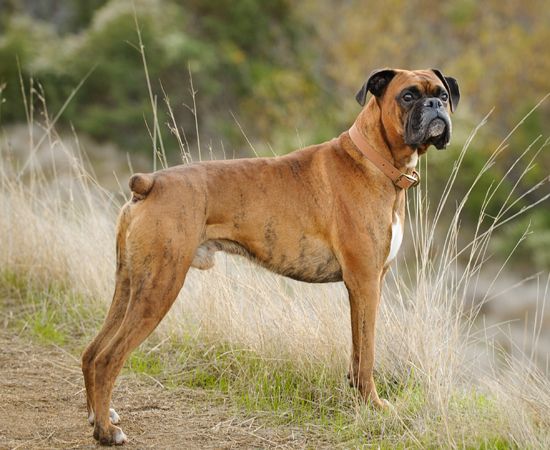
How much exercise and training do Boxer dogs require?
Boxers are a high-energy working dog breed that requires a significant amount of both physical and mental stimulation to remain healthy and well-behaved.1
Physical Exercise
Due to their high energy levels, Boxers need regular, vigorous activity. Recommended outlets include:
- Leashed walks and runs in safe areas.1
- Games of fetch or other active play.1
- Activities in a securely fenced yard, though they should not be left alone for extended periods.1
- Water play, which many Boxers enjoy.1
Because they are a brachycephalic (short-headed) breed, they struggle to cool down effectively and are at risk of overheating. Consequently, they should avoid strenuous exercise in hot weather and thrive best in temperate climates.1
Training and Mental Stimulation
Mental exercise is just as vital as physical activity for this intelligent breed. Training is essential not only for behavioral management but also to provide the mental challenges they crave. Boxers are quick learners, though they can occasionally display stubbornness. They often excel in dog sports, such as agility and obedience competitions, and can be trained as effective service dogs.1
What are the grooming requirements for a Boxer dog?
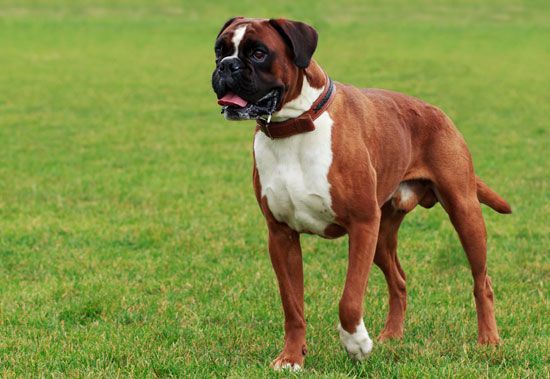
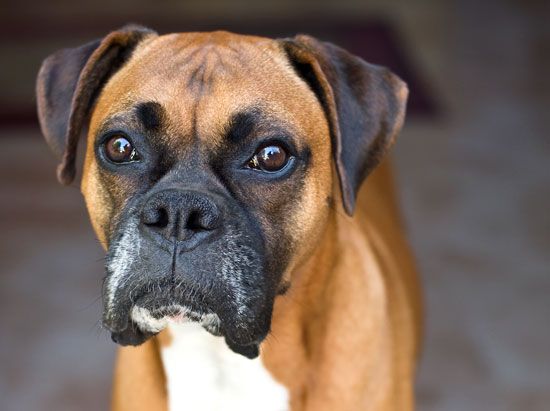
Grooming a Boxer is a straightforward process due to the breed’s short, shiny coat. The primary requirements include:
- Brushing: A weekly brushing is sufficient to maintain the coat’s condition and remove loose hair.1
- Bathing: Occasional baths are all that is typically needed to keep the dog clean.1
- Wrinkle Care: For Boxers that have particularly deep facial wrinkles, it is important to clean and dry these areas regularly to prevent irritation or infection.1
Because the Boxer is a working dog with a short-haired coat, these simple maintenance steps are usually enough to keep them looking their best.
What are the typical personality traits and temperament of Boxers?
Boxers are known for a personality that is far more playful and loving than their sometimes grumpy appearance might suggest. They are highly energetic dogs that bring great enthusiasm to all their activities.1
Key temperament traits include:
- Affectionate and Loyal: While they are only moderately friendly toward strangers and other pets, they are extremely affectionate and devoted to their own families.1
- Intelligent and Trainable: The breed is highly intelligent and learns quickly, though they can occasionally display a streak of stubbornness. They enjoy the mental challenge of learning new tasks and excel in dog sports and as service dogs.1
- Protective: Boxers are excellent watchdogs and outstanding protection dogs. They are generally not nuisance barkers, typically only vocalizing when there is a genuine cause.1
- Boisterous Nature: Because of their high energy and physical play style—which includes “boxing” with their front paws—they are best suited for active individuals. They may sometimes be too boisterous for very young children or older adults.12
Sources
- Boxer — Encyclopædia Britannica
- Why are Boxer dogs called Boxers? — Encyclopædia Britannica
Published on · 3 min read