Bush Dog
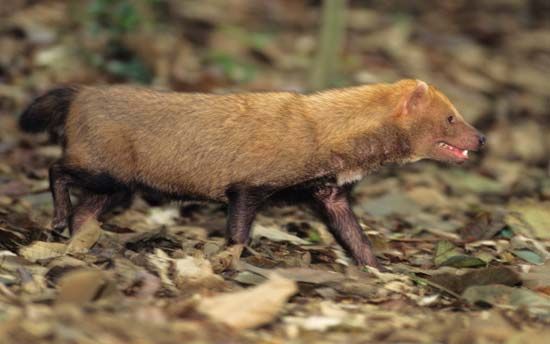
The bush dog (Speothos venaticus) is a small, stocky carnivore belonging to the Canidae family, native to the forests and savannas of Central and South…
What is bush dog?
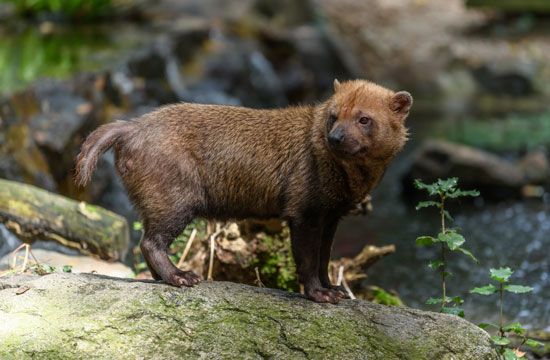
The bush dog (Speothos venaticus) is a small, stocky carnivore belonging to the Canidae family, native to the forests and savannas of Central and South America.1
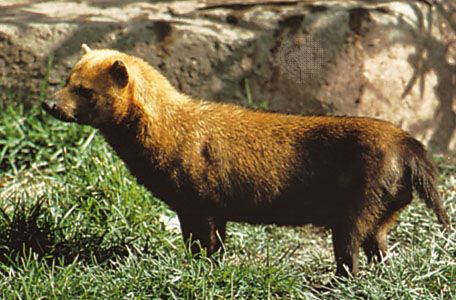
Physically, the bush dog is distinguished by its short legs, long hair, and brown coat, often featuring reddish or whitish forequarters. Growing to a shoulder height of about 30 cm (12 inches), these animals are highly adapted for their environment and are known to be excellent swimmers and divers. Unlike most wild canids, bush dogs hunt in packs and can breed year-round.12
Currently classified as near threatened by the IUCN, their populations are in decline due to habitat loss, fragmentation, and the spread of diseases from domestic dogs. Protecting these unique animals and their natural ecosystems is an essential ethical responsibility to ensure the preservation of biodiversity.1
What are some other unique wild canid species?
The family Canidae includes several unique wild species that exhibit diverse physical traits and behaviors. Beyond the bush dog, notable examples include:
- Maned Wolf: Found in the plains of South America, this solitary, nocturnal animal is known for its foxlike head, long reddish-brown fur, and exceptionally long blackish legs. It is neither a true wolf nor a fox.32
- Dhole: Also known as the Asiatic red dog, this species has the widest range of any wild canid. It is a sturdy, short-haired hunter that lives in packs and communicates through whistles and howls rather than barking.24
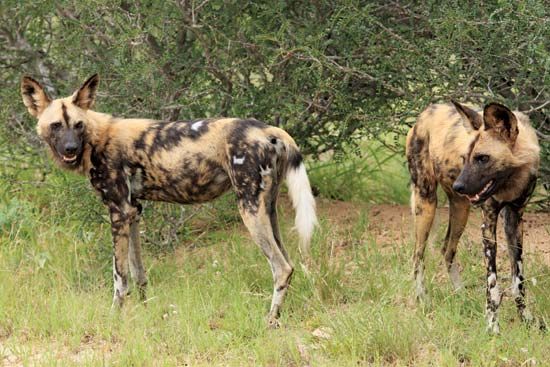
- African Wild Dog: Distinct from other canids, this species has only four toes on each foot. It is highly social, living in large packs, and is currently classified as endangered. living in large packs, and is currently classified as endangered.5
- Raccoon Dog: Considered the most primitive member of the family, it is the only canid that hibernates. Its appearance resembles a cross between a raccoon and a fox.2
- Dingo: An iconic wild dog of Australia, the dingo’s origins remain debated, with some scientists viewing it as a small wolf and others as a distinct type of dog.2
We could dive deeper into the conservation challenges facing these species or explore the behavioral differences between pack-hunting and solitary canids.
How do bush dogs differ from domestic dogs?
Bush dogs (Speothos venaticus) and domestic dogs (Canis lupus familiaris) are both members of the Canidae family, but they possess distinct biological and behavioral differences.
- Reproduction: While most domestic dogs typically follow seasonal or specific reproductive cycles, bush dogs are unique among canids for their ability to breed year-round. Females can reach sexual maturity as early as 10 months of age, and they have been observed producing litters at intervals of approximately 238 days in captivity.1
- Physical Adaptation: Bush dogs are highly specialized for their environment, featuring a stocky build with short legs and long hair, reaching a shoulder height of only about 30 cm (12 inches). This morphology is quite different from the diverse range of sizes and shapes found in domestic dog breeds.1
- Ecological Interaction: Domestic dogs often pose a threat to wild bush dog populations. The expansion of human activity brings domestic dogs into contact with bush dogs, leading to the transmission of diseases and increased competition for resources, which contributes to the decline of this near threatened species.1
We could dive deeper into the specific conservation efforts aimed at protecting bush dogs from these domestic threats.
What threats are causing the decline of bush dog populations?
The bush dog (Speothos venaticus) is currently classified as near threatened by the IUCN. Despite their wide geographic range, several critical factors are driving the decline of their populations:
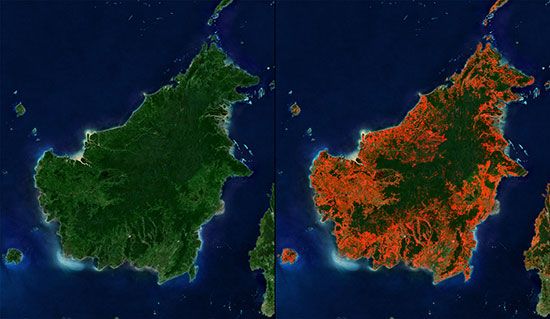
- Habitat Loss and Fragmentation: The primary threat is the conversion of natural forests and savannas into urban and agricultural land, which destroys the environments necessary for their survival.1
- Prey Depletion: The availability of food is decreasing due to illegal poaching of the bush dog’s natural prey, such as agouti and armadillos1.
- Domestic Dog Interference: Domestic dogs pose a significant risk to bush dogs in two ways: they act as predators that compete for the same food sources, and they serve as vectors for diseases that can devastate wild populations.1
Sources
- bush dog — Encyclopædia Britannica
- dog - Other wild canids — Encyclopædia Britannica
- maned wolf — Encyclopædia Britannica
- dhole — Encyclopædia Britannica
- African wild dog — Encyclopædia Britannica
- wolf — Encyclopædia Britannica
- What is the rarest dog breed? — Encyclopædia Britannica
Published on · 3 min read