Brachiosaur
The brachiosaur possessed a unique morphology that functioned as a specialized apparatus for high-level browsing. Unlike many other sauropods, its forelimbs…
How did the brachiosaurus’s unique body structure contribute to its feeding habits?
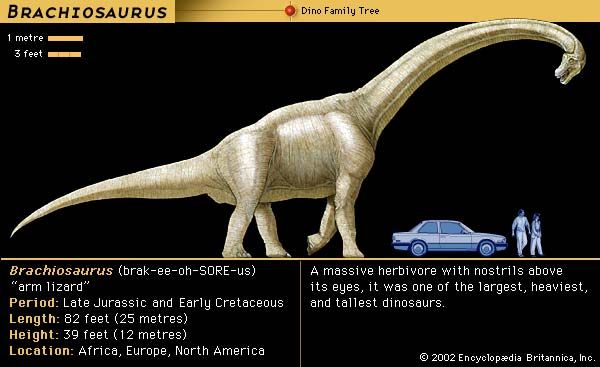
The brachiosaur possessed a unique morphology that functioned as a specialized apparatus for high-level browsing. Unlike many other sauropods, its forelimbs were longer than its hind limbs, a structure that, combined with an immensely long neck, allowed it to reach heights of approximately 12 meters (39 feet) to feed on tall tree branches.1
This feeding strategy was supported by several anatomical adaptations:
- Nasal Positioning: The nasal bones were expanded into a broad arch located on top of the head. This allowed the animal to maintain distance between its nasal openings and the vegetation, facilitating easy breathing while feeding.1
- Dental Structure: The mouth contained pencil-like teeth with beveled edges. Because they did not chew, these teeth were used to collect forage, which the tongue then forced into the throat.1
- Skeletal Efficiency: To support such a massive frame while browsing, the neck bones were deeply excavated, creating a lightweight framework of struts and plates that provided strength without excessive weight.1
Given the poor nutritional quality of their forage and their massive size, scientists believe these dinosaurs spent nearly all their waking hours feeding.1
What was the average size and weight of a fully grown brachiosaurus?
A fully grown brachiosaur was among the largest and most massive dinosaurs to ever exist. While estimates can vary based on the specific specimen, these animals reached a maximum length approaching 25 to 30 meters (approximately 82 to 98 feet) and attained a weight of nearly 80 metric tons.13
When and where did brachiosaurus live during the prehistoric era?
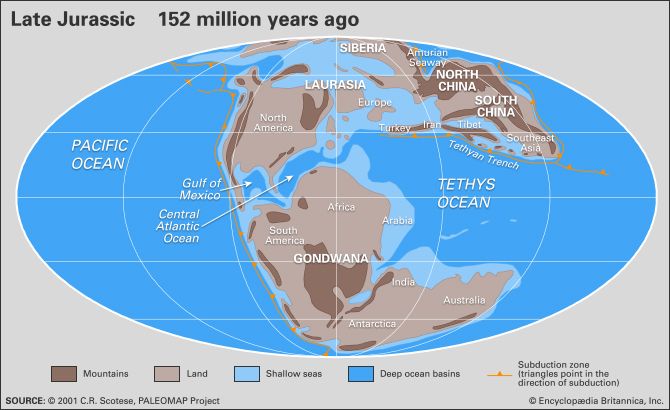
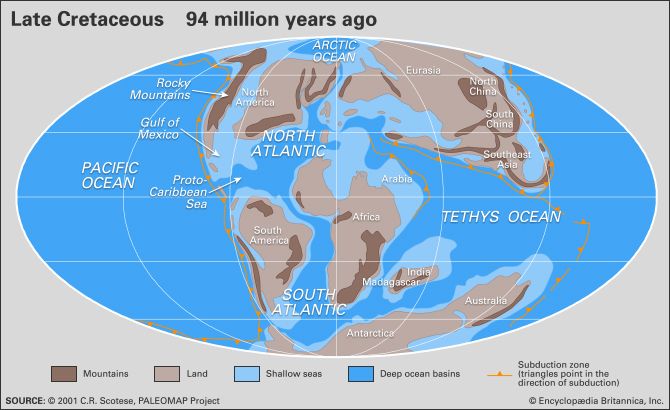
The brachiosaur lived during the prehistoric era from 150 million to 130 million years ago, spanning the Late Jurassic to the Early Cretaceous Period.1
Fossilized remains of these dinosaurs have been discovered across three continents: Africa, North America, and Europe.1
How did scientists first discover and identify the brachiosaurus?
The discovery and identification of the Brachiosaurus genus are rooted in the study of its unique skeletal morphology. While the provided records note that the term was first used in 1912, the scientific identification of the genus is defined by its distinct physical characteristics, most notably that its forelimbs were longer than its hind limbs, a feature that distinguishes it from many other sauropod dinosaurs.115
Early researchers initially hypothesized that the massive size of these creatures necessitated a life spent submerged in water to support their weight, a theory bolstered by the position of their nasal openings on top of their heads. However, subsequent scientific analysis of their skeletal structure—specifically the lightweight, strut-like framework of their neckbones—led experts to conclude that they were actually well-adapted for life on land, where they used their height to browse high treetops.6
Sources
- brachiosaur — Encyclopædia Britannica
- dinosaur - Sauropoda — Encyclopædia Britannica
- sauropod — Encyclopædia Britannica
- Jurassic Period - Marine life — Encyclopædia Britannica
- Brachiosaurus — Merriam-Webster
- brachiosaur — Merriam-Webster
Published on · 2 min read