Compsognathus
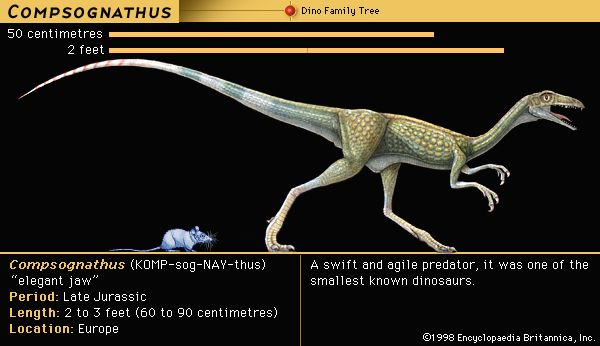
Compsognathus was a small, carnivorous dinosaur that lived during the Late Jurassic Period, approximately 161 million to 146 million years ago.…
When and where did Compsognathus live?
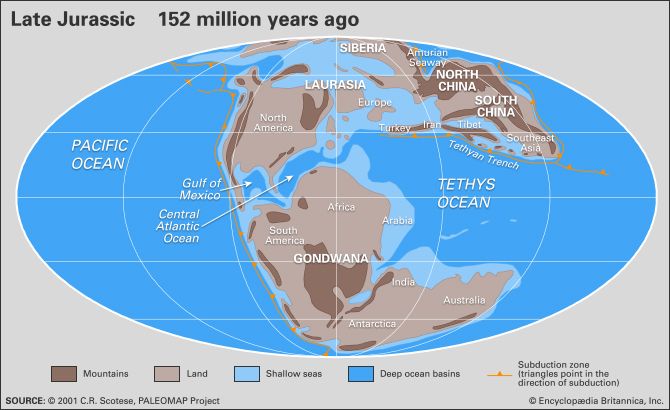
Compsognathus was a small, carnivorous dinosaur that lived during the Late Jurassic Period, approximately 161 million to 146 million years ago. Geographically, these dinosaurs inhabited the region now known as Europe, with specific fossil evidence originating from the Upper Jurassic deposits of Bavaria.12
What significant fossil discoveries have been made of Compsognathus?
Significant fossil discoveries of Compsognathus have provided key insights into the biology and behavior of this small dinosaur.
- Dietary Evidence: One of the most notable specimens features a tiny skeleton preserved within its rib cage. While researchers initially hypothesized that this was an embryo, subsequent analysis confirmed it was the remains of a lizard, providing direct evidence of the predatory habits of Compsognathus.1
- Geographic Context: The genus is primarily known from fossils discovered in the Upper Jurassic Period deposits of Bavaria, Germany.12
While Compsognathus itself is a distinct genus, its study has been bolstered by the discovery of related theropod fossils in China, such as Sinosauropteryx. These findings, which include evidence of filamentous structures similar to feathers, have significantly advanced our understanding of how simple integumentary structures evolved in early dinosaurs.1
How does Compsognathus compare in size to other dinosaurs of its time?
Compsognathus was one of the smallest dinosaurs known from the Late Jurassic Period. Measuring approximately 60–90 cm (2–3 feet) in length and weighing only about 5.5 kg (12 pounds), it was roughly the size of a modern chicken.1
In contrast, other dinosaurs of the same era were significantly larger. For example, the sauropod Europasaurus, which also lived in the Late Jurassic, reached lengths of up to 6.2 meters (20 feet) and weighed around 500 kg (1,100 pounds). While Europasaurus is considered an example of “island dwarfing” and was small compared to its massive relatives like Brachiosaurus, it was still substantially larger than the lightly built, swift-running Compsognathus.31
How is Compsognathus related to modern birds?
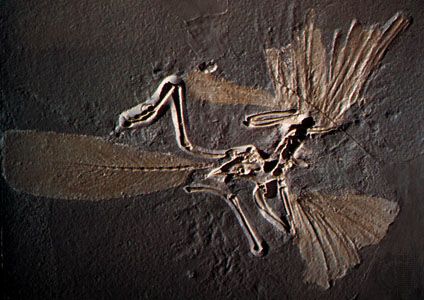
Compsognathus is classified as a coelurosaurian theropod, a group of carnivorous dinosaurs that includes birds. Its relationship to modern birds is defined by its position within this evolutionary lineage, which also encompasses the first known bird, Archaeopteryx. encompasses the first known bird, Archaeopteryx.145
Key aspects of this relationship include:
- Shared Ancestry: Compsognathus and birds share a common ancestry as members of the coelurosaurian theropods. While Compsognathus was contemporaneous with Archaeopteryx in the Late Jurassic Period, it was not as closely related to birds as some other coelurosaurs were.54
- Physical Characteristics: Compsognathus exhibited birdlike features, such as three-toed feet and a lightly built, agile frame.12
- Evolutionary Context: The discovery of related fossils, such as Sinosauropteryx, has provided evidence that early coelurosaurs possessed simple, filamentous structures on their skin. These structures are considered precursors to the complex feathers found on modern birds, suggesting that such coverings evolved initially for insulation or display before eventually acquiring aerodynamic functions.15
Sources
- Compsognathus — Encyclopædia Britannica
- Compsognathus — Merriam-Webster
- Europasaurus — Encyclopædia Britannica
- dinosaur - Tetanurae — Encyclopædia Britannica
- feathered dinosaur — Encyclopædia Britannica
Published on · 2 min read