Podokesaurus
Podokesaurus (Podokesaurus holyokensis) was a small, lightly built carnivorous dinosaur that lived during the Middle Jurassic Epoch, approximately 174.1 to…
What is Podokesaurus?
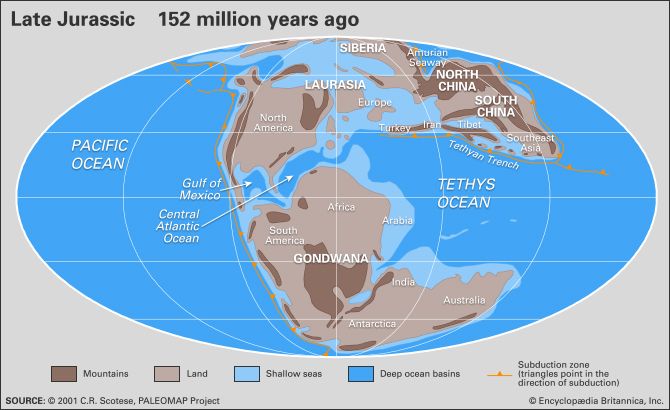
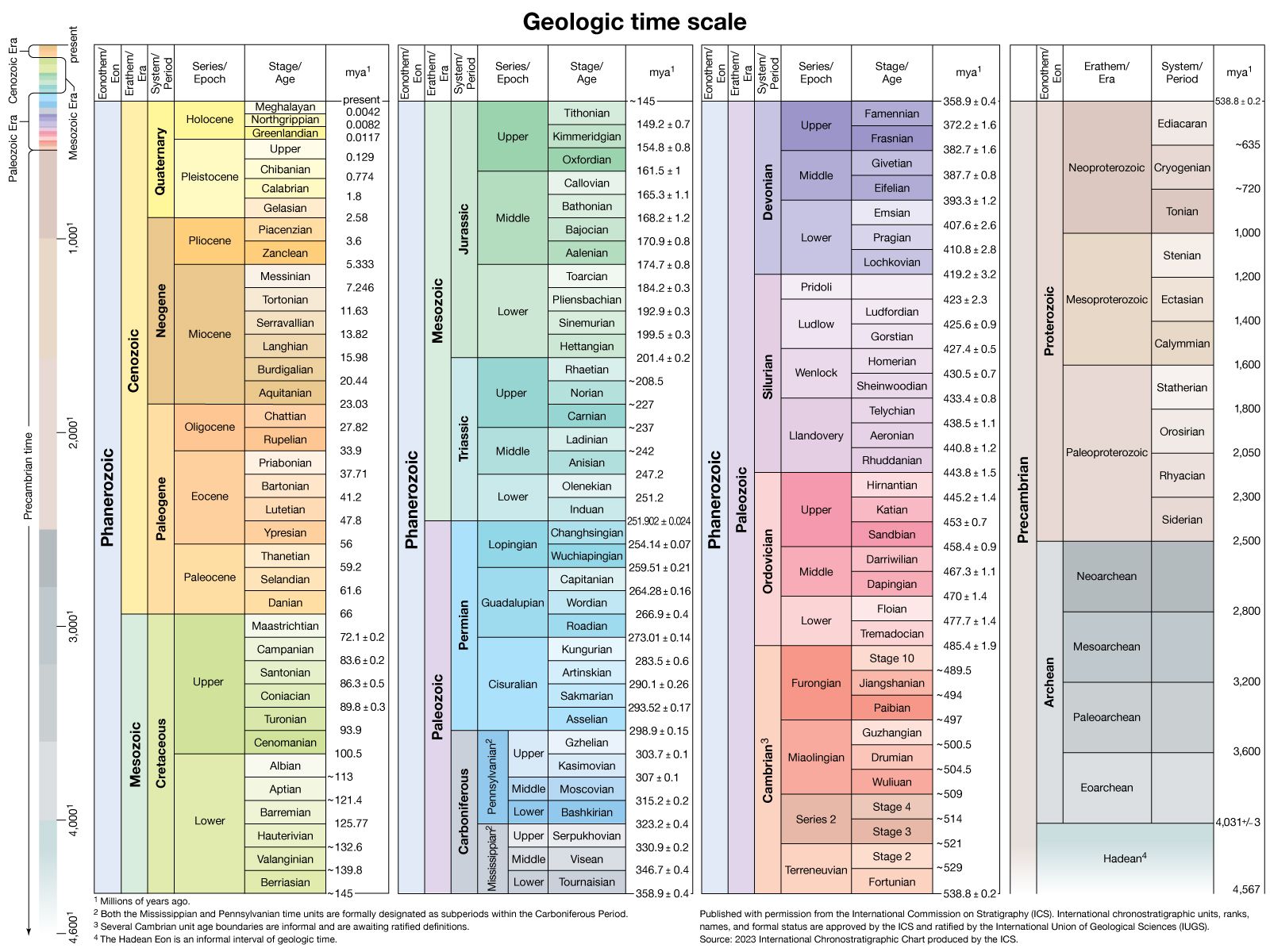
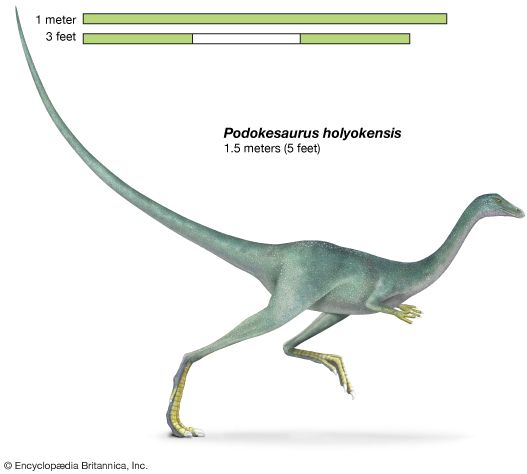
Podokesaurus (Podokesaurus holyokensis) was a small, lightly built carnivorous dinosaur that lived during the Middle Jurassic Epoch, approximately 174.1 to 163.5 million years ago.1
Measuring about 1.5 meters (5 feet) in length, this theropod was discovered in Massachusetts in the 19th century. The original specimen was housed at Mount Holyoke College until it was destroyed in a fire in 1917; today, only casts of the fossil remain. Despite the loss of the original bones, P. holyokensis is recognized as the official state dinosaur of Massachusetts.1
What are the main characteristics of theropod dinosaurs?
Theropod dinosaurs, a diverse group of saurischian dinosaurs that includes all birds, are defined by several distinct anatomical and behavioral characteristics.
Key Characteristics
- Locomotion: All theropods were obligate bipeds, meaning they walked exclusively on their hind legs. Their hind limbs were designed for support and locomotion, often featuring hollow bones to reduce weight.23
- Dentition: Most theropods possessed sharp, bladelike, and often serrated teeth adapted for a carnivorous diet. While some groups, such as ornithomimids and oviraptorids, became toothless or omnivorous, the ancestral condition was predatory.23
- Forelimbs: Unlike their hind legs, the forelimbs were modified for grasping and tearing rather than support. They typically featured long, flexible fingers with sharp, recurved claws.23
- Skeletal Features: Theropods share a unique “transition point” in the tail where vertebrae become lighter and longer, as well as a distinctive joint in the lower jaw and epipophyses on the neck vertebrae.2
- Integument: Many theropods, particularly those in the coelurosaurian lineage, possessed filamentous structures resembling feathers. These structures likely provided insulation and may have been used for display or camouflage.24
How do scientists study fossils that have been destroyed?
When a fossil is destroyed, such as the original specimen of Podokesaurus that was lost in a fire, scientists rely on secondary records to continue their research. The most common method involves studying high-quality casts or molds that were created while the original specimen was still intact.6
These casts serve as physical replicas, allowing paleontologists to perform detailed anatomical examinations and measurements even in the absence of the original bones. Additionally, rigorous documentation—including photographs, detailed descriptions, and scientific illustrations produced before the loss—provides a vital historical record for ongoing study.
While the loss of an original specimen is a significant setback, the scientific community emphasizes the importance of careful excavation and cataloging to prevent such data loss in the future. Proper curation in museum or university collections is essential to ensure that these irreplaceable windows into the geologic past remain available for future generations of researchers.78
What other dinosaurs lived during the Jurassic Period?
The Jurassic Period was a time of significant diversification for dinosaurs, which served as the dominant terrestrial vertebrates of the era. They are broadly categorized into two groups based on their pelvic structure: the saurischians (lizard-hipped) and the ornithischians (bird-hipped).1112
Saurischians
This group included both the massive herbivores and the carnivorous predators:
- Sauropods: These large, long-necked, quadrupedal herbivores reached their peak diversity and size during the Late Jurassic. Notable examples include Apatosaurus, Diplodocus, and Brachiosaurus.111213
- Theropods: These were two-legged carnivores. The Jurassic saw the rise of predators like Allosaurus and the emergence of early birds, such as the feathered Archaeopteryx. Small coelurosaurs like Compsognathus were also present.121114
Ornithischians
All members of this group were herbivorous and often featured specialized defenses:
- Armored and Quadrupedal Forms: This group included the well-known Stegosaurus, which possessed heavy plates and spikes.11
- Other Ornithischians: The period also featured early bipedal ornithopods that were diversifying into various armored and quadrupedal lineages.11
Sources
- Podokesaurus — Encyclopædia Britannica
- dinosaur - Theropoda — Encyclopædia Britannica
- feathered dinosaur — Encyclopædia Britannica
- theropod — Encyclopædia Britannica
- dinosaur - The plant eaters — Encyclopædia Britannica
- fossil — Encyclopædia Britannica
- Tertiary Period - Correlation of Tertiary strata — Encyclopædia Britannica
- evolution - The fossil record — Encyclopædia Britannica
- paleontology — Encyclopædia Britannica
- fossil record — Encyclopædia Britannica
- saurischian — Encyclopædia Britannica
- sauropod — Encyclopædia Britannica
- Jurassic Period - Vertebrates — Encyclopædia Britannica
- dinosaur - Tetanurae — Encyclopædia Britannica
- 5 Questions About Dinosaurs Answered — Encyclopædia Britannica
Published on · 3 min read