Morrison Formation
Our understanding of the Morrison Formation has evolved significantly since the first discoveries near Morrison, Colorado, in 1877. Initially, the formation…
How has our understanding of the Morrison Formation changed over time with new discoveries?
Our understanding of the Morrison Formation has evolved significantly since the first discoveries near Morrison, Colorado, in 1877. Initially, the formation became a focal point for intense, competitive fossil hunting by pioneers like O.C. Marsh and E.D. Cope, who identified iconic Jurassic Period dinosaurs such as Stegosaurus, Allosaurus, and Diplodocus.12
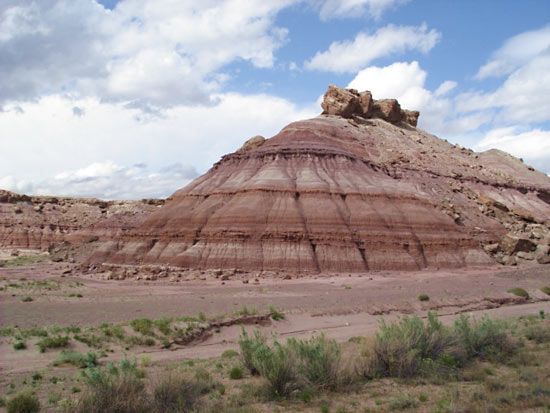
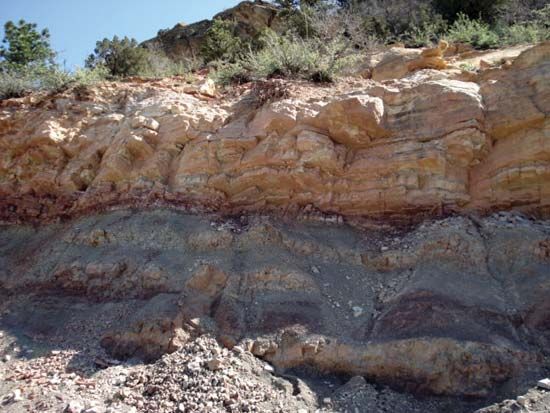
Over time, scientific analysis has shifted from merely collecting specimens to reconstructing complex paleoenvironments. We now understand that these sedimentary rocks—ranging from mudstones to sandstones—were deposited across diverse habitats, including rivers, lakes, and alluvial plains1. Modern techniques, such as radiometric dating of volcanic ash beds, have precisely placed the formation between 148 million and 155 million years old. Furthermore, the study of jumbled, disarticulated skeletons has provided insights into how carcasses were transported and buried by ancient stream systems, while the presence of various mollusks and fishes helps characterize the salinity and chemistry of the region’s prehistoric lakes.1
What types of fossils have been discovered in the Morrison Formation?
The Morrison Formation is renowned for its diverse array of Jurassic Period fossils, which provide a detailed look at the ecosystems of the western interior of North America between 148 and 155 million years ago.1
The fossils discovered within these nonmarine sediments include:
- Dinosaurs: The formation is most famous for its abundant dinosaur remains, which represent a variety of habitats. These are often found as jumbled, partially disarticulated skeletons, likely deposited by ancient stream systems.1
- Invertebrates: The fossil record includes various mollusks and insects, which help scientists reconstruct the chemistry and salinity of prehistoric lakes.1
- Vertebrates: Beyond dinosaurs, researchers have uncovered fossils of crocodiles, turtles, and fishes.1
- Plants: The sedimentary deposits also contain abundant plant fossils, reflecting the vegetation of the ancient landscape.1
What are some of the most significant dinosaur discoveries from the Morrison Formation?
The Morrison Formation is one of the most significant sources of Late Jurassic Period dinosaur fossils in the world. Since the first major discoveries in 1877, paleontologists have unearthed a diverse array of species that have fundamentally shaped our understanding of prehistoric life.
Notable Dinosaur Discoveries
Many of the most iconic dinosaurs were first identified from sites in Colorado and Wyoming, such as Como Bluff:
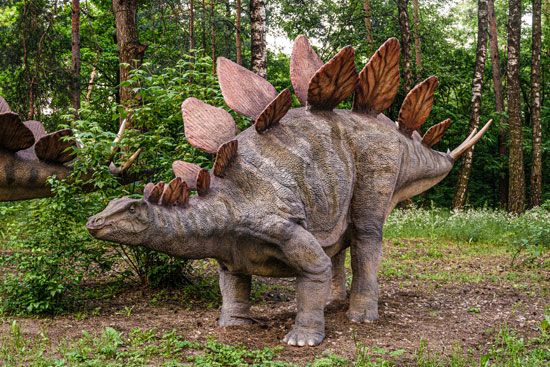
- Stegosaurus: Famous for its double row of bony plates and tail spikes, this herbivore remains a symbol of the formation’s unique fauna.13
- Allosaurus: A dominant predator of the era, this theropod is frequently found in the same deposits as its prey.3
- Diplodocus: One of the longest land animals to ever live, this sauropod is known for its extremely long, flexible tail and small, elongated skull.2
- Apatosaurus: Often associated with the historical naming controversy involving Brontosaurus, this massive herbivore provides key insights into sauropod anatomy and terrestrial locomotion.4
- Camarasaurus: Another significant sauropod genus frequently recovered from these strata.3
- Brachiosaurus: Known for its immense size and distinctively long forelimbs, representing the extreme scale of Jurassic herbivores.34
These discoveries, preserved in river and floodplain sediments, continue to provide researchers with critical data on dinosaur diversity, behavior, and the ecosystems of the ancient western interior of North America.5
How has the study of the Morrison Formation contributed to our understanding of Late Jurassic ecosystems?
The study of the Morrison Formation has been instrumental in reconstructing the Late Jurassic Period ecosystems of western North America. By analyzing its diverse sedimentary record—which includes mudstones, sandstones, and conglomerates—researchers have identified a landscape dominated by rivers, lakes, swamps, and alluvial plains.1
Key contributions to our understanding include:
- Environmental Diversity: The presence of both freshwater and saline, alkaline lakes, as indicated by fossilized mollusks, fishes, and other aquatic life, reveals a complex, varied environment.1
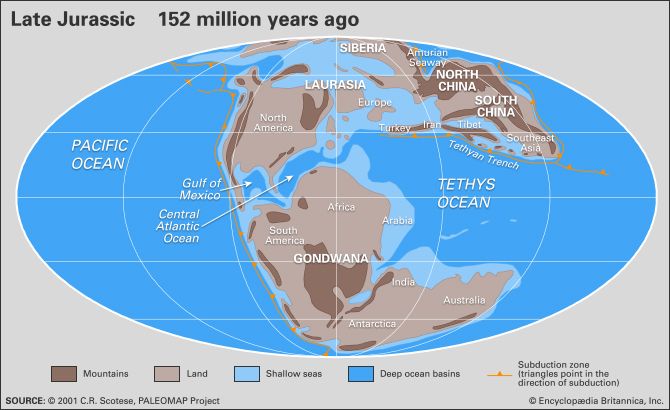
- Tectonic Context: The formation’s sediments, derived from western mountain ranges like the Sierra Nevada, provide evidence of the intense plate tectonic activity and mountain-building occurring during the Late Jurassic.17
- Chronological Precision: The inclusion of volcanic ash beds has allowed scientists to use radiometric dating to accurately place these ecosystems between 148 and 155 million years ago.17
- Biological Assemblages: The jumbled, disarticulated dinosaur skeletons suggest these animals were transported by ancient stream systems, offering insights into how carcasses were processed and buried in these prehistoric habitats.1
Sources
- Morrison Formation — Encyclopædia Britannica
- dinosaur - American hunting expeditions — Encyclopædia Britannica
- dinosaur - Stegosauria — Encyclopædia Britannica
- Diplodocus — Encyclopædia Britannica
- Jurassic Period — Encyclopædia Britannica
- Apatosaurus — Encyclopædia Britannica
- Jurassic Period - Occurrence and distribution of Jurassic rocks — Encyclopædia Britannica
Published on · 3 min read