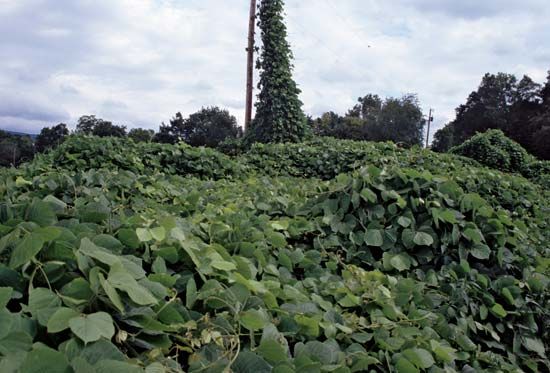
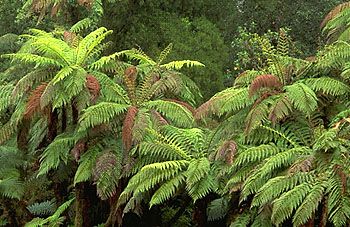
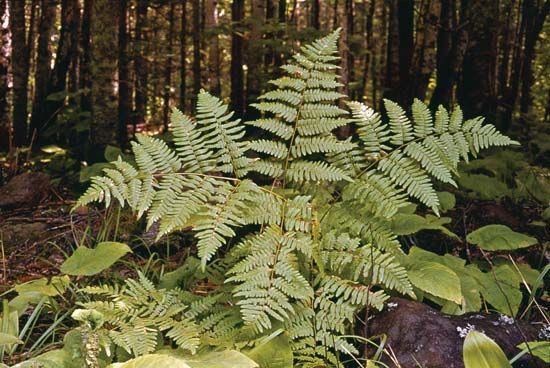
Bracken
Bracken fern (Pteridium aquilinum) reproduces and spreads through two primary methods: the dispersal of spores and the expansion of its underground root…
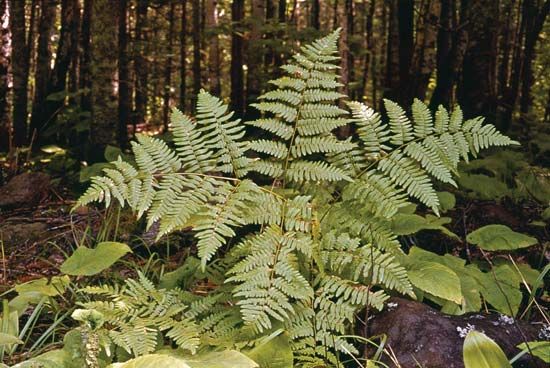
How does bracken fern reproduce and spread?
Bracken fern (Pteridium aquilinum) reproduces and spreads through two primary methods: the dispersal of spores and the expansion of its underground root system.1
- Spore Dispersal: Bracken produces minute, lightweight spores that are easily carried by the wind. This mechanism has enabled the plant to achieve a nearly worldwide distribution.1
- Rhizome Expansion: The plant features a perennial black rootstock known as a rhizome. These rhizomes creep extensively underground, sometimes reaching lengths of up to 400 meters (1,300 feet). At intervals, these rhizomes send up new fronds, allowing the fern to aggressively colonize open or disturbed ground.12
Once established, the deep-set rhizome network makes the plant extremely difficult to eradicate. Its ability to spread rapidly and shade out other vegetation has led to its classification as one of the world’s worst weeds and an invasive species in many regions1. While sexual reproduction via spores is standard, researchers have also observed that bracken can be induced to reproduce through apomictic processes under specific laboratory conditions.123
What ecological role does bracken fern play in its habitat?
Bracken fern (Pteridium aquilinum) plays a complex and often disruptive role in its habitat. While it provides some limited utility, such as offering winter cover for game animals due to its persistent dead fronds, its ecological impact is predominantly characterized by its status as an aggressive invasive species and a noxious weed.11
The plant’s ecological influence is defined by several key factors:
- Competitive Dominance: Through its extensive, deep-set rhizome network, bracken rapidly colonizes open or disturbed ground. It competes vigorously with other vegetation, often shading out and displacing native plant species, including those of conservation concern.34
- Habitat Alteration: By rendering land unsuitable for grazing, bracken significantly alters the utility of pastures and fields for livestock.41
- Chemical Defense: The leaves of the bracken fern contain toxic and carcinogenic compounds. These chemicals serve as a defense mechanism, making the plant unpalatable and potentially harmful to animals that might otherwise consume it.341
Are there any historical or cultural uses for bracken fern?
Throughout history, bracken fern (Pteridium aquilinum) has been utilized in various practical ways, despite its reputation as an aggressive invasive species.
Historical and cultural uses include:
- Construction: The fronds have traditionally been used as thatching material for houses.1
- Agriculture: In some regions, the plant has been harvested for use as fodder for livestock. harvested for use as fodder for livestock.1
- Culinary Use: In parts of Asia, bracken is cooked and consumed as a vegetable or incorporated into soups.1
It is important to note that these uses come with significant health risks. The leaves of the bracken fern contain an array of poisonous and carcinogenic compounds, which can be harmful if consumed. Furthermore, because the plant is toxic to grazing animals and can shade out other vegetation, it is widely regarded as one of the world’s most problematic weeds.15
How deep do bracken fern roots grow, and why is this significant?
Bracken fern (Pteridium aquilinum) does not have traditional roots in the conventional sense; instead, it possesses a perennial, black rhizome system that creeps extensively underground. While these rhizomes are described as deep-set, their most significant physical characteristic is their horizontal reach rather than vertical depth. Individual rhizomes have been documented spreading up to approximately 400 meters (1,300 feet) in length, which contributes to the plant being one of the largest in the world.13
This extensive underground network is highly significant for several reasons:
- Persistence: Once established, the deep-set nature of these rhizomes makes the plant nearly impossible to eradicate.1
- Aggressive Colonization: The rhizomes allow the fern to rapidly invade and dominate open or disturbed ground, where it outcompetes other vegetation by shading out native species.13
- Agricultural Impact: Because the plant spreads so effectively and contains toxic compounds, it renders land unfit for livestock grazing, leading to its classification as one of the world’s worst weeds.13
Sources
- Bracken — Encyclopædia Britannica
- Plant reproductive system - Variations in reproductive cycles — Encyclopædia Britannica
- Dennstaedtiaceae — Encyclopædia Britannica
- Fern - Importance to humans — Encyclopædia Britannica
- bracken — Merriam-Webster
Published on · 3 min read