Fern
Ferns exhibit a remarkable range in size, from minute plants to towering arborescent species, and are primarily found in warm, damp environments across the…
What are some of the largest and smallest species of ferns, and where are they found?
Ferns exhibit a remarkable range in size, from minute plants to towering arborescent species, and are primarily found in warm, damp environments across the globe.1
Smallest Ferns
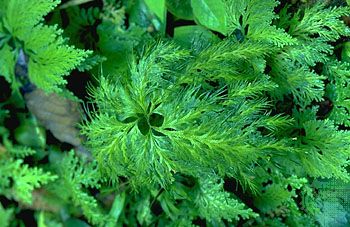
The world’s smallest terrestrial fern is Ophioglossum malviae, a species native to India that reaches an average size of only 1–1.2 cm (0.39–0.47 inch). Generally, ferns categorized as “filmy ferns” (family Hymenophyllaceae) are also noted for their delicate, minute stature, often featuring leaves that are only one cell layer thick.23
Largest Ferns
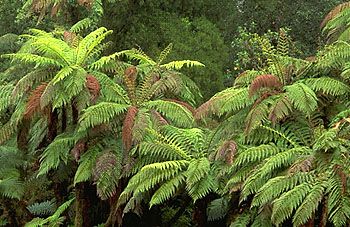
The largest ferns are the tree ferns, which belong primarily to the families Cyatheaceae and Dicksoniaceae. These plants are conspicuous in humid tropical forests and can reach heights of 10 to 25 metres (30 to 80 feet). Unlike seed-bearing trees, their trunks are composed of modified rhizomes embedded in a dense mantle of roots.41
While these extremes represent the diversity of the group, most ferns thrive in tropical regions, with their numbers decreasing as latitude increases and moisture levels drop.15
What are the key characteristics that distinguish ferns from other plants?
Ferns are classified as vascular plants, meaning they possess specialized xylem and phloem tissues for water and nutrient transport, which allows them to develop true roots, stems, and leaves. Despite these similarities to seed plants, they are distinguished by several key characteristics:7
Reproduction via Spores
Unlike seed plants, which reproduce using seeds, ferns reproduce via spores. These spores are produced in structures called sporangia, which are often clustered into sori on the undersides of their leaves (fronds). Because they produce motile, flagellated sperm, ferns remain dependent on the presence of water for fertilization to occur.89107
Life Cycle and Development
Ferns exhibit an alternation of generations where the sporophyte (the leafy plant) is the dominant, free-living phase. The gametophyte (or prothallus) is a small, independent, heart-shaped structure that is distinct from the reduced, non-independent gametophytes found in seed plants.981011
Leaf Characteristics
Fern leaves, or pteridophylls, are typically characterized by:
- Circinate Vernation: Young leaves emerge as coiled fiddleheads that unroll as they grow.912
- Venation: Their leaves generally feature open, dichotomous (forking) venation patterns.912
What are some common types of ferns, and where are they typically found?
Ferns are a diverse group of over 9,000 species found nearly worldwide, though they are most abundant in tropical rainforests. most abundant in tropical rainforests. While many species thrive in shaded, damp forests, others have adapted to rocky crevices, open fields, or even aquatic environments.413
Common Types of Ferns
Ferns vary significantly in form, ranging from delicate houseplants to large, tree-like structures:
- Houseplant Favorites: Popular varieties include the sword fern (Nephrolepis), the fanlike bird’s-nest fern, and the maidenhair fern. The staghorn fern is noted for its unique, antler-shaped fronds, while the hare’s-foot fern is recognized by its woolly, pawlike rhizomes.14
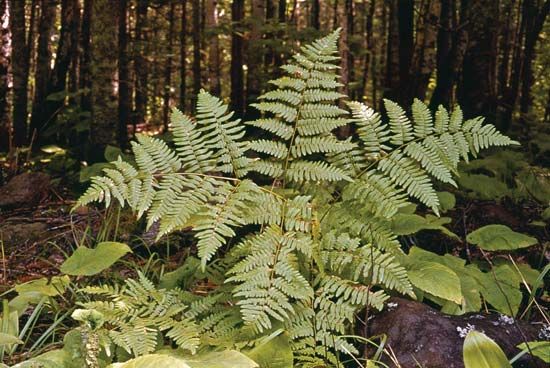
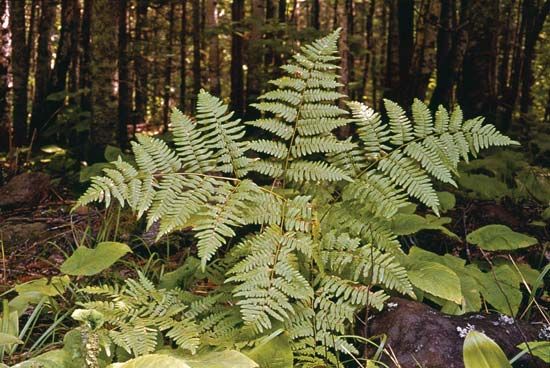
- Outdoor and Wild Species: The lady fern is a common, feathery species found in temperate, moist areas. Bracken is a widespread, hardy fern that often invades open pastures. Tree ferns are iconic tropical plants with stout, fibrous trunks.1516414
- Water Ferns: Species such as water spangles and mosquito ferns are specialized to grow in aquatic habitats.4
Typical Habitats
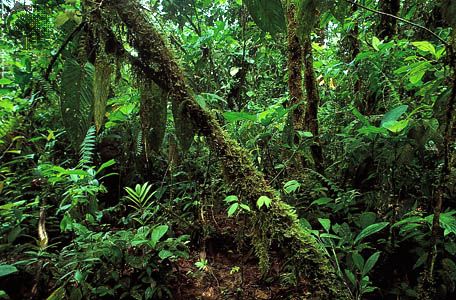
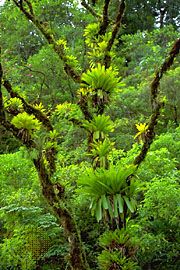
While ferns are found globally, their distribution is heavily influenced by moisture and light. Tropical regions host the highest diversity, with many species growing as epiphytes on tree trunks and branches. In temperate zones, ferns are often found in shaded, damp woodlands, though some genera, such as Dryopteris and Polystichum, can be found at high elevations on mountains.164
How have ferns been used in traditional medicine across different cultures?
While ferns have been utilized as minor sources of medicine in various cultures throughout history, they are not generally considered to be of major economic or medicinal importance compared to other plant groups. The study of these traditional practices falls under the field of ethnobotany, which examines how different social groups have historically identified and prepared local plants for use as folk medicines to treat various physical and mental illnessesfolk medicines](https://www.britannica.com/science/folk-medicine) to treat various physical and mental illnesses.1819
It is important to note that while some ferns have been used traditionally, many species contain toxic compounds. For example, while the young leaves of certain ferns are consumed as food, species such as Pteridium (bracken) and Osmunda have been shown to contain carcinogenic substances. Because of these risks, the use of ferns in traditional medicine requires significant caution, as the presence of poisonous chemicals can render certain species harmful to human health.181920
Sources
- Fern - Size range and habitat — Encyclopædia Britannica
- Ophioglossaceae — Encyclopædia Britannica
- Pteridaceae — Encyclopædia Britannica
- Fern - Distribution and abundance — Encyclopædia Britannica
- tree fern — Encyclopædia Britannica
- Hymenophyllaceae — Encyclopædia Britannica
- Plant - Subclass Polypodiidae — Encyclopædia Britannica
- Plant - Definition of the category — Encyclopædia Britannica
- Plant reproductive system - Ferns — Encyclopædia Britannica
- Fern - Comparisons with leaves of other plant groups — Encyclopædia Britannica
- lower vascular plant - Reproduction — Encyclopædia Britannica
- Plant - Seed plants — Encyclopædia Britannica
- houseplant - Ferns — Encyclopædia Britannica
- Fern - Ecology — Encyclopædia Britannica
- Polypodiaceae — Encyclopædia Britannica
- list of ferns — Encyclopædia Britannica
- Lady fern — Encyclopædia Britannica
- Fern - Importance to humans — Encyclopædia Britannica
- Ethnobotany — Encyclopædia Britannica
- Bracken — Encyclopædia Britannica
- Dennstaedtiaceae — Encyclopædia Britannica
Published on · 4 min read