Cliff Brake
Cliff brake refers to any of approximately 40 species of ferns belonging to the genus Pellaea within the family Pteridaceae. These small, rock-loving plants…
What is Cliff brake?
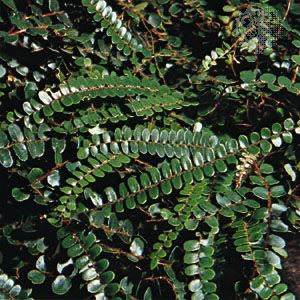
Cliff brake refers to any of approximately 40 species of ferns belonging to the genus Pellaea within the family Pteridaceae. These small, rock-loving plants typically grow on or among rocks, particularly limestone, and are characterized by leathery leaves that emerge from a creeping rhizome.12
The name is derived from the Greek word pellaios, meaning “dark-colored,” in reference to the plants’ dark leaves. Their reproductive structures, known as sori, are found on the margins of fertile leaves, where overlapping leaf edges provide a protective covering. While many species are found in the wild, some, such as the button fern (Pellaea rotundifolia) and sickle fern (P. falcata), are popular as indoor ornamentals.21
The term is sometimes also applied to rock ferns of the genus Cryptogramma, though these differ from Pellaea by having fronds that die back annually and distinctively narrow fertile leaflets.1
How do ferns reproduce using spores?
Ferns reproduce through a complex life cycle that alternates between two distinct stages: the sporophyte and the gametophyte.4
The Sporophyte Stage
The mature fern, or sporophyte, produces haploid spores within specialized structures called sporangia. These are typically found in clusters known as sori on the undersides of the fronds. In many species, these clusters are protected by a flap of tissue called an indusium. Once mature, the spores are released and dispersed by wind.45
The Gametophyte Stage
When a spore lands in a suitable environment, it germinates to form a tiny, heart-shaped, or ribbonlike plant called a prothallium. This gametophyte produces both male (antheridia) and female (archegonia) sex organs. Fertilization occurs when sperm swim to the egg, forming a zygote. The resulting embryo grows into a new, independent sporophyte, eventually causing the small prothallium to wither and die.45
While most ferns follow this pattern, some are apomictic, meaning they bypass fertilization and produce new sporophytes directly from gametophyte cells.4
What are the main differences between ferns and flowering plants?
Ferns and flowering plants (angiosperms) share fundamental traits such as vascular tissue, photosynthetic pigments, and a dominant, independent sporophyte generation. However, they differ significantly in their reproductive strategies and structural development.6
Key Differences
- Reproduction: Ferns reproduce via spores, which are single-celled units that develop into a free-living, often ephemeral gametophyte (prothallium). In contrast, flowering plants reproduce via seeds, which contain an embryonic plant, food-storage tissue, and a protective coat. Seed plants have reduced their gametophytes to a few cells that remain embedded within the sporophyte, protecting them from environmental stress.67
- Fertilization: Most ferns require external water for flagellated sperm to swim to the egg. Flowering plants have evolved pollen tubes, allowing nonflagellated sperm to reach the egg without relying on external water.6
- Leaf Development: Fern leaves typically exhibit circinate vernation, unrolling from a “fiddlehead” crosier. Flowering plants possess “true leaves” (euphylls) that expand from a folded condition.4
- Growth: While ferns generally have determinate leaf growth, flowering plants often exhibit secondary growth (wood production) via a vascular cambium, allowing for significant increases in the width of the plant axis.64
Why do some ferns prefer growing on rocks or limestone?
Ferns that grow on rocks, known as epipetric ferns, occupy these habitats by utilizing fissures and crevices in cliff faces, boulders, and taluses. The specific type of rock often dictates which species can thrive there; for instance, ferns associated with acidic rocks like granites and sandstones differ from those found on alkaline rocks such as calcites and dolomites.8
These ferns have evolved structural adaptations to survive in these often dry, exposed environments. These include hard tissues, thick textures, and a waxy epidermis (cuticle) to retain moisture. Many also feature abundant scales or hairs on their surfaces.89
Crucially, while the mature sporophyte may tolerate sun and drought, the fern gametophyte remains sensitive. On rocks, gametophytes typically develop in protected crevices where light is minimal and moisture is maximized. Some species in the Pteridaceae family further adapt to these rocky habitats through apogamy, a life cycle that bypasses fertilization, allowing for rapid reproduction during brief damp periods.8
Sources
- Cliff brake — Encyclopædia Britannica
- cliff brake — Merriam-Webster
- Pellaea — Merriam-Webster
- Fern - Life cycle — Encyclopædia Britannica
- Plant reproductive system - Ferns — Encyclopædia Britannica
- Plant - Seed plants — Encyclopædia Britannica
- Fern - Comparisons with leaves of other plant groups — Encyclopædia Britannica
- Fern - Ecology — Encyclopædia Britannica
- Lip fern — Encyclopædia Britannica
Published on · 3 min read