Brine Shrimp
Brine shrimp are small crustaceans belonging to the genus Artemia and the order Anostraca. These hardy invertebrates typically inhabit highly saline inland…
What is brine shrimp?
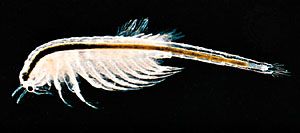
Brine shrimp are small crustaceans belonging to the genus Artemia and the order Anostraca. These hardy invertebrates typically inhabit highly saline inland waters, such as the Great Salt Lake in Utah, where they thrive in environments with salt concentrations higher than that of the ocean.123
Measuring up to 15 mm (0.6 inch) in length, brine shrimp possess a distinct head with stalked compound eyes, a thorax with leaflike limbs used for swimming and filtering green algae, and a slender abdomen. They are well-known for their ability to enter a state of anhydrobiosis, where they produce hard-shelled “cysts” that allow them to survive extreme drying and even exposure to cosmic rays in space.13
Commercially, these shrimp are important as a food source for aquarium animals and are famously marketed as “Sea-Monkeys”. Their resilience has also made them valuable subjects for scientific research, including NASA experiments during the Apollo 16 mission.13
What is anhydrobiosis and how does it help brine shrimp survive?
Anhydrobiosis, a term derived from New Latin meaning “life away from water,” is a state of extreme dormancy that allows certain organisms to survive in environments where water is unavailable.43
For brine shrimp, this process is a critical survival strategy for inhabiting volatile, high-salinity environments that are prone to drying out. When environmental conditions become harsh—such as when a habitat loses its water or nutrients—the shrimp produce hard-shelled eggs known as “cysts”.4
Inside these cysts, the larvae enter the state of anhydrobiosis, effectively pausing their biological activity and existing with almost no water. This “deathlike” state allows them to remain viable for long periods, resisting desiccation and even surviving exposure to extreme conditions like cosmic rays in space. Once the cysts are returned to a favorable, water-rich environment, the larvae rehydrate and hatch within hours, demonstrating a remarkable capacity for biological recovery.4
How do brine shrimp differ from other types of crustaceans?
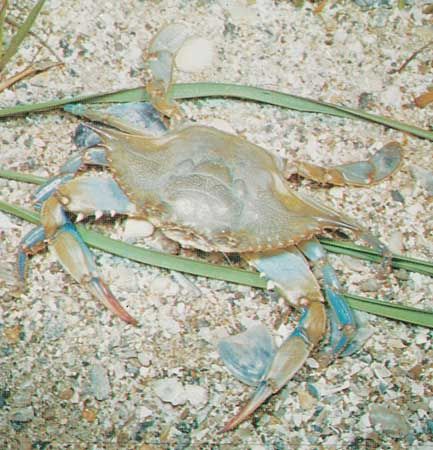
Brine shrimp differ from many other crustaceans, such as the decapods (which include crabs, lobsters, and shrimp), in several key anatomical and ecological ways:
- Classification and Body Structure: Brine shrimp belong to the order Anostraca within the class Branchiopoda. Unlike decapods, which have a fused head and thorax (cephalothorax) covered by a carapace, brine shrimp have a discrete head, a thorax with leaflike swimming limbs, and a slender abdomen that lacks appendages.26
- Locomotion: While many crustaceans are capable of crawling or complex swimming, brine shrimp typically swim in an upside-down position by rhythmically beating their leaflike thoracic limbs.6
- Environmental Adaptation: Brine shrimp are specialized for highly saline inland waters, such as the Great Salt Lake, where they thrive in salt concentrations exceeding that of the ocean. In contrast, most decapods are primarily marine, and those that have colonized freshwater or terrestrial environments have evolved different physiological mechanisms to regulate internal fluids and protect against desiccation.612
Why are brine shrimp important to the ecosystem of lakes like the Great Salt Lake?
Brine shrimp are vital to the ecosystem of the Great Salt Lake because they serve as a primary food source for a variety of wildlife in an environment that is otherwise too saline for most organisms to inhabit.18
Their ecological importance includes:
- Primary Consumer: Brine shrimp feed on green algae, which they filter from the water. By consuming this algae, they play a key role in the lake’s food web.1
- Essential Food Source: They are a critical nutritional resource for numerous birds, including flamingos, grebes, and avocets. Additionally, they are consumed by other crustaceans, water boatmen, and fishes.1
Because the high salinity of the Great Salt Lake renders the water largely uninhabitable for other species, the presence of brine shrimp allows for the support of a complex avian population that relies on the lake as a wildlife refuge.8
Sources
- brine shrimp — Encyclopædia Britannica
- brine shrimp — Merriam-Webster
- How One Shrimp Used Its Survival Skills to Become Both Best-Selling Pet and Astronaut — Encyclopædia Britannica
- Dormancy - Invertebrates — Encyclopædia Britannica
- anhydrobiosis — Merriam-Webster
- decapod — Encyclopædia Britannica
- branchiopod - Distribution and abundance — Encyclopædia Britannica
- Great Salt Lake — Encyclopædia Britannica
Published on · 3 min read