Brisbane Box
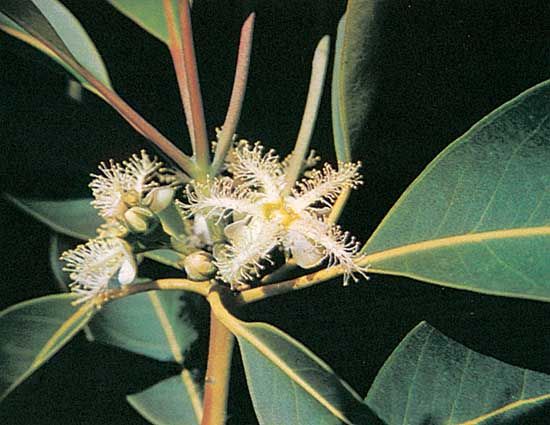
The Brisbane box, also known as the brush box (Tristania conferta), is an evergreen tree belonging to the Myrtaceae family.
What is Brisbane box?
The Brisbane box, also known as the brush box (Tristania conferta), is an evergreen tree belonging to the Myrtaceae family.12
Native to Australia, this species is widely cultivated in tropical and subtropical regions of North America for use as a shade tree. The tree can reach heights exceeding 45 metres (approximately 150 feet) and features oval or lance-shaped leaves measuring 7–15 centimetres (3–6 inches) in length, along with small white flowers.1
Beyond its ornamental value, the Brisbane box is highly valued for being extremely drought-resistant. Its timber is exceptionally strong and durable, making it a commercially useful resource in construction and manufacturing.1
What are some other common trees native to Australia?
Australia is home to a diverse array of native trees, many of which are uniquely adapted to the continent’s varied climates and soil conditions. Beyond the Brisbane box, some of the most prominent and widespread native trees include:
- Eucalyptus: Represented by more than 600 species, these evergreen trees are the most iconic feature of the Australian landscape. They range from small, shrub-like mallees to forest giants like the mountain ash, which can reach heights of 90 metres. They are highly valued for their timber and aromatic oils.345
- Acacia: Known locally as wattles, these trees and shrubs are the other dominant group in Australian vegetation. Species like the mulga are vital in arid regions, while others, such as the silver wattle and golden wattle, are prized for their floral displays and tannin-rich bark.365
- Southern Beech: Also known as myrtle beech, these trees are particularly notable in the cooler, temperate forests of Tasmania and reflect Australia’s ancient botanical links to Gondwana.37
- Wollemi Pine: Discovered in 1994, this is one of the world’s oldest and rarest tree species, representing a significant botanical find.5
- Hoop Pine: A native softwood species found in eastern Australia, historically significant for its timber.5
Why are evergreen trees important for the environment?
Evergreen trees, defined as plants that retain their foliage throughout the year, play a vital role in maintaining environmental health. Their continuous presence provides year-round benefits that support both local ecosystems and the global climate.10
Key environmental contributions include:
- Carbon Sequestration: Like all trees, evergreens perform photosynthesis, absorbing carbon dioxide from the atmosphere to build their tissues and releasing oxygen. A single mature tree can sequester significant amounts of CO2 annually, helping to mitigate the impacts of climate change.1112
- Soil and Water Protection: Forests are essential for soil stabilization and erosion control. By holding soil in place and protecting stream banks, they prevent washouts, conserve water supplies, and help mitigate flooding.11
- Wildlife Support: Evergreen species, such as the ponderosa pine, provide critical food and shelter for a wide variety of animals, including birds, rodents, and numerous arthropods, sustaining biodiversity throughout all seasons.13
How do trees adapt to survive in drought conditions?
Trees have evolved a variety of morphological and physiological adaptations to survive in drought conditions, primarily by minimizing water loss and maximizing water storage.
Leaf Adaptations
To reduce water loss through transpiration, trees in dry habitats often exhibit specific leaf traits:
- Reduced Surface Area: Many drought-adapted trees have smaller leaves or may be deciduous, dropping their leaves entirely during dry periods to eliminate water loss.1415
- Protective Coatings: Leaves are often covered in thick cuticles and epicuticular wax to prevent evaporation.1416
- Stomatal Control: Stomata are often smaller, more closely spaced, and sunken below the leaf surface, sometimes protected by hairs (trichomes) to reduce air currents across the pore.1415
- Structural Changes: Leaves may be stiffer with increased fibrous tissue and a higher density of veins to support water transport.14
Physiological and Structural Mechanisms
- Water Storage: Succulents and other xerophytic species may store water in fleshy stems or leaves.16
- Alternative Photosynthesis: Some plants utilize crassulacean acid metabolism (CAM), allowing them to open their stomata at night to take in carbon dioxide, significantly reducing daytime water loss.15
- Root Systems: Trees in dry habitats often invest heavily in root development to access deep water sources. They may also form associations with mycorrhizae to improve nutrient and water uptake.17
- Xylem Efficiency: Dry-habitat trees often have a higher proportion of xylem relative to leaf area, ensuring that the water-conducting tissue can adequately supply the canopy.18
Sources
- Brisbane box — Encyclopædia Britannica
- brush box — Merriam-Webster
- Australia - Plant life — Encyclopædia Britannica
- eucalyptus — Encyclopædia Britannica
- acacia — Encyclopædia Britannica
- Australia - Vegetation — Encyclopædia Britannica
- Australian teak — Merriam-Webster
- New South Wales - Plant and animal life — Encyclopædia Britannica
- wallaby acacia — Merriam-Webster
- evergreen — Encyclopædia Britannica
- tree - The importance of trees — Encyclopædia Britannica
- decarbonization - Natural carbon removal — Encyclopædia Britannica
- ponderosa pine: Top Questions — Encyclopædia Britannica
- tree - Leaf adaptations — Encyclopædia Britannica
- xerophyte — Encyclopædia Britannica
- transpiration — Encyclopædia Britannica
- angiosperm - Process of xylem transport — Encyclopædia Britannica
- tree - Tree roots — Encyclopædia Britannica
- Deciduous forest: Top Questions — Encyclopædia Britannica
- Why Do Leaves Fall in Autumn? — Encyclopædia Britannica
- tree - Adaptations — Encyclopædia Britannica
Published on · 3 min read